Why doesn’t the UvA offer a military minor, like other institutions do?

For now, there will be no exciting soldiering adventures for UvA students. While several higher education institutions, including the University of Groningen (RUG) and the Amsterdam University of Applied Sciences (HvA), have recently introduced a military minor that trains students to become reservists, the UvA has so far chosen not to follow suit.
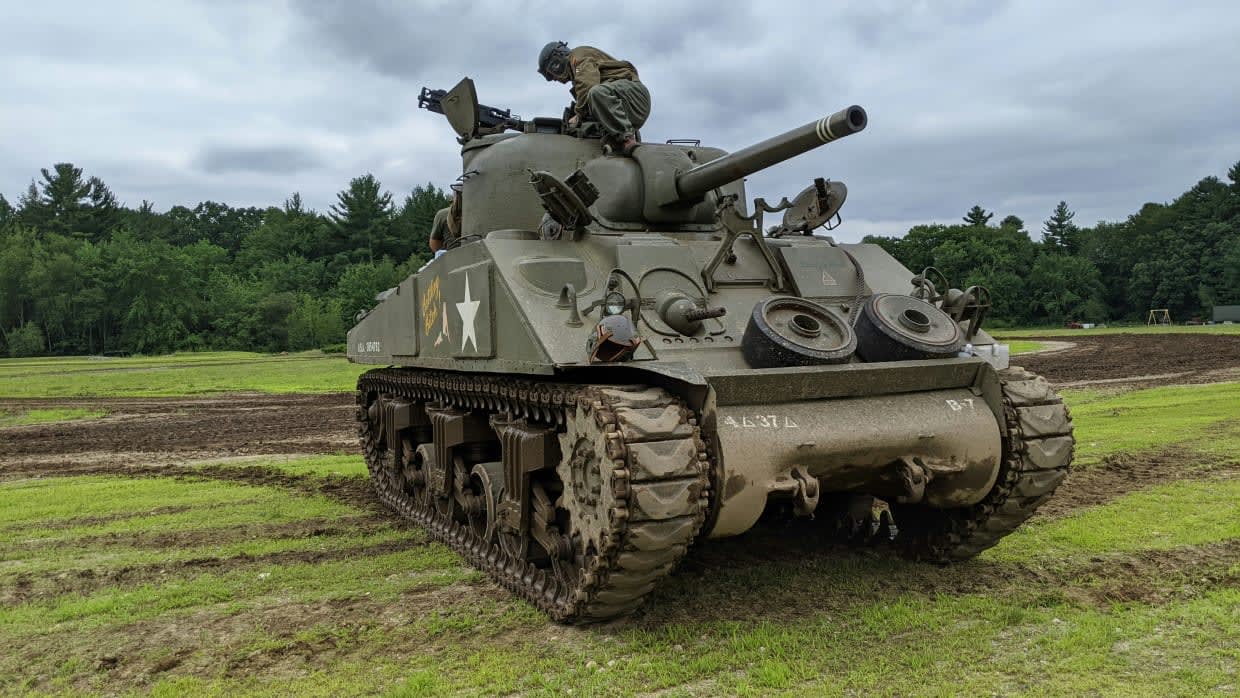
In recent months, Defence has been a frequent topic of discussion. In the run-up to the general election, politicians have been eager to present their plans for the future of the armed forces. Not only must defence spending increase substantially to meet NATO targets, but more personnel will also be needed in the coming years. The importance of reservists is regularly emphasised in this context. At present, the Dutch armed forces have over 6,600 reservists – part-time soldiers who also hold civilian jobs – but due to growing geopolitical tensions, the Ministry of Defence aims to triple this number within the next six years.

To help realise this ambitious goal, the National Resilience Training Programme was recently launched, a ten-week military course that trains young people to become reservists. This training is now also available as a minor at the University of Groningen and several universities of applied sciences, including (starting next semester) the HvA. More institutions are expected to follow soon and offer the programme as a minor as well. But according to inquiries, this is not yet the case at the UvA. Nor are there any concrete plans for the near future.
Academic programme
Associate Professor of Contemporary and Military History Samuël Kruizinga understands why Defence is trying to recruit young people in this way, given the current climate. “For a long time, the Netherlands had conscription, but it was suspended at the end of the Cold War. Since then, the idea was that the armed forces could manage with fewer people and operate more efficiently around a smaller group of highly trained professionals. However, we are now seeing a shift: Defence is focusing less on missions outside NATO territory and more on protecting national borders. That means there is a strong need for personnel, and it makes sense to make becoming a reservist more appealing.”
According to Kruizinga, there is nothing preventing the UvA from following the University of Groningen’s example. “The UvA could certainly consider offering such a minor. If the examination board deems that the course fits within the academic programme, it can also be offered outside a student’s own degree track.” Would he recommend that the university do so? “That’s not my role. As a lecturer and researcher, my job is to provide an academic perspective, not a practical one.”
But there is no doubt, he adds, that the armed forces would benefit. “Given the way Defence is developing, it’s very useful to have a flexible layer of personnel for certain tasks, allowing full-time soldiers to focus on other duties. One way to achieve that is to make it easier for interested students to combine this with their studies. That makes the option very appealing.”
UvA student Princess Amalia has also recently begun training as a reservist. This autumn, alongside her studies in Dutch law, she started as a working student in the part-time programme at the Defensity College. Amalia now holds the rank of naval rating third class in the Royal Netherlands Navy and private third class in both the army and the air force.
Criticism
Still, the UvA has so far decided not to take this step. Around the institutions that already offer the minor, some criticism has emerged. Michiel Bot, associate professor at Tilburg University’s Faculty of Law, told RTV Utrecht he found it “alarming” that universities and the military are collaborating in this way. Kruizinga comments: “In general, I can understand why some might see this as a normative move. As if taking such a minor is something that is expected of students.”
To take away that concern, he points to the voluntary nature of the programme. “It’s a free choice for students. This is simply one of several routes to becoming a reservist, and I don’t see any issue with that. At least not in this form. But regardless of one’s opinion, it’s certainly a good thing to discuss this topic more within the university. It should go beyond a complacent attitude of ‘this doesn’t concern us,’ in my view.”