Dialogue | New student assessor launches discussion evenings to tackle polarisation

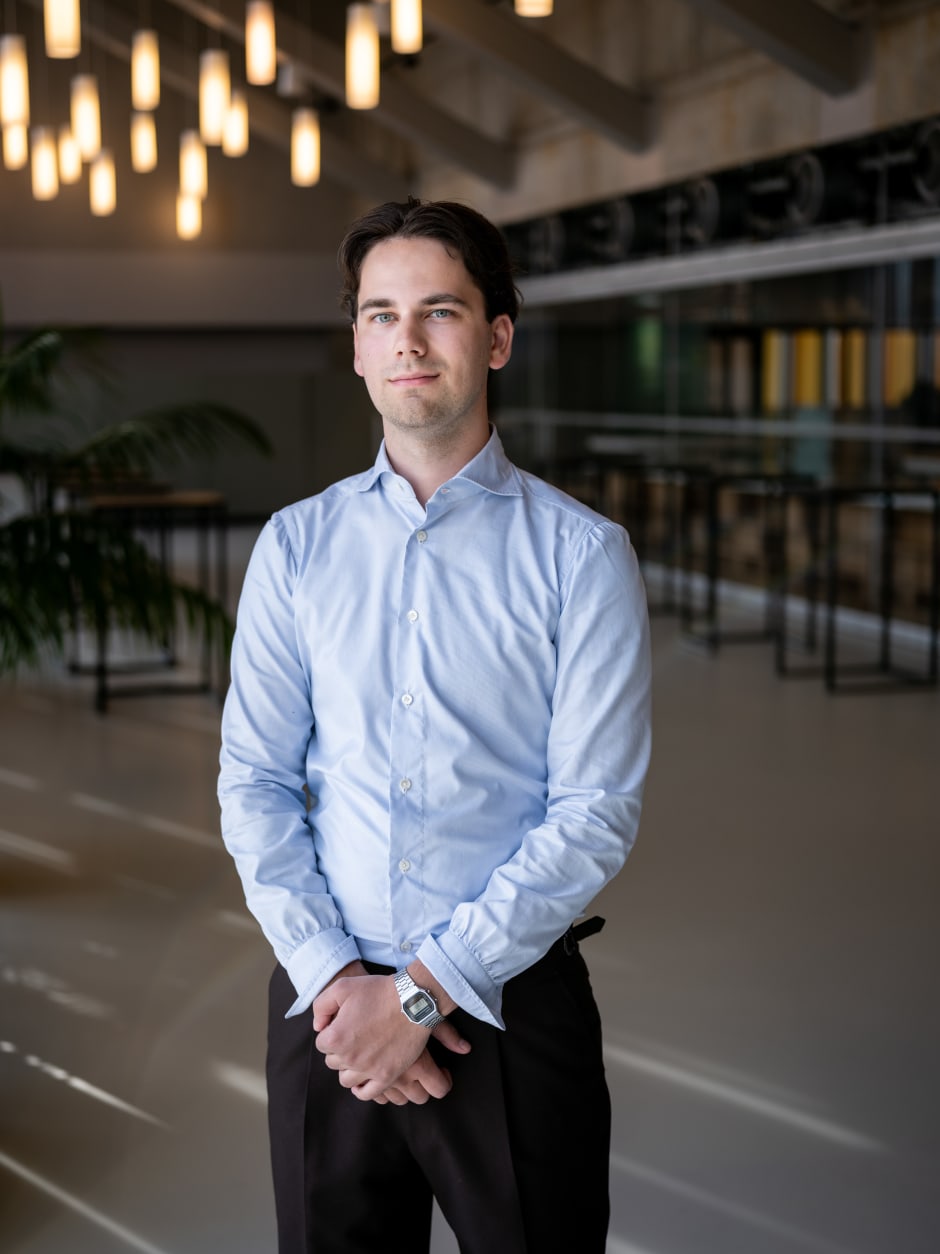
According to student assessor Willem Volker (22), dialogue at the UvA is in a poor state. To stimulate open debate, he has therefore created Platform for Different Perspectives: evenings organised by him in which students engage in conversation with each other. Everybody can participate.

Since September you’ve been the student assessor. How have the first few weeks been?
“Really enjoyable. As student assessor I attend every meeting of the Executive Board that concerns students or academic affairs. I’m there as a bridge between the students and the administration. I try to gauge what’s going on among the wider student body and translate that to the institutional level, so I can stand up for students and their interests.”
“It’s been an interesting and dynamic period, especially with the recent statement the UvA made regarding its ties with Israel. Suddenly I find myself among the university’s top administrators, representing student perspectives.”
“Before this I was active in the student council, and I realised I get real energy from being involved with the university. That might sound a bit dull, but I simply enjoy it. The interplay of different actors, the UvA as a kind of miniature society, I find that fascinating.”
That all sounds very positive, yet one of your first observations must have been that the willingness to engage in discussion isn’t great at the UvA.
“Among students, definitely. A large part of the student body has entrenched itself ever more deeply in the trenches of its own convictions. Sometimes people seem unwilling to reconsider their positions because it would unsettle their worldview. You have to be ready to rearrange the puzzle pieces to reach a better understanding, and that’s something I see going wrong.”
Where do you notice that?
“In seminars, I notice that some viewpoints are questioned for evidence while others aren’t. We’re not always willing to challenge everything, even when there’s no scientific consensus on an issue.”
What kind of topics are you thinking of?
“I see the Israel–Gaza conflict as a symptom of the affective polarisation at the UvA. In my role I move between activists and those who take offence at activism. With the latter, I try to make clear that activists aren’t automatically antisemites; with activists, I try to explain that some people are uncomfortable with certain slogans. But on my own I can’t make a difference – that’s why I want people to talk to each other. And that’s where things often get stuck. As soon as you express a certain view on the conflict, some people stop being open to listening to how particular actions affect others.”
Is it a problem if one viewpoint becomes dominant at a university?
“No, not in itself. But it is a problem when people with different opinions no longer feel welcome. Many students at the UvA hold moderate views, somewhere in the political middle, but they stay silent in seminars because they don’t want to deal with the backlash they might face.”
And that’s what the Vrijplaats voor Verschil aims to change?
“The Vrijplaats is meant mainly as a platform for students who aren’t yet involved in university life, and as a way to foster mutual understanding between those who already are. We have a few guiding principles for how we conduct dialogue: we assume the other person is acting in good faith, and we recognise that reasonable people can disagree. Debate isn’t just about winning, but about understanding each other’s perspectives. I think people on the political fringes sometimes lose sight of those values.”
What will the dialogue evenings look like?
“We’ll start with speakers on stage who introduce the evening’s topic for about half an hour. Afterwards, students will join round-table sessions to discuss the theme. I want to seat them in groups of six with a few icebreakers and propositions, and then let the conversation flow. The goal is to get people talking who normally wouldn’t. After that, it’s up to them, I’ll walk around but won’t interfere with what’s being said.”
“I’m already receiving lots of registrations and expect many more. I’ll reach out to study and student associations too, there is still a big group of students who have opinions but keep them to themselves. I want to give them a little push to get involved in their university. I hope to hold the first dialogue evening at Crea around January, and if it goes well, do it regularly, once a month would be ideal. But Vrijplaats voor Verschil is more than just a discussion club. Together with fellow students, we want to explore what else we can do to strengthen diversity of thought at our university.”
Participate in Platform for Different Perspectives? Register can here.