UvA-legal philosopher Soeharno: “Politics is turning against the judiciary”

“The Netherlands must stop trying to be the teacher’s pet. Neighbouring country Belgium ignores court rulings, but gets rewarded,” writes the PVV at the beginning of its election manifesto. Such statements deeply concern professor of legal philosophy Jonathan Soeharno.

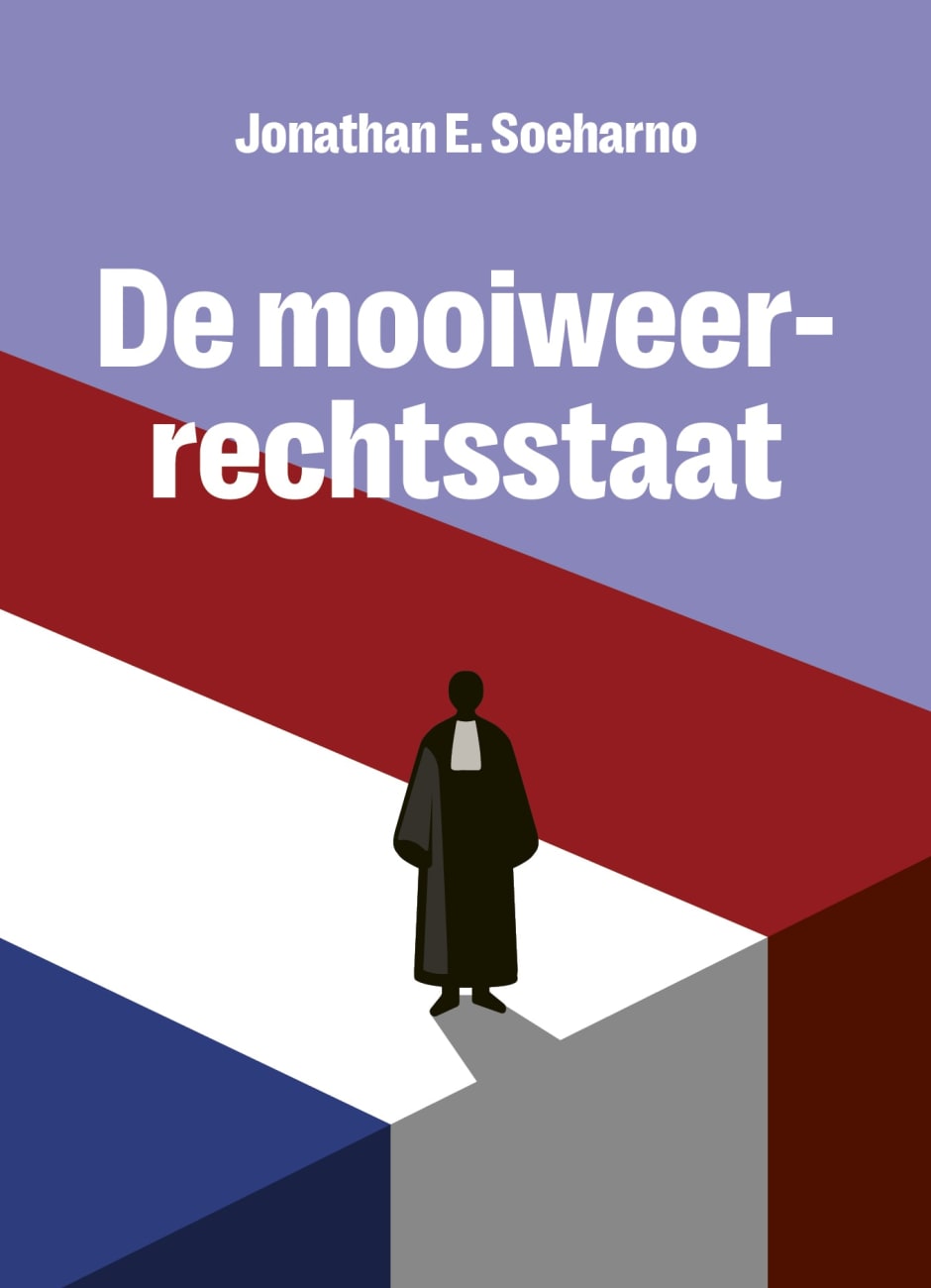
The rule of law is increasingly under pressure, says Jonathan Soeharno. In his new book De Mooiweerrechtsstaat (The Fair-Weather Rule of Law), the University of Amsterdam professor warns about the great vulnerability of the judiciary. The rule of law only functions in “fair weather”: when politics turns against the judiciary, the rule of law becomes fragile.
According to Soeharno, the general elections of October 29 are crucial for the protection of the rule of law. Will the Netherlands choose a party that clashes with the judiciary, or one that seeks to protect it?
In your book, you describe the respect in the Netherlands for the separation of powers — the division between politics and the judiciary — as “declining.” How worried should we be about our independent judiciary?
“You can see in recent years that politics increasingly turns against the rule of law. The PVV says it will ignore court rulings. And several parties portray the judiciary as an elite, unelected group that stands in the way of decisiveness.
“Politicians from such parties do not hesitate to implement policies they already know are unlawful. PVV minister Marjolein Faber tried to push through asylum laws even though she knew in advance that the courts could not deem them legitimate. She then blamed the judges for that. In doing so, politicians make the judiciary itself political.
“Minister Mona Keijzer (BBB) followed a similar tactic last month. The Council of State indicated that her plans — to abolish priority access to social housing for status holders — violate the Constitution. Nevertheless, Keijzer announced that she would proceed with her plans. Judges who later have to block such policies can then be portrayed as belonging to a different political camp. For example, Keijzer’s party colleague and BBB leader Caroline van der Plas referred to the Council of State as ‘D66 judges’ in an interview with WNL.”
In January, judges asked Minister Faber to postpone several asylum laws. Aren’t judges themselves also engaging too much in politics?
“There is a gray area between upholding the law and taking the seat of politics. This is partly because the government increasingly drafts laws with open norms — flexible, more general frameworks. It is then up to the judge to determine what exactly is lawful.
“That can become quite dangerous. When a judge blocked an entry ban for three Islamic preachers, Faber made fierce statements expressing her disagreement with the ruling. Shortly thereafter, personal information and photos of the judge and his partner were shared online by unknown sources in an attempt to intimidate the judge.”
The Council for Public Administration said earlier this year that our country still has “a relatively strong rule of law.” Aren’t you exaggerating the problem?
“Our judiciary is actually much more susceptible to political influence than in many other countries. In the Netherlands, the Minister of Justice personally appoints the governing board of the judiciary — the Council for the Judiciary — as well as the boards of the courts. A minister who wants to impose their politics on the courts can therefore exert pressure.
“In the United States, you see President Trump appointing people of his political preference to judicial positions. We must therefore prevent a minister in the Netherlands from being able to act in a similar way. It would make far more sense for the judiciary itself to appoint its governing boards, rather than giving that power to the minister.”
Far-right demonstrators attacked the D66 party headquarters in The Hague last week and harassed GroenLinks/PvdA leader Frans Timmermans during a protest in Amsterdam. Do such violent demonstrations also make you worry about the safety of other authorities, such as judges?
“The demonstrators are calling for action against institutions — against authority itself. That sharp anti-institutional sentiment is dangerous for the rule of law. Judges are then no longer seen as guardians of shared norms, but as belonging to a certain political camp. And that is becoming risky.
“For many people, the rule of law is the last hope. You could see that in the childcare benefits scandal, when court rulings vindicated the affected parents. It is precisely such minorities who are protected by the judiciary. It’s terrifying to imagine a situation where the will of the majority prevails, and minorities are no longer protected by the law.”
In 2021–2022, you yourself spent a period in politics as a member of the Senate for the CDA. From that position, can one do anything for the judiciary?
“In the Senate, there was genuine room for substantive debate on proposed legislation. The constitutional and legal advice from the Council of State was enormously important in that process. Still, there was a sense that we were sometimes doing the work of the House of Representatives: because of tightly negotiated coalition agreements, a bill was often already assured of a majority there. The critical debate only really took place in the Senate. That, of course, is not how it’s supposed to be.”
You partly blame right-wing parties such as the BBB and PVV for the erosion of the rule of law. Is left-wing politics in the Netherlands blameless?
“On the left, you see a different kind of personal attack on judges. Whereas the BBB and PVV tend to point to the supposed political leanings of judges, the left sometimes attacks judges based on their personal identity. For example, you sometimes hear that a male, white judge cannot fairly assess cases involving certain minority groups. The judiciary must defend itself against both sides of the spectrum.”
So is there no hope left? Is the rule of law crumbling, no matter who we vote for on October 29?
“There are certainly enough parties that consider the rule of law to be of great importance. Volt even advocates a ‘Rule of Law Offensive’ in its election manifesto. And D66, CDA, and GroenLinks/PvdA also devote significant attention to safeguarding the judiciary.
“I remain hopeful. In countries like Hungary and Poland, people reacted stoically when the rule of law was curtailed, whereas in the Netherlands I see people genuinely becoming concerned when that danger arises. A very important signal of which direction the rule of law will take will be the coalition agreement after the elections. During the coalition talks, we’ll see whether politics is heading for a clash with the judiciary — or whether steps will be taken to protect it.”