Outgoing professor Sarah de Lange looks ahead to the elections

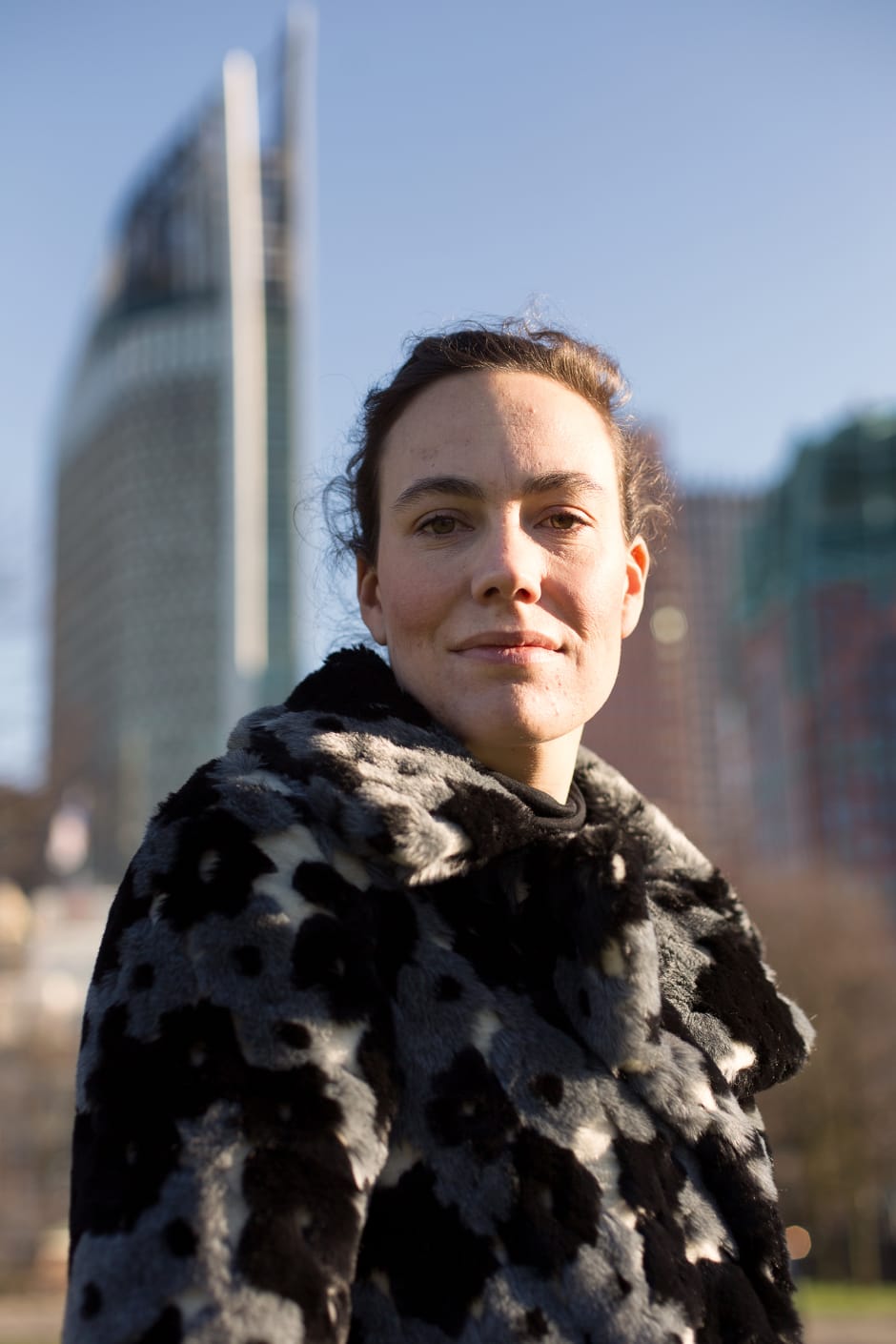
After seventeen years of dedicated service, Professor of Political Pluralism Sarah de Lange is leaving the UvA. Just weeks before the elections, she takes up her new position at Leiden University at a turbulent moment. “Parties must step up and play their part in defending democracy.”
You started in 2008 as a researcher at the UvA. How have you seen politics change in the years since?
“When I joined the UvA, the PVV had only just been founded. Politics was not yet as fragmented as it is today, and the established parties were much larger. But with the rise of the PVV and the decline of the CDA and PvdA that accompanied it, the dynamics of Dutch politics fundamentally shifted. The centre attention has moved much further to the right, and instability in governance has increased.”
Have these developments made your work at the UvA more complicated, or more engaging?
“They ensured that my research topic remained very high on the academic agenda. The rise of radical-right parties, and the success they have enjoyed over the past two decades, is unparalleled. Since the Second World War, no political party family has become so successful. In 2008, we were talking about roughly ten percent of voters supporting these parties; today, they have become the largest in several countries.”
You will begin in Leiden on 15 October. Why is this the right moment to make the move?
“I have been incredibly fortunate to develop myself at the UvA. I came here straight after my PhD and was able to grow into the position of professor. But I believe it is important to keep developing yourself, which is why I wanted to choose a different working environment now. One where I can learn from other colleagues, another culture, and a different teaching programme.”
“The fact that Leiden University has a campus in The Hague is very appealing, because throughout my career I have focused on translating my research findings into knowledge and insights that are useful in practice. Having a campus in The Hague lowers the threshold for collaborating with democratic institutions.”
You are stepping in during a turbulent period, just before the elections. How are you approaching 29 October?
“I think these will be important elections, because after several short-lived cabinets, there is a clear need for stability. The outcome could therefore be decisive for how Dutch democracy develops in the years to come. I am following the news closely and I am particularly looking at the latest research and insights from countries similar to ours, to better understand the developments in the Netherlands. That is only possible by recognising broader patterns in comparable countries such as Belgium or the Scandinavian nations.”
What do you expect from the upcoming elections?
“Because of the fragmented system in the Netherlands, many voters only decide at the very last moment where they will cast their ballot. Polls are therefore of limited predictive value. At the moment we are a little over three weeks before the elections, so I would not dare make a prediction about the outcome. We do see certain trends in the polls, but a lot could still change, especially once the debates begin.”
“What is clear, however, is that parties are expressing strong preferences about who they would or would not like to govern with. The fact that the VVD has been so explicit about not wanting to work with GroenLinks-PvdA, for instance, could have a major influence on coalition-building. On the one hand that is negative, because it makes forming a workable coalition more difficult. On the other hand, it does provide voters with a clear choice. In the Netherlands it is often hard for voters to see how their vote translates into policy, as coalitions usually involve many compromises. This trend of ruling out partners gives voters clarity in advance about governing preferences and how parties view their ideological differences.”
In 2023 we saw a strong final surge from the PVV, and the party is once again performing well in the polls. How does Wilders manage to consistently turn the campaign in his favour?
“Radical-right parties like the PVV are populist, creating a divide between the people and the elite. As opposition members, they criticise the established parties, but when they govern themselves, they also know how to blame other elites – such as the judiciary or the Council of State – for not being able to implement their programme. In this way, these parties continually shift responsibility for government policy failures elsewhere. We know from other countries that this ensures they are rarely, if ever, electorally punished. Voters of these radical-right parties are highly distrustful of politics, not only towards institutions but also towards the media. The narrative of parties like the PVV therefore fits perfectly with the image these voters already have.”
Is that distrust the reason other parties struggle to attract PVV voters?
“That is one factor, but another is that these voters simply find radical-right parties more credible on issues such as migration. When the VVD proposes a strict migration programme, it is seen as less credible, partly because the party has governed for a long time but has never implemented such strict policies. This is linked to political priorities. For right-conservative parties, economic issues also play a role in negotiations, but for radical-right parties, these cultural issues are central to their very existence.”
1999–2004: Bachelor’s and Master’s degrees in Political Science, Leiden University
2004–2008: PhD Researcher, University of Antwerp
2008–2014: Assistant Professor of Political Science, UvA
2014–2022: Associate Professor of Political Science, UvA
2016–2022: Special Professor on the Dr. J.M. den Uyl Chair, UvA
2022–2025: Professor of Political Pluralism, UvA
We have recently seen the riots in The Hague. Are you surprised that the violence is now taking such extreme forms?
“Radical positions are increasingly seen as normal, which leads citizens to push further in expressing those views, including through the use of violence during demonstrations. When we look at the Netherlands in comparison with other countries, we have historically experienced very little political violence. The growing closeness between extreme-right and radical-right movements in other countries has already resulted in far more street protests from this side, often involving significant violence. In a way, we are now joining that international trend. It is certainly possible that this will only increase in the coming period. The AIVD and NCTV have been warning about this for some time.”
What role does the fact that right-wing parties are reluctant to label this violence as far-right play in this?
“That is one of the major challenges facing Dutch democracy today. If we want it to function properly, it is essential to uphold norms and make it very clear that this violence is unacceptable in a democracy. You must always acknowledge the source of political violence. Much will depend in the coming period on whether politicians, opinion leaders, and journalists succeed in enforcing these standards. One can hope that the current lack of political accountability is due to the election period, during which the VVD is primarily focused on winning back voters lost to the PVV. After the elections, things could turn for the better, but for that to happen, all parties must play their role in defending liberal democracy.”