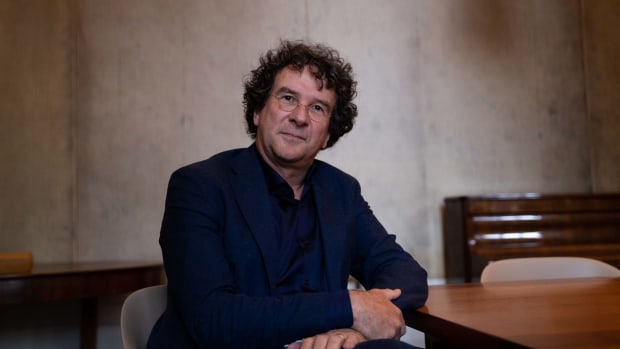
UvA rector magnificus: “I think we benefit more from dialogue than from radicalism”

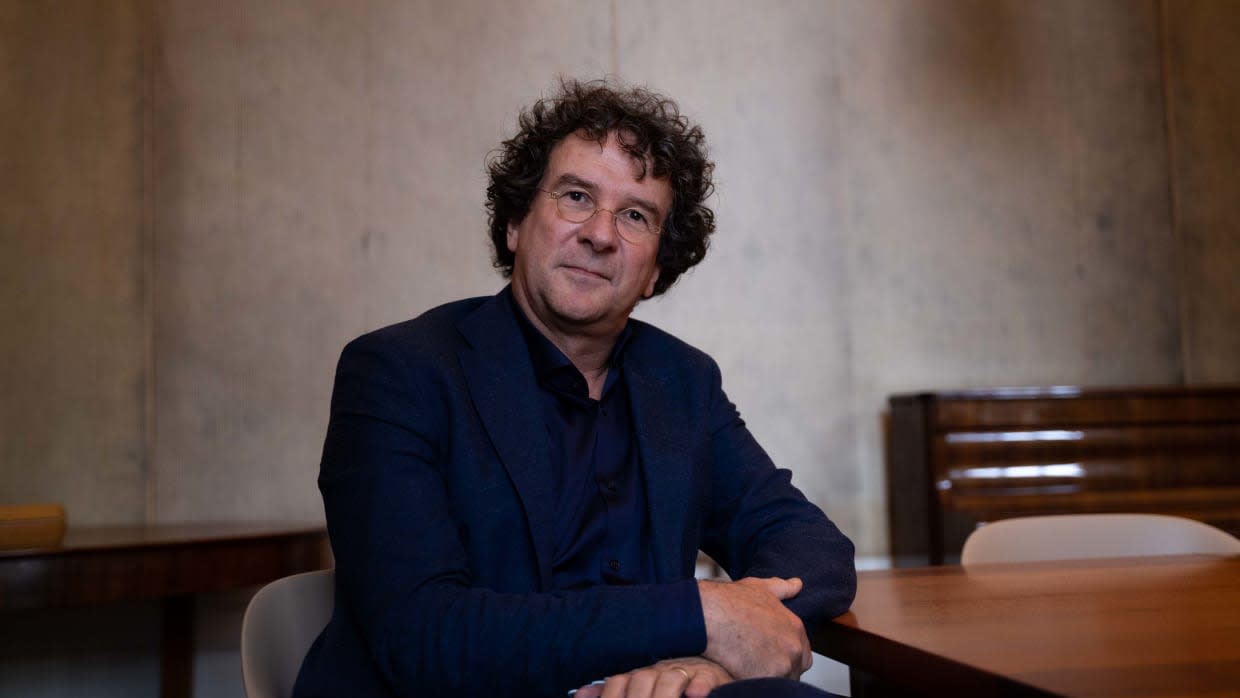
The new academic year got off to a good start: the official opening ceremony was disrupted by pro-Palestinian demonstrators on Monday and subsequently cancelled. What now? Five questions for rector magnificus and acting President of the Board Peter-Paul Verbeek.
After Monday’s event, you said that “a line had been crossed”. That has been said before, but the protests continue.
“That’s true, but it has never before led to a festive gathering having to be cancelled and the programme items being scrapped. We gave the protesters the microphone, but after that the programme should be able to continue. That was not possible; they continued to shout, an unsafe and intimidating atmosphere arose, and people walked out of the hall. And you can’t expect invited speakers, including students, to perform when they’re standing in the wings with trembling legs. Then you have no choice but to cancel the event.”
Access to the planned reception in the Maagdenhuis was also chaotic. Some students and protesters were not admitted and are now angry.
“I don’t know the details yet, but what I do know is that security wanted to prevent a disrupted event in the Aula from leading to a disrupted event in the Maagdenhuis. Perhaps something went wrong in that regard, but we also wanted to restore calm among those present during the reception, and bringing in troublemakers doesn’t help then.”
But what now?
“Once again, it has become clear that we as an academic community have a responsibility: a university can only function if we give each other the space to speak and to listen. That requires something from all of us: how do we work together to ensure a safe, respectful and open environment? We will therefore continue to engage in dialogue about how we interact with each other. I find our current “house rules” too restrictive when it comes to political demonstrations, for example. In the new house rules, which I would actually prefer to refer to as a “code of conduct”, we want to better facilitate protests and demonstrations. But everything depends on compliance with these rules.”
“I don’t want to lock down the UvA, install security gates or implement a restrictive admissions policy, because that would take the soul out of the university. We would lose what the UvA stands for as an open and engaged place. So the only thing you can do is continue the conversation. The open, academic culture is vulnerable, but not defenceless. And that is why I now want to sit down with the protesters to discuss what is a good way to engage in conversation with each other within an academic setting. It may be a ‘soft’ method, but I think we benefit more from dialogue than from radicalism, which makes people feel unsafe and afraid to speak up. An eye for an eye, a tooth for a tooth is not the right approach, in my opinion, to preserve a sense of community and bring about a cultural change.”
Professor Marc Salomons wrote yesterday in the Dutch daily De Telegraaf that new legislation is needed to intervene against what he sees as anti-Semitic violence at universities. He says that there is a “state of emergency” at the UvA.
“I understand his feelings very well, but I think the word ‘state of emergency’ is really too strong, even though we have ended up in a situation where it is becoming increasingly difficult to have an open debate without silencing each other. That really can and must change. It will be a considerable challenge to maintain that debate at the UvA, but it must be done, because it is the essence of academic culture.”
The same newspaper article suggested that it would be better to stop holding large events that are accessible to everyone at the UvA, such as the dies celebration.
“I understand that question very well, but I don’t want to go down that road. As I said, the UvA is an open and accessible university and it must remain so, even when it comes to something like the anniversary celebrations. I can imagine that some people are wondering whether they still want to attend in this way, and I find that sad, because it takes away from the festive atmosphere. It should not be the case that the default setting for a UvA gathering is that it is not festive, but intimidating.”