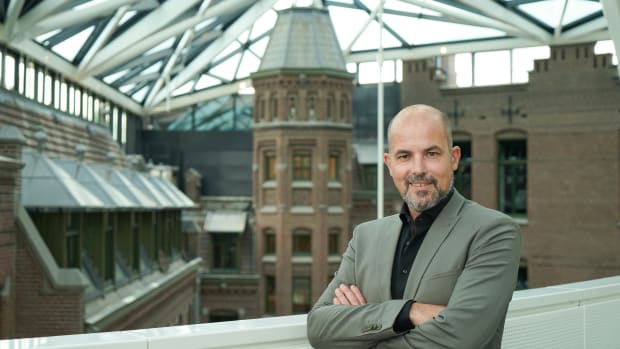
Director of new University Library: “Libraries are less about books”

Today, after years of (neighbourhood) disputes, discussion, design and construction, the UvA is finally opening its new University Library on the Binnengasthuis site. It features a gigantic atrium, hundreds of study spaces and fewer books than the Singel location. We spoke with the equally new director, Carlos Reijnen. “The University Library must be a place of debate.”
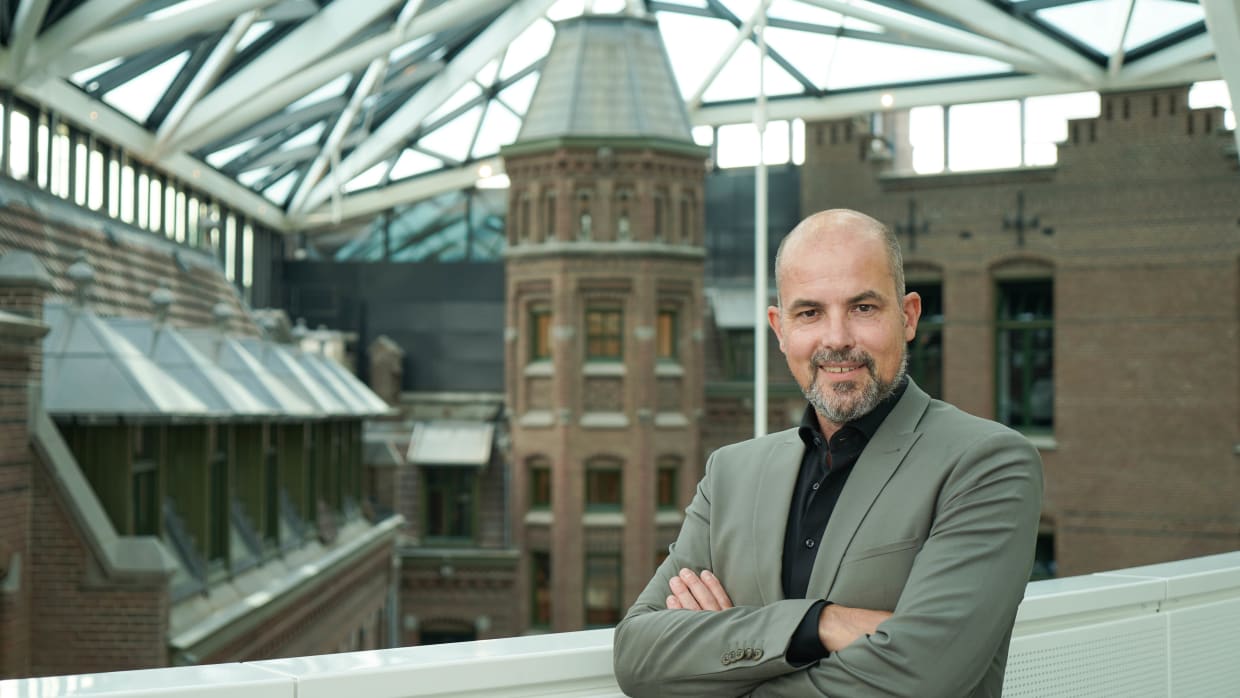
There are no books to be seen in the flexible workspace of University Library Director Carlos Reijnen. This summer, he moved into the University Library on Vendelstraat, the former Binnengasthuis hospital, which underwent extensive renovation and refurbishment in 2019. His personal collection – mainly works on the Czech Republic, Poland and the Balkan countries under communism in the twentieth century – is still in the coffee room. “Then I can read in a corner, but I still keep in touch with the scientist.”
This is exemplary of how the director of the new University Library sees the library: not exclusively as a place for books. He increasingly presents the library as a study room, a place of learning for researchers and a place for conversation and debate.
A quarter of the literature from the UvA libraries in the city centre has now disappeared. More than a thousand study places are being created around the impressive, light-filled atrium, says Reijnen.
In short, we have a huge new University Library costing 140 million euros, but less space for books?
“All the work will of course be retained, but some of it has been moved to the IWO repository. Libraries are less about books. If only two people read a book here in my field, Czech, in the coming year, that’s already a good result. Even though we have decided, against the tide, to retain a large part of the physical collection.”
1998 Cultural and Scientific Studies, Maastricht University
1998 Master's degree in Czech Studies, Charles University, Prague
1999 PhD candidate in History, Leiden University
2006 Assistant Professor of (Eastern) European Studies, University of Amsterdam
2016 Associate Professor of (Eastern) European Studies, University of Amsterdam
2016 Director of the Graduate School of Humanities, Faculty of Humanities, University of Amsterdam
2020 Director of the College of Humanities, Faculty of Humanities, University of Amsterdam
March 2025 Director of the University Library and Amsterdam University of Applied Sciences Library.
“We are increasingly focused on digitisation. And I’m not just talking about online books, but also datasets. In the past, people would store data such as interviews or information about research subjects in a cabinet in their office. In the context of open science, you want to make that data searchable and store it securely. At the same time, researchers have to comply with privacy regulations. The new University Library plays a central role in regulating and supervising this process.”
The disappearance of the old-style libraries was met with resistance from fans of the P.C. Hoofthuis Library. Action group De Reaksie organised a large petition and then a well-attended “funeral” for the library. How can the demise of such public favourites be justified?
“The P.C. Hoofthuis Library was indeed very pleasant. I often went there myself to work as a researcher. The nice thing about that library was that you were surrounded by the collection. In all kinds of little corners, quiet or just right for chatting, next to the books. And that is exactly the concept that I see reflected so well in this new University Library. Lots of small spaces, among the literature.
‘The Singel University Library is now empty. It is expected to be sold in the long term. You lose those places – and especially their emotional value – but you gain the fact that all the collections in the city centre can now be found in one large open layout. Science is becoming increasingly interdisciplinary, so it is an added value that you can search in all disciplines.”
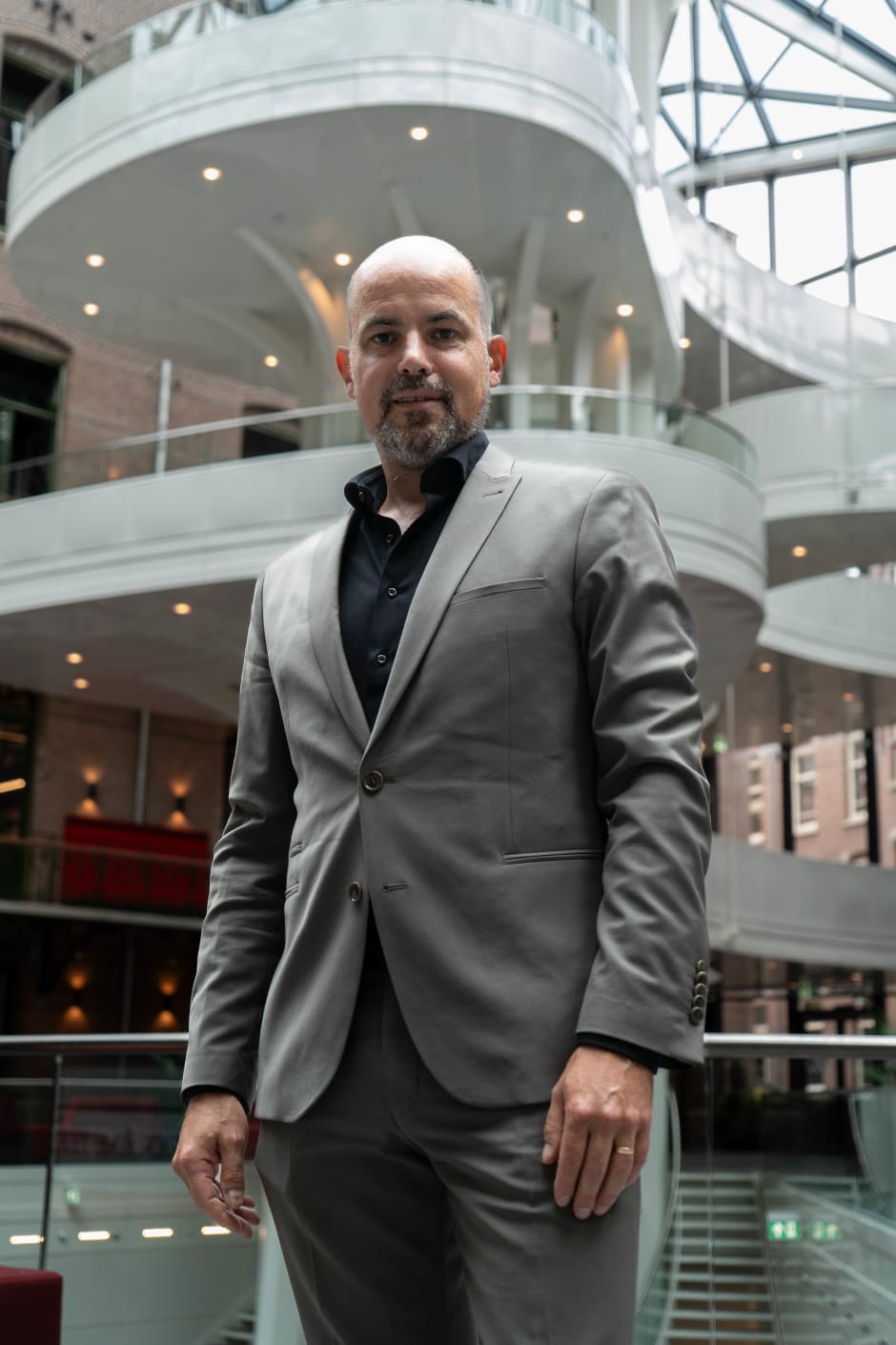
The thousand study places are still calculated based on the total number of users of the Singel and PC. Hoofthuis University Libraries. Won’t these study rooms be flooded with eager students?
“It is, of course, a particularly attractive location, so I expect that it will indeed generate more demand. Ultimately, we will be able to accommodate this. We can adjust the layout or create study spaces in nearby buildings, such as the Bushuis. A last resort could be to make space by moving some of the books to the depot.”
With all that space, will this also become an open space for everyone in the neighbourhood?
“For the time being, the library is only accessible to anyone with a UvA card. That’s quite a challenge, because on the one hand you want to emphasise the relationship with the city. The city centre is inspiring, and research, education and debate can only exist in relation to your environment. On the other hand, you don’t want tourists walking in and occupying a student space. So we’re keeping the access gates for now.”
Last year, there were loud protests in the REC-H library, and during the occupation of the Binnengasthuis site, pro-Palestinian demonstrators temporarily entered the grounds of the new University Library, causing damage to the building. How do you intend to deal with any demonstrations?
“I’m not authorised to intervene in occupations. But the University Library must be a place for debate; that’s why we have a beautiful, open atrium. It’s a library, so I think that debate should remain somewhat on topic. Palestine-Israel can certainly be one of the topics, but preferably with themes such as censorship or freedom of information. Such a discussion may well be quite heated.”
The University Library was originally budgeted at 60 million, but ultimately cost around 140 million euros. Was it worth continuing with the construction given the costs?
“If you had put this price tag on the project in advance, it probably would not have been started. But the project encountered some serious setbacks. Examples include protests against the demolition of the old Binnengasthuis hospital – fortunately successful – objections from local residents, building materials that could only be transported via the canal instead of the street, and an unexpectedly necessary bicycle parking facility. You then end up going from one cost item to another, while you have already chosen the path and it is difficult to turn back.”
“However, the university really needs a central location where students can meet, events can be held and which ultimately serves as a showcase for the UvA. A place where we can bring together PhD students from different disciplines, help lecturers improve their teaching and teach students how to find sources. I think we will soon see that this central icon in the heart of the city centre was worth the price.”
Since May 2024, the UvA has banned the student magazine Propria Cures (PC) from campus due to a dispute over an article about a University Library employee. PC editors ironically pointed out that the University Library had simultaneously placed a huge quote from former PC editor Martinus Nijhoff – “Just read, it doesn’t say what it says” – on the exterior façade.
“That is indeed amusing. I can’t say too much about PC itself, as that is a UvA-wide issue. More generally, I can say that I believe that all voices should, in principle, be given a place here.”
Do you still have time to read here in the library?
“I have set aside one day a week specifically for teaching, doing research and studying literature. I think it’s important to retain the experience of being a researcher. And soon, I will be able to teach in the library for the first time. The surgical theatre, where live operations were performed during lectures in the nineteenth century, is now a beautiful lecture hall.”
And if you can’t find books for your research, you can complain to the director.
“Yes! This experience helps me to see where academics look for material, what they use and what they don’t. It keeps me in touch with what is needed for data management, the preconditions for research. The University Library wants to help with that. This new, often digital, form of support really represents the rediscovery of the library.”