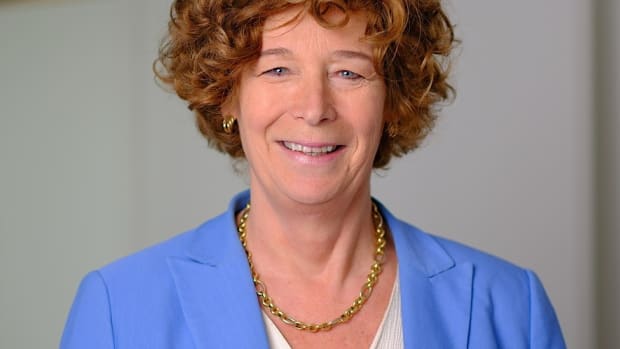
Upcoming UvA honorary doctor and former politician Petra de Sutter on life as a transgender woman

Later this month the streets of Amsterdam will be coloured in rainbow hues for Pride Amsterdam. In the run‑up to the celebrations the rector‑elect of Ghent University, and transgender woman, Petra de Sutter (62), will speak on Saturday at the annual Pride Talk in De Nieuwe Kerk. Folia received a sneak preview. “I have become who I was always meant to be, both to the outside world and in the mirror.”
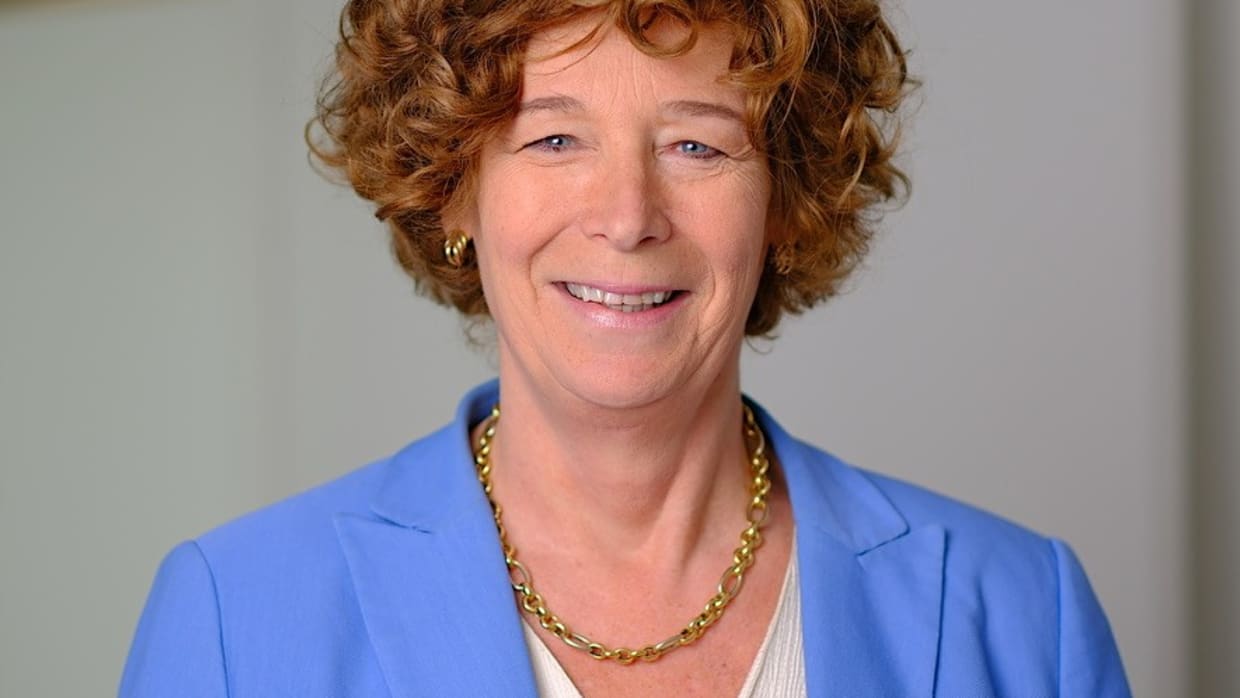
That people continually feel the need to emphasise that Petra de Sutter was the first in something is, for her, proof that genuine inclusion has not yet been achieved. “That puts people in a box and reduces them to a single aspect of who they are,” she explains. “That I am transgender is only one part of my identity. An identity that is highly layered. It would nowadays also sound strange to draw attention to the fact that someone was the first homosexual person to have achieved something.”
The Flemish Petra de Sutter, who will receive an honorary doctorate from the UvA in January, has a long record in science and politics: she is an extraordinary professor of gynaecology at Ghent University, became politically active with the Flemish green party Groen and served in the Parliamentary Assembly of the Council of Europe. Moreover she was a Member of the European Parliament and for more than four years Deputy Prime Minister of Belgium. This summer she will officially leave politics. This coming Saturday she will speak at the annual Pride Talk in De Nieuwe Kerk.
Transition
De Sutter was born in the 1960s and raised in a Catholic household. At primary school she already sensed she was different – even labelled “abnormal” and “sinful” by the teachings of her faith – yet she did not understand why, and there was no internet to consult. It was only two decades later, with the rise of the web, that De Sutter discovered the truth. “My guilt about being different quietly turned into self‑acceptance.”
It nonetheless took time before she finally chose to leave behind the life she had built for forty years as a man. “I had to start from scratch again, and that decision came with much suffering.” She therefore prefers not to discuss the personal details of her transition – too painful to revisit. Since then it has felt like a liberation. “I have become who I was always meant to be, both to the outside world and in the mirror.”
Layered identity
Her transition in 2003 set in motion far more than the embracing of her gender identity. It created space for her to develop interests in, and commitment to, the world around her, now that she could finally live as her authentic self. That in turn led to a successful political career from 2014 onwards. Although De Sutter was Europe’s first transgender minister – and a pioneer in other fields – she prefers not to dwell on that. “Always the first,” she laughs. “I know.”
In an ideal society, De Sutter believes it should make no difference what your gender identity, sexual orientation or skin colour is. She hopes that in future such characteristics will no longer need to be noted: “Then you simply occupy a position in society because you are good at what you do.”
Letter
As recognition of her exceptional contributions De Sutter will receive an honorary doctorate from the UvA in January. But what she is truly proud of cannot be captured in a single line on her CV. “I am contacted daily by people who say I have inspired them. That makes me happier than any title.”
Just last Thursday during the plenary session the former politician had such a moment of joy. “In the plenary chamber of the European Parliament we each have our own seat with our name on it. When I opened the drawer I found a note from a sixteen year old girl who had been on a school visit to Parliament. It said that I was her great idol. When she graduates she intends to follow in my footsteps. That makes me so incredibly happy. Then I think: my life does have meaning.”
Check here for tickets for the Pride Talk on July 19 in De Nieuwe Kerk.