UvA PhD alumnus: getting pregnant still comes at the expense of your research

PhD candidates who have children during their doctoral trajectory receive less research time than their colleagues. Ellen Algera experienced this herself during her PhD at the UvA – and is reporting it to the national discrimination center.

Employees in the Netherlands typically accrue nine vacation days during sixteen weeks of maternity leave. But for PhD candidates, these days are not compensated with an extension of their contract. Breastfeeding time also isn’t accounted for: mothers are legally entitled to spend up to 25 percent of their working hours — for a maximum of nine months — on expressing milk, without loss of income. In a 40-hour work week, this amounts to ten hours of pumping time per week. PhD candidates conduct research under tightly defined contracts, and as a result, they lose research time that is not compensated.
Some PhD candidates try to find a workaround by using parental leave for pumping in small hourly increments (at 70 percent pay) instead of in full days, allowing them to count that time toward a contract extension. But that comes at the cost of income — which feels unfair, given that the right to pumping time is protected by law.
The fairest solution, says UvA researcher Ellen Algera, would be to simply add the number of weeks lost to pumping and vacation accrual to the end of the PhD contract. But that currently doesn’t happen.
Add it all up, and the difference compared to male colleagues is significant: female PhD candidates are expected to deliver the same research in less time. “That’s discrimination based on sex,” says Algera, who submitted her dissertation at the University of Amsterdam this year and experienced the issue firsthand. She filed a report with the national anti-discrimination office — the first step toward a legal assessment of the university collective labor agreement (cao) by the Netherlands Institute for Human Rights. Together with legal experts, she is currently preparing that request.
In 2025, 52% of PhD graduates in the Netherlands were women. The average age of completing a PhD is 33, and the average age for a first child among Dutch women is 31. Exactly how many PhDs become pregnant during their trajectory is unknown, but statistics suggest that many do so during the same life stage.
‘Clearly unfair’
Algera, who began her PhD at the UvA in 2018, had two children during her appointment. During her maternity and parental leave, as well as the time spent pumping, her research came to a halt. “I had to make choices that men without children never have to make: do I pump or do I write? Do I take parental leave with reduced salary, or give up research time?” Maternity and parental leave are compensated with contract extension, but the vacation days accrued during that leave are not — “and that’s unfair,” Algera says. “Those days are meant for rest, and maternity or parental leave is not rest. I received 32 weeks of extension in total for two pregnancies, but no time to take a proper break within those 32 weeks.”
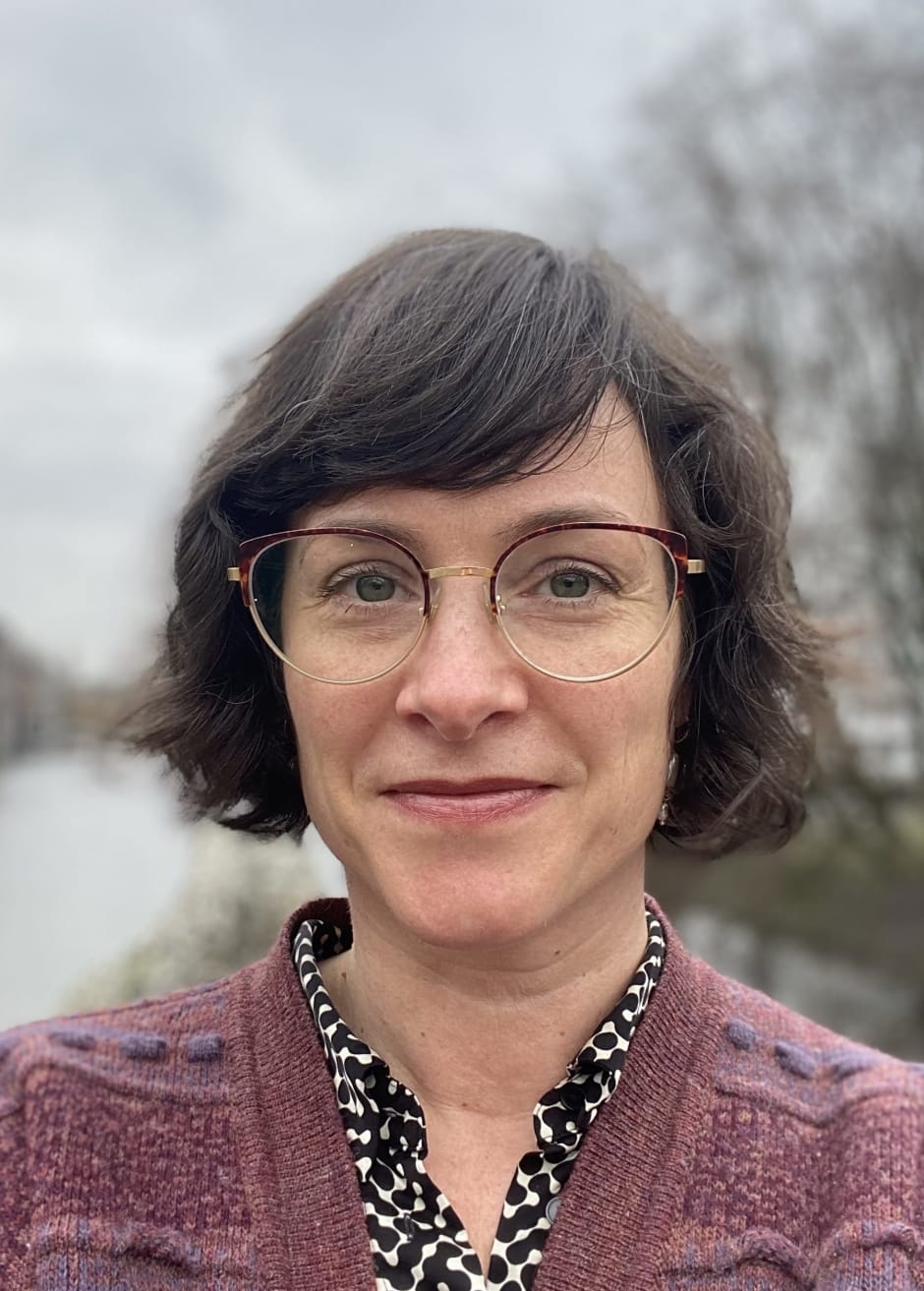
“It’s so clearly unfair and legally wrong,” says Algera. “Men can use their full contract period for research, while women who give birth cannot. I get the impression that people in positions of power – often men – don’t consider this a priority. We already know that many women drop out of academia, especially around the time they have children. I thought: damn it. Do we really want to lose even more women in science?” In 2022, the Dutch government published a report showing that the difference between men and women leaving academia is largely due to motherhood. “If we’re going to fund reports, we should also act on them. If you say A, you must also do B,” Algera says.
A guessing game
Algera quickly realized how fragmented the rules around contract extension were after her second pregnancy. “I spoke to HR to clarify the new end date. I had taken maternity leave twice and also used parental leave, so it was quite a calculation. It was very unclear how they arrived at the new end date – it felt like a guessing game. I’d be given an extension, only to be told a month later that it would be shortened again, without explanation. I thought: am I just supposed to trust this?” Algera then made the calculations herself and discovered the issue around vacation days accrued during leave.
She raised the issue with her union, the AOb, but says she was not properly supported. “I started a ‘vacation strike’ — I brought my laptop on family holidays to keep working, because I wanted my dissertation to be on par with my colleagues.” Eventually, she wrote to the dean of the Faculty of Social and Behavioural Sciences (FMG), who understood her situation and granted an additional extension out of goodwill. “Even just arranging my extension cost me time that should have gone into my research – and I’m sure other PhDs run into the same issue,” Algera says. At FMG, vacation days during maternity leave are now properly compensated, confirms the Central Works Council. However, time spent breastfeeding is still not structurally compensated. There is no UvA-wide policy for how to handle accrued vacation days or pumping time; it is determined at the faculty level. The university does plan to raise the issue in the national consultation with the Universities of the Netherlands (UNL), confirms UvA HR director Robert Grem.
Why unions don’t address the issue
According to UvA-PhD student Saskia Boumans, who is conducting doctoral research into the role of trade unions and employers in labor relations, the lack of contract extension for pregnant PhD candidates stems from the unique employment status of PhDs. “They sit at the intersection of employee and trainee, with a strong personal stake in completing their research — while their contracts are still based on a generic employment model that doesn’t take that into account.” Contract extension for maternity leave was only explicitly added to the collective labor agreement in 2018. Still, Boumans notes, implementation is often unclear, inconsistent, and dependent on the institution or even the individual supervisor.
A major issue, she says, is the funding structure. “Universities are increasingly financed on a project basis, meaning each PhD brings in their own funding — often through an NWO grant or another external source.” Since the university is the legal employer, but reliant on third-party funds, responsibility and execution fall out of sync — with the PhD candidate left holding the bag.
Even though the issue is widely acknowledged, Boumans says it repeatedly gets dropped during CAO negotiations. “Everyone agrees this needs to be fixed, but because it affects a relatively small group, it gets pushed aside. Unions have recently focused on broader issues like workload, inflation compensation, and precarious contracts.” According to her, the real solution lies elsewhere: “It makes sense that people turn to unions first, but because this is a funding issue, it needs to be addressed directly with the employer organizations.”
Going to the Institute with pregnant PhDs
Algera disagrees somewhat. “Yes, it’s partly a financial issue — but fundamentally, this is a legal and moral matter: unequal treatment on the basis of sex. And that is not allowed. If the Human Rights Board determines that this is discrimination, then neither employer organizations nor unions can ignore it.” While the board’s rulings are not legally binding, they are often followed in practice and can be cited in legal proceedings.
Algera is still looking for PhD candidates who are currently disadvantaged by the way contract extensions are arranged in the collective labor agreement, both for maternity leave and for breastfeeding time, in order to potentially bring the issue before the Netherlands Institute for Human Rights. “I’m not worried about finding someone,” she says. “Since I spoke out on LinkedIn, I’ve received dozens of messages from PhD candidates who are experiencing exactly the same thing.” Meanwhile, Algera is in contact with UNL, among others: “I am also hopeful that it will not be necessary to go to the Board. But if we cannot reach an agreement now, I will take the matter to the Netherlands Institute for Human Rights.”