Robbert Dijkgraaf: ‘Feels like failure if it is not clear what science contributes’
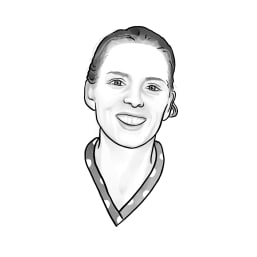
After two years of ‘political leave’, former education minister Robbert Dijkgraaf (65) is back at the University of Amsterdam. In his new professorship he wants to bridge the gap between science and society, both within the Netherlands and especially internationally.

The timing could not have been better. While the Senate is holding its final debates on the education budget and in the United States pressure on science is reaching worrying proportions, former education minister (D66) and University of Amsterdam physicist Robbert Dijkgraaf returns as a university professor at the University of Amsterdam.
His chair of Science and Society in an International Perspective is – in his own words – specifically about the increasing geopolitical tensions, the pressure on academic freedom and the gap between science and society. What does he hope to change about this from his new position in science?
Did you expect to return to the UvA?
“No. I was 64 when the cabinet fell and I resigned. My wife and I (Pia de Jong, ed.) had no place to live, no work and no home. We said to each other: the last time we felt this way we were twenty-two and we both quit our studies. Which is very strange when you are 64, because most people I know have their routine completely down by then.”
Robbert Dijkgraaf (1960) studied physics in Utrecht, a study he interrupted for a year to study painting at the Gerrit Rietveld Academy when he was twenty-two. He obtained his doctorate cum laude under Nobel Prize winner Gerard ‘t Hooft and became professor of mathematical physics at the University of Amsterdam in 1992. He also served as president of the Royal Netherlands Academy of Arts and Sciences (KNAW) for four years.
Dijkgraaf spent a large part of his career in the United States with his wife Pia de Jong and their three children. He was the director of the Institute for Advanced Study in Princeton, the research institute where Albert Einstein worked. He also remained affiliated with the University of Amsterdam, where he was a university professor of theoretical physics until 2022.
In 2022, Dijkgraaf left the University of Amsterdam to become the Minister of Education for D66 in the fourth Rutte cabinet. He returns to the University of Amsterdam on April first to take up the new chair in Science and Society in an International Perspective. He will combine this job with his role as president of the International Science Council (ISC), the “United Nations” of science.
“The ministerial post was a huge leap for me. I had my life in Princeton (as director of the Institute for Advanced Study, ed.) and my wife and I wanted to stay in the United States. The ministerial post yanked you out of that in one fell swoop. As a government official, your entire CV is stripped away and you have to say goodbye to everything.”
“When the ministerial post was over, I felt: what am I supposed to do with my life now? I was really allowed to start all over again. Then anything is really possible: you can go anywhere and do anything.”
And then you end up back at the University of Amsterdam.
“Yes, to my surprise – it’s actually the least creative choice – you end up back at the place you already have a long history with. But with a new assignment.”
“I am very happy with how things turned out over the past nine months. During that time, I conducted an experiment and asked myself: where do I want to go? What should I read about? What am I enthusiastic about? And then I noticed that two things were bubbling to the surface: science itself. I started reading essays, books and magazines again. And the international dimension, which I had also missed very much.”
Have you also considered returning to the United States?`
“That was still the plan three years ago, but it didn’t feel right in a number of ways. I had come to the end of something there and the board position no longer appealed to me. In retrospect, it was a good choice because I think that as a university administrator in the US you are right now in an impossible position.”

Did you see the situation of science in the US coming?
“To be perfectly honest, I did not. In 2017, when the first Trump administration came to power, I started protesting with the “real armchair academics” in Washington. The atmosphere at the time was that Trump’s ideas were misconceptions that we as scientists had to correct. In the end, the budget cuts were not as bad as expected because many senators and congressmen had a different opinion. The biomedical research of the National Institutes of Health (NIH) even received additional funding. Various forces were at work and a lot of energy was released in science to mobilise these forces. Now you notice that there is a much more paralysed atmosphere in the United States. People are anxious, they don’t dare to speak out, they are afraid of becoming a target.”
“I also see it as a lesson in politics. When people say they are planning something, they often go ahead and do it when they get the chance. In the human mind there is still a kind of wishful thinking that it won’t be so bad. But politics is about change. That can be very painful to see, but that’s how politics work.”
This also applies to the cuts in higher education in the Netherlands. The money that you invested in universities, in the form of start-up and incentive grants, will most likely disappear. How do you view this?
“Firstly, it is important to say that the investments in higher education were absolutely no gift to science, but a much-needed recovery operation based on in-depth analyses. The universities were struggling, and there had been protests for years.”
“We made plans for higher education for the next ten years. Some issues were structural, administrative agreements were made, and we also asked schools and universities to do what was necessary. It was a whole package, a kind of embroidery, that is now torn apart. That is very painful to see.”
“One thing that struck me was a statement made by the PVV spokesperson in a parliamentary debate, who said that the cuts were justified because of the “woke stuff” at the universities. I don’t remember the exact wording, but it smelled strongly of revanchism. That touches me, because apparently people no longer recognise the added value of universities. Whereas everyone – regardless of their political opinion – benefits from science. It almost feels as if we as a community have failed if it is not clear what science contributes.”
Where can this ultimately lead?
“I sometimes have this nightmare that science and technology will develop further and further, while at the same time we see a kind of rejection in society of people who don’t want to know anything about it or who see universities as the enemy. Then you end up in a situation where you are dependent on it, but have no control over it.”
And what do you want to change about that from your new chair?
“Science could use some self-reflection. I think it is important that science increasingly concerns itself with how it relates to society, how it is perceived and received. If we use some of the brain cells of science for that, it will also benefit the rest of science.”
“Science as a business can also be better organised. We do a lot of things because that’s just the way we do them. Our structures should be way more flexible. Science must make it clearer that science is not just an investment that pays for itself, but also show how best to make that investment.”
How do you view internationalisation? The universities want to precisely get rid of the Foreign-language Education Assessment (TAO) that you introduced, and the current education minister Eppo Bruins refined, because it would not leave room for English-language programmes and English-speaking staff.
“I don’t feel comfortable with detailed criticism. As minister, I was responsible for a whole package, and that package is now being shifted. What I have learned from the whole discussion is that internationalisation is a subtle story, a positive force that must be channelled in the right way.”
“It’s incredibly customised, so you can’t just go in with a blunt axe, but you have to make sure that the institutions have the tools to perform the delicate surgery needed to ensure that the system remains financially sustainable in the long term. That too requires an international perspective; we as universities also need to coordinate at the European level. The Netherlands still looks too much at its own situation.”
“The only thing I can say about it is that politics is a zigzag movement, things have a huge expiry date. In science it is different, scientific results last forever. Those are the long lines and you have to keep following them.”
Are you happy to be back in science?
“As a minister, you hear many strong opinions and I have often thought, gosh, I would like to know more about this. All those strong political opinions are often based on a very thin layer of ice, sometimes the last opinion piece that people have read. There could be more factual information in the debate.”
Would you call yourself too nuanced for politics?
“Well, yes, you have to be honest. In politics, I have often tried to outline the ideal solution. But when you stand in the House of Representatives with that nuanced story, where they want to move left or right, it doesn’t always have the desired result. And then one powerful opinion can sometimes be decisive.”
What are you most looking forward to in your new position?
“To live a life where I can say at the end of the day: I have met so many nice people and learnt so many new things. It started when I was a little boy, marvelling at the world and putting things together. It feels like a great gift to be able to keep learning and that the things I do to have a lasting effect. It’s also just a nice thought.”