Interview platform Room for Discussion “doesn’t shy away from conversations” despite incidents

A new interview at Room for Discussion is scheduled for today. Last week, the interview with Minister Brekelmans was ended early for security reasons due to demonstrators storming in. How will the discussion platform proceed, after now another incident?
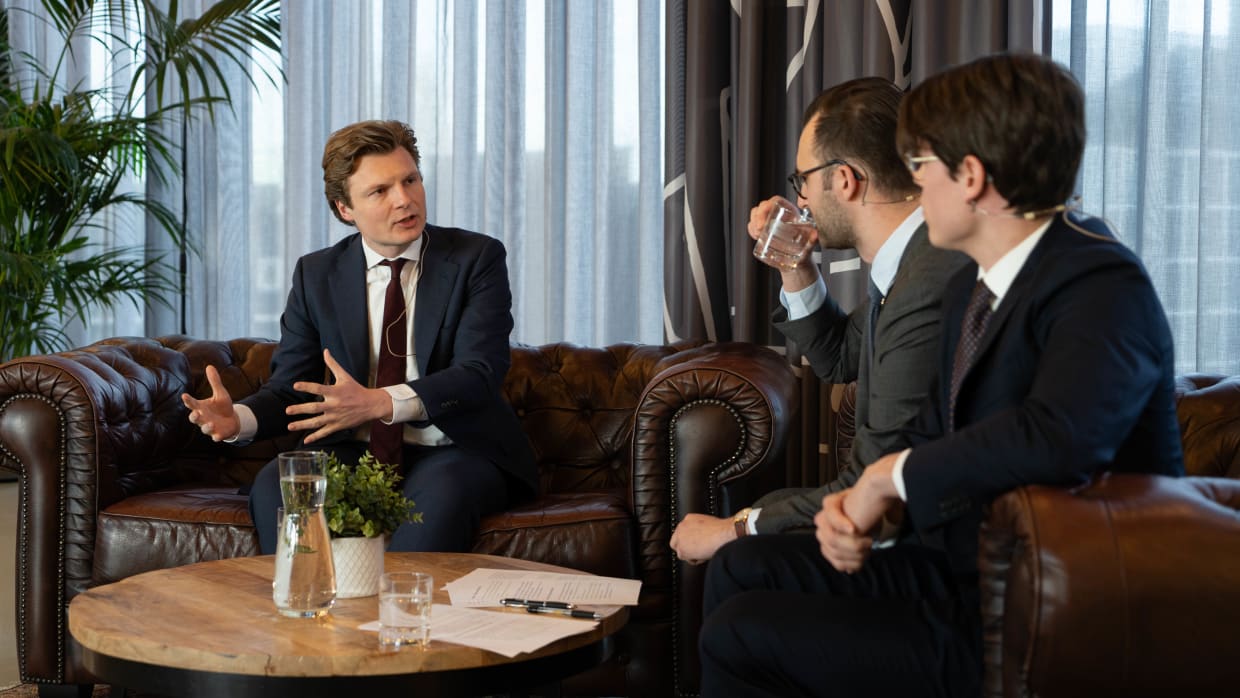
Last week's interview with the Minister of Defense was not the first time that a Room for Discussion (RfD) interview was canceled for security reasons. The discussion with the then Minister of Defense Kajsa Ollongren also suffered a similar fate in 2024. The interview had to be postponed twice due to security threats. Last year, a discussion with NATO's then-highest-ranking military officer, Lieutenant Admiral Rob Bauer, was also canceled due to a demonstration.
UvA board chair Edith Hooge called it on LinkedIn “unacceptable and shameful that a group of students and staff [...] made a discussion organized by students impossible.” How will the public discussion platform continue now that, according to Hooge, “open, free debate has been sabotaged?” Can the platform still guarantee its objective of providing an opportunity for the free exchange of ideas on social issues?
Difficult balancing act
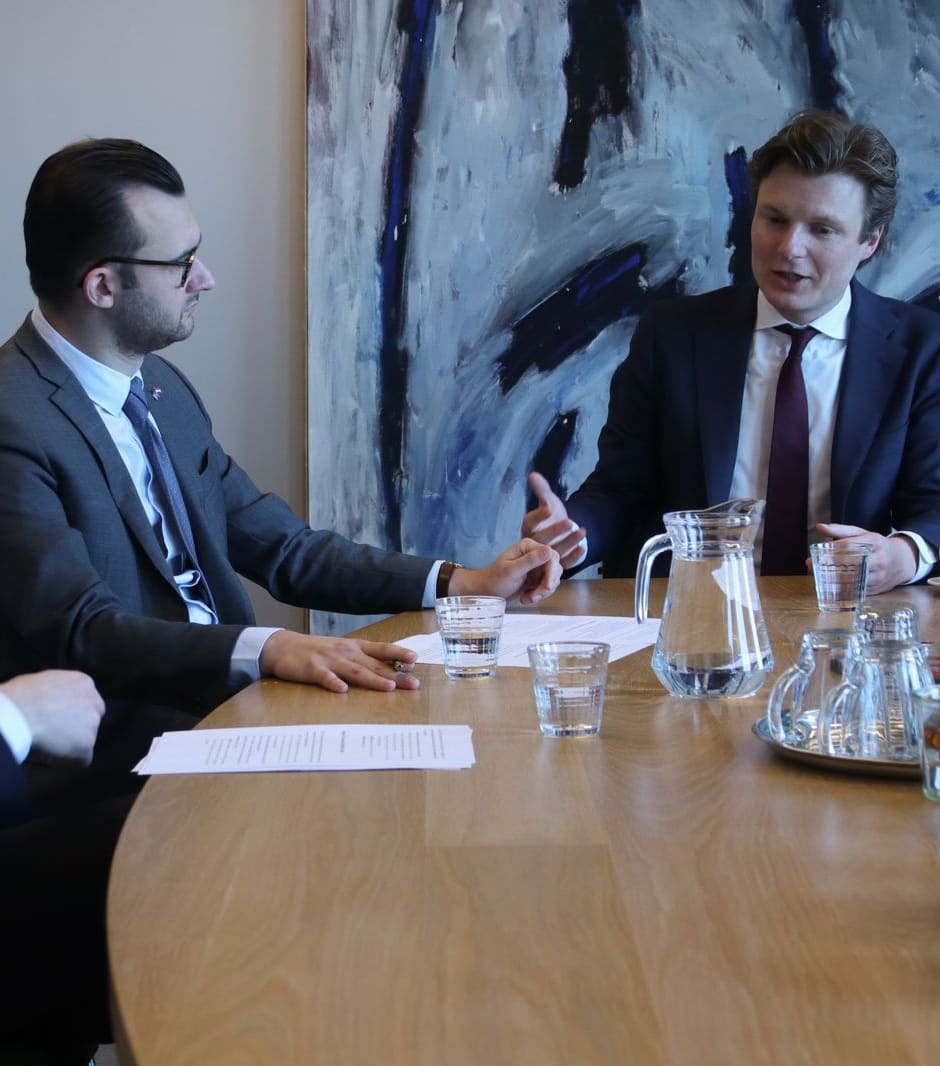
RfD host and organizer Sean Cotter-Lem admitted that they saw the chance that the conversation with Minister Brekelmans could go wrong. That is why RfD, together with the university, had drawn up a protocol in the run-up to the interview in which possible scenarios were outlined. According to Cotter-Lem, the RfD organization made the decision to break off the discussion when the situation became untenable: “We agreed in advance that we would take the lead in seeing when it became impossible to continue the interview.”
“At universities you should be able to exchange ideas openly. It is very unfortunate that this has been made impossible,” Minister Brekelmans wrote after the canceled interview via X. But according to Cotter-Lem, ”demonstrations are part of the open exchange of ideas.”
Despite this difficult balancing act of free democracy and debate disturbance, Cotter-Lem believes that there is still room for open discussion at the University of Amsterdam. “Yes, of course, we would like to continue talking to people who have criticisms. But, as we have seen, this time no discussion was possible. However, as a matter of principle, we always remain open to discussion. I think it is important that we continue to discuss important social issues. It makes no difference to us whether we agree or disagree with our guests.”
Not shying away from debate
However, this raises the question of to what extent open debate is really possible when it appears to be impossible time and time again for RfD. Shouldn't the RfD platform adapt? “I wouldn't call it adapting,” says Cotter-Lem. “The tensions that an interview can cause is something we always discuss with the university and security before an RfD interview.” The suggestion to hold RfD in a more private setting from now on, as happened after the interview with Minister Brekelmans was suspended, is also not a solution, according to Cotter-Lem.
Cotter-Lem and the other organizers of RfD will not avoid controversial speakers to prevent demonstrations: “Precisely questions surrounding war and peace affect the world and the Netherlands. To ignore that because it might be inconvenient is not the right method for us to have a free exchange of those ideas. We are not going to avoid discussions.”
Despite all the commotion, Cotter-Lem remains optimistic about the continued existence of the democratic culture of dialogue at the university: “I am hopeful because we see that the free exchange of ideas is incredibly important, especially at a university. There are always people who want to engage in conversation and hear ideas. We always want to create that democratic environment. We want to have an open discussion that is accessible to students. We are a platform by students for students. That will never go away.”