Young people relatively often the victim of sexual violence: “There is a sense of discomfort”

Young people between 18 and 24 are relatively often victims of physical sexual violence, recent figures from the CBS show. Consent at UvA is trying to bring about a culture change at the UvA, but finds that it is not that easy. “Students, for example, cannot make formal complaints against fellow students.”
At the end of 2024, a comprehensive report by the Central Bureau of Statistics (CBS) showed that young people in the 18-24 age group were the most frequent victims of physical sexual violence of all age groups. This is exactly the age group that students also fall into. How common is sexual physical violence at the university and specifically at the UvA?
The latest known figures from Argos, show that the number of reports of sexual transgressive behaviour on Dutch universities increased between 2019 and 2022: from 141 to 300. The Centre for Sexual Violence reports that one in 10 female students experience rape while studying, as do one per cent of men.
Going back to the recently published figures from the CBS, it shows that in 2024, almost 10 per cent of young people aged 18 to 24 had been touched in an unwanted sexual way in the past 12 months and over 5 per cent had been kissed in an unwanted way. These percentages are the highest among all age groups. Looking at incidents from the past five years, both percentages double. This age group is also the most frequent victim of unwanted sexual intercourse.
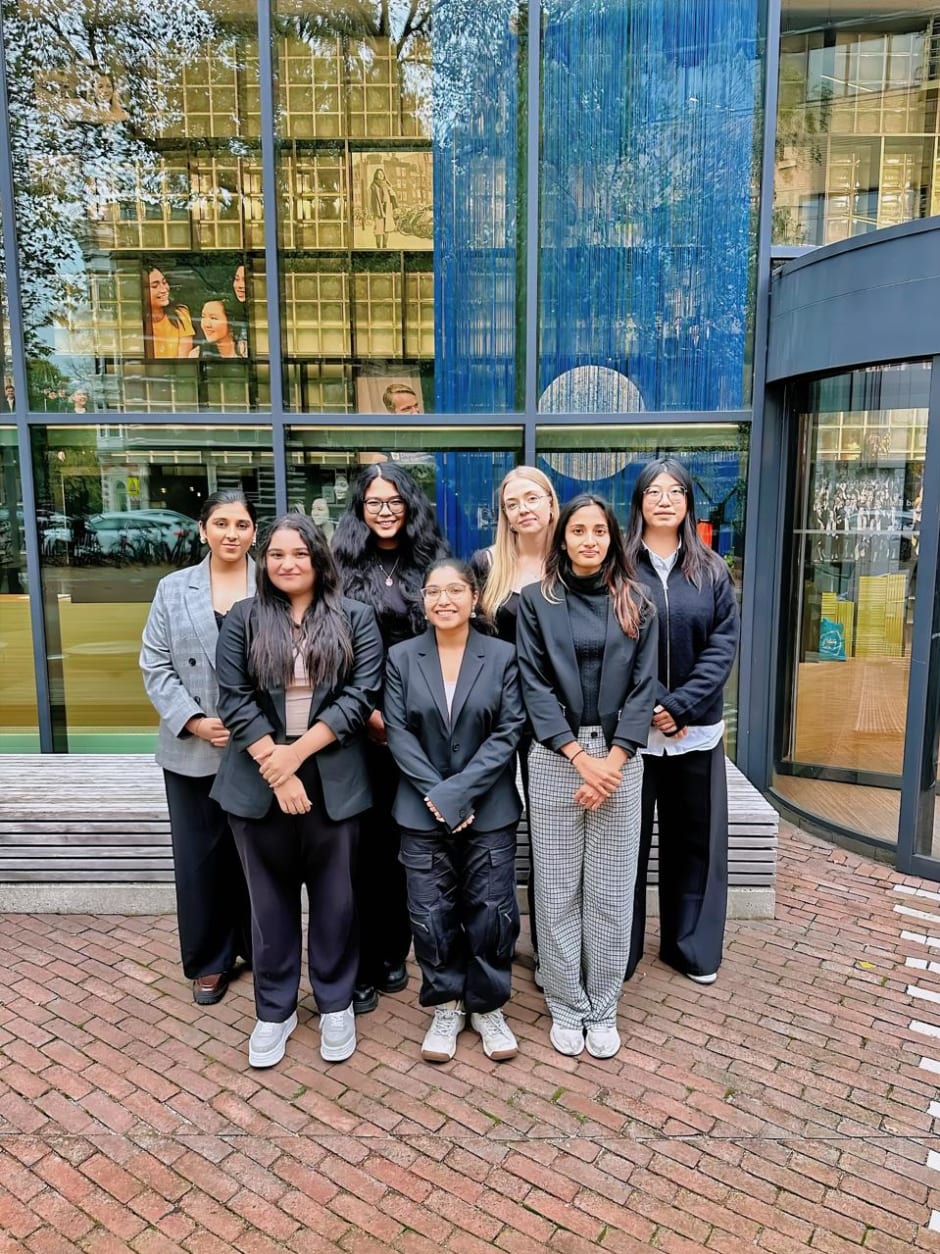
The figures above come as no surprise to Consent at UvA, a student organisation dedicated to addressing sexual abuse and related violence in and around the university. Founded in 2019 as the UvA branch of Stichting Our Bodies Our Voices Foundation, the organisation aims to counter sexual abuse at UvA through workshops, events, trainings and a newsletter. The organisation does not have recent figures, but cites 2019 numbers from the UvA itself showing that 4 per cent of students have been victims of sexual transgressive behaviour on campus or at a student union.
Exact figures
It is difficult for the organisation to make the number of cases of sexual violence at the UvA concrete. “Despite the fact that this is a common problem, we cannot offer exact figures,” says vice-chair Suhani Acharya. “Because of the ambiguity around the definition of sexual violence, it is complicated to report on it, even if it does happen.”
“And those are only the reported incidents,” explains chair Scarlet Thant Thiri Kyaw. “Only the most extreme cases are reported, but those figures do not tell the entire story. There is still a culture of catcalling and sexist jokes. Because the university is not exactly known for its responsiveness, people become more reluctant to report such incidents.” So where does this alleged passivity of the UvA manifest itself through? “Students cannot, for example, file formal complaints against fellow students. Because there are gaps like this, many people do not know which university channels to report to if something undesirable happens, and so consequences often do not follow.”
They themselves prefer not to speak of sexual abuse, but of sexual violence, Thant Thiri Kyaw explains. “Because that is a broader term. Our focus is on the culture around it and the underlying causes of sexual violence, sexual misconduct, and also the culture of victim blaming. We spread awareness about alcohol and consent and the intersections between them, and want to be a safe space for people who want to talk about their experiences.” Acharya adds: “For us, sexual violence is anything where consent is violated, making someone feel uncomfortable and put in a vulnerable position. It can be anything from catcalling to cyberstalking.”
Acharya: “Because many people are still so unclear about terms like sexual violence, sexual abuse and sexual assault, there is a lack of awareness when people experience it themselves. There is a sense of discomfort, but you cannot always articulate it properly, which is why we try to make it clear that these are indeed real issues that need to be talked about.”
Sexual transgressive behaviour is alive and well among students worldwide: international students from the UvA, the University of Salzburg and Eötvös Loránd University (Budapest ed.) unanimously chose ‘transgressive behaviour’ as their main theme. This is evident from a series of workshops by theatre group Theater der Unterdrückten Wien, which developed a theatre performance on sexual harassment together with the aforementioned universities. According to political scientist Liza Mügge, who is leading the project from the UvA, transgressive behaviour is something of all times, but it is new that students are naming the subject so broadly.
On Thursday 16 January, the performance will play at cultural centre Crea. There, students will perform skits from student life. The audience can intervene by clapping during a scene if they find an action transgressive and take the role of the actor. Through this form of interactive theatre, the makers aim to come up with actual recommendations to tackle transgressive behaviour. Policymakers such as the Central Diversity Office and the Confidential Advisor of the UvA and the municipality of Amsterdam are also present for this reason.
Culture change
Influencing policies is difficult for a student organisation, according to Thant Thiri Kyaw, so Consent at UvA focuses mainly on culture change. Yet even that does not happen automatically, as getting the male part of the university on board proves to be a challenge. “We want to get rid of the frame that sexual violence is only a problem faced by women,” explains Acharya. “Anyone can become a victim of sexual violence, and it is important for people to be aware of that. We want to approach men not just as potential perpetrators, but also inform and empower them in case they face uncomfortable situations themselves.”
Still, the question remains whether such meetings substantially affect the behaviour of tipsy 19-year-old boys at student parties. Thant Thiri Kyaw responds: “By being increasingly active and visible at the university, we want to instil a sense, even in people who don’t participate in our events themselves, that this is an important issue. We also hope to educate and integrate into our community those who may be at greater risk of engaging in sexually transgressive behaviour themselves. For example, by holding workshops for bystanders, where people learn what they can do when they witness inappropriate behaviour.”
Because despite the fact that Thant Thiri Kyaw says the Netherlands is a hugely progressive country, she feels there is still a lot to be gained in this area. Figures are lacking, but she says that the members of Consent at UvA see that things often go wrong at parties of student associations, or at places of entertainment frequented by many students. “That’s why sober people should always be present to make sure everything goes safely.”