How heat-resistant is the Dutch forest ant?


It is not just people who are suffering the consequences of a warming climate; animals are too. In the forests around Wageningen, UvA researchers from IBED are investigating how ants cope with drought and extreme heat caused by climate change. “Without ants, there is no forest.”
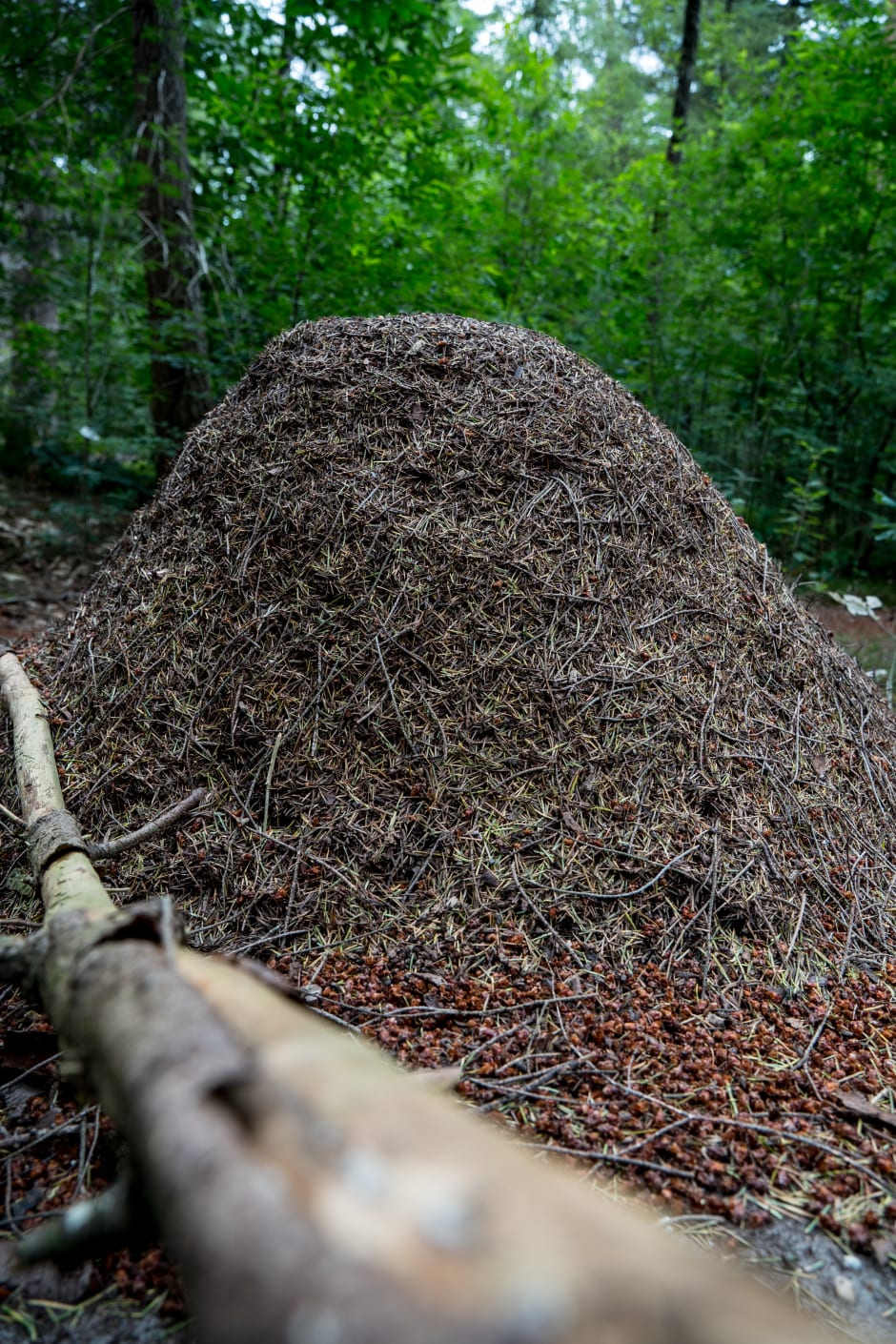
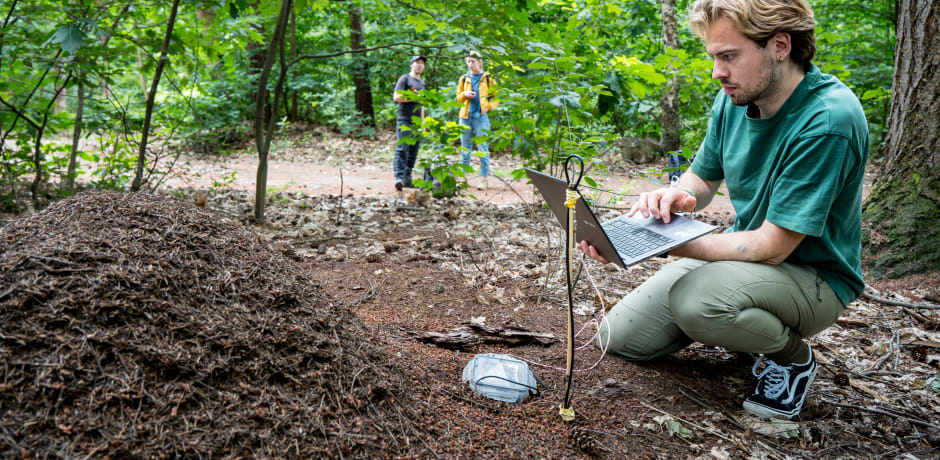
During the extreme heatwave at the end of June, there was a great deal of focus on heat stress in cities. But the heat is just as intense in the woods. “This is an anthill in the Veluwe,” says UvA student Timo van Wijk, showing a video on his phone. At the edge of a sand drift lies a pile of twigs and pine needles, right in the sun. A thermometer shows the temperature on top of the nest: 69 degrees Celsius.
Ants do like a bit of warmth – which is why they build nests to retain heat during cold winters – but if the temperature rises too high, it becomes too hot outside the nest and ants can fall into a heat coma. This is a paralysing condition in which the ant loses control of its muscles. It can then no longer leave its nest to forage for food, which in the worst-case scenario can lead to the extinction of the colony.
Climate change is causing extreme weather conditions such as heatwaves and droughts to occur more frequently. Science still knows very little about whether ants can adapt to this. That is why researchers from the UvA are investigating, from March to October, how Dutch forest ants cope with heat and drought stress. On a cloudy Wednesday in July, Folia joined the researchers to visit various ant mounds in the woods on the outskirts of Wageningen.
Guardian of the forest
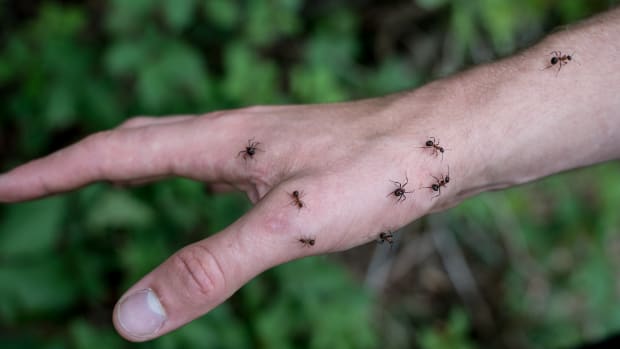
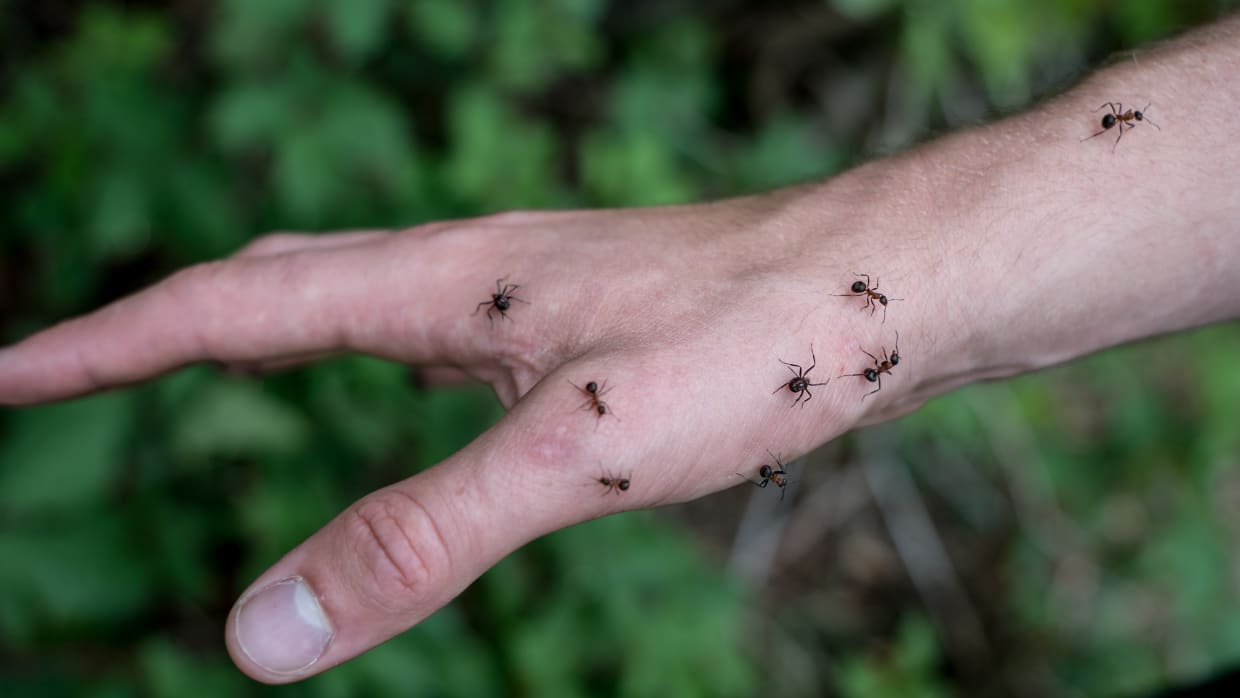
Two students are waiting at the car park in their fieldwork outfits: cargo trousers with long socks pulled up over the trouser legs. This is to protect them from the ants, which like to “walk along the edges and crawl in everywhere”. After a short walk into the woods, the first anthill comes into view: a mound of twigs and pine needles teeming with ants.
Bachelor’s student Timo van Wijk, who is volunteering during his summer holidays, notices that the ants are less active due to the cloud cover. During previous test sessions, the mounds were teeming with even more ants and there was no escaping them for the researchers. “I always tuck my shirt tightly into my trousers, but I still always find them between my buttocks.” Van Wijk shows a video from a few weeks earlier in which the ants are crawling all over his body and making their way inside through the neck of his shirt.
“This is the bald red wood ant, Formica polyctena.” Master’s student Jim Zonneveld carefully holds an ant that secretes a sour liquid – known as formic acid – in self-defence. Three species of wood ants live in the Wageningen woods: the above-mentioned, red-bellied forest ant (Formica polyctena), the hairy forest ant (Formica rufa) and the black-backed forest ant (Formica pratensis). Even though these are native species, many wood ant populations have been placed by humans in the last century to help young production forests grow and protect them against pest insect outbreaks.
Ants are, in fact, vital to the forest’s ecosystem, explains Zonneveld: “Without ants, you have no forest.” Ants protect their habitat against all manner of pests, such as caterpillars and beetles, and serve as a food source for larger insects and birds. Ant nests are also home to a great many other creatures, such as woodlice, beetles and fungi. “Ants keep livestock,” says Zonneveld. Ants “milk” aphids by drumming their legs on the aphid’s abdomen. This is, incidentally, a reciprocal relationship: they protect the aphids in exchange for the sugar-rich honeydew that the aphids produce.
(Text continues below the image.)
Climate change is causing temperature differences to become more pronounced. Purebred ants are often resistant to either the heat or the cold, whereas hybrids are better able to withstand both conditions, as UvA ant researcher Jonna Kulmuni, a colleague of Patrick Krapf, discovered in Finland.
Kulmuni and Krapf suspect that there are potential hybrids in the Netherlands. This is likely because climate change is shifting the ants’ habitats, causing the paths of species that “may not have encountered each other for hundreds of years” to cross once again.
According to Krapf, hybrids may better adapt to higher temperatures under certain conditions, yet hybridisation can also be harmful. For example, hybrids can be infertile. “Under such circumstances, hybridisation may be a dead end.”
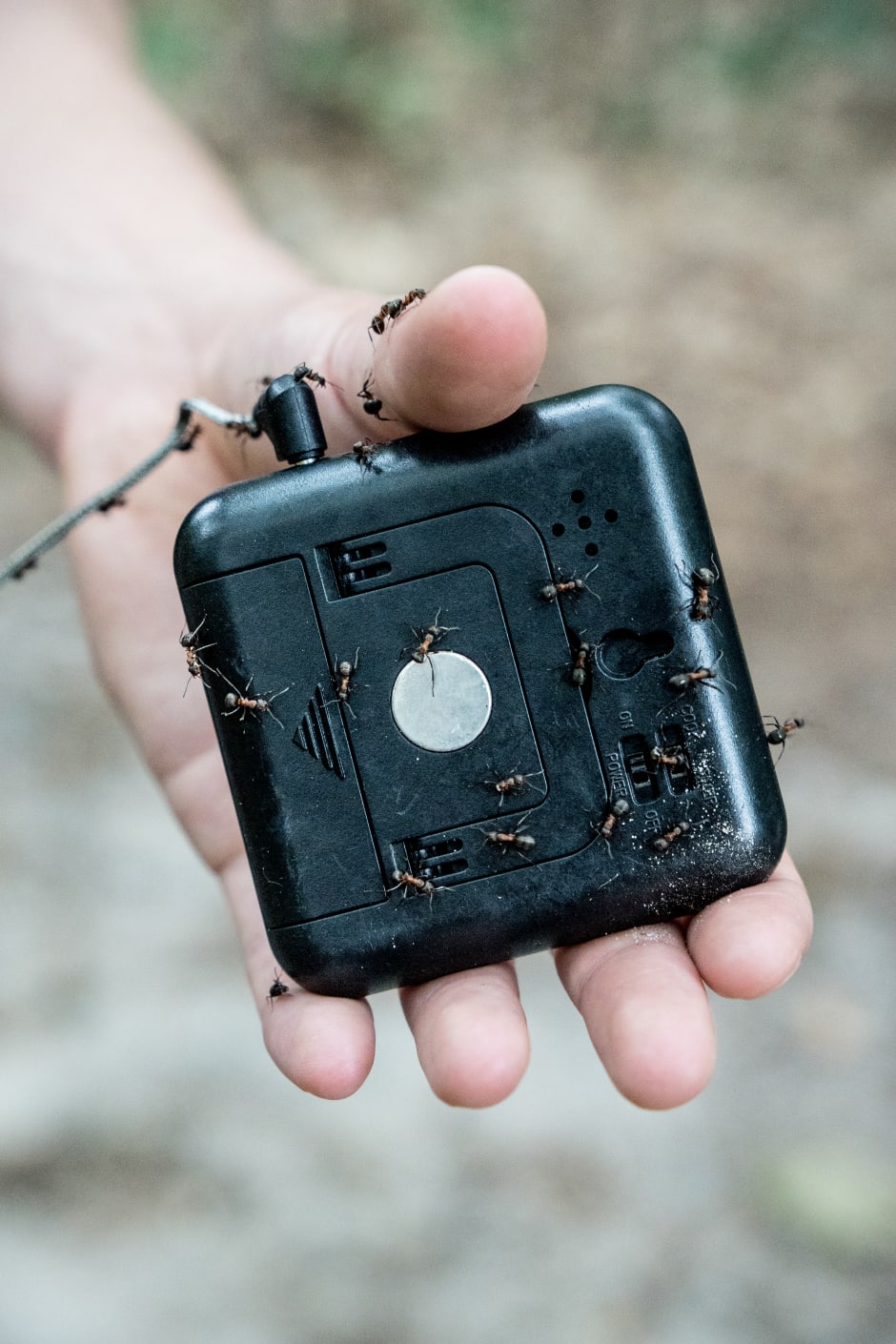
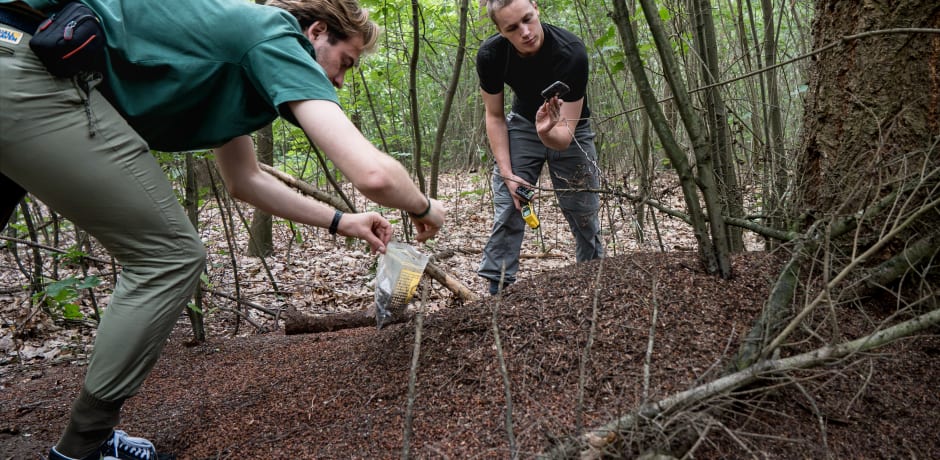
The researchers measure both the internal and external temperatures of the nest, as there is quite a difference between the two. This is because ants are very good at regulating the temperature inside their nest. For example, ants warm their bodies in the sun and then transfer that heat to the nest. To seek cooler conditions, ants dig deeper tunnels. “During warm days, the inside of the nest usually stays below thirty degrees, while in colder days, the nest can remain surprisingly warm,” says Zonneveld.
The ants can regulate not only the heat inside their nest but also within their own bodies. This is because ants have a waxy coating on their skin which can protect them from heat and dehydration and adapts to changing temperatures. Zonneveld: “We see in the field that the ants adapt to the climate. If it’s warm for a while, the waxy coating adapts and they can cope much better with that heat.”
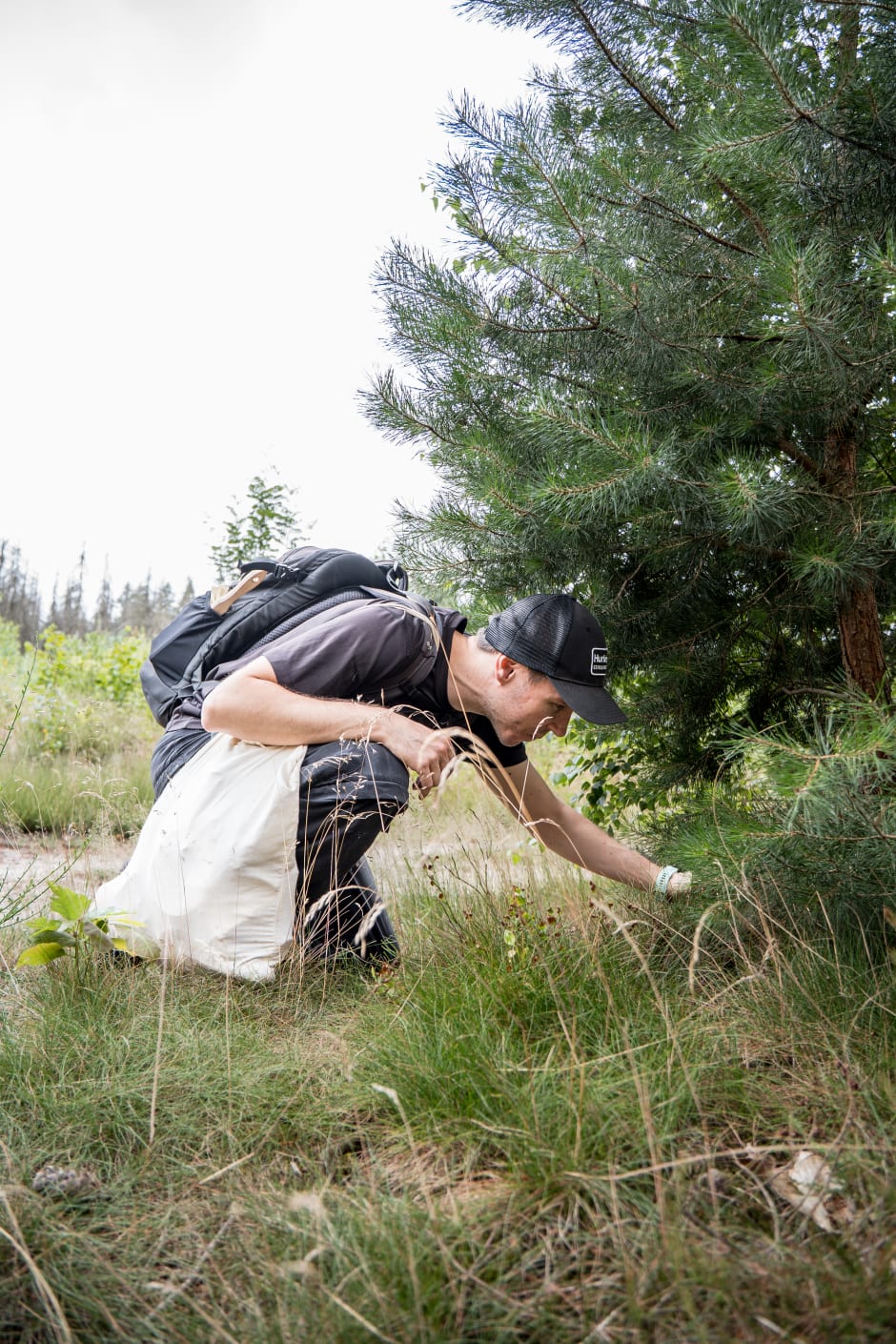
In addition to taking temperature readings, the researchers also collect ants in resealable bags every three weeks and take them to the lab at the UvA. There, the ants are divided into two groups: one group is kept at the same temperature and humidity as the nest during that week, whilst the other group is kept at a temperature 4 degrees higher – the expected temperature rise by the year 2100.
(Text continues below the image.)
Relief
“So far, we haven’t seen any difference between the two groups of ants,” says Patrick Krapf, a Marie Skłodowska-Curie postdoc fellow at the UvA. “The initial results therefore suggest that these ant species are able to quickly adapt well to different temperatures. The threshold for heatstroke in wood ants was 45 degrees in Finland, but we’ve seen that ants in the Netherlands continue to function even at higher temperatures. That’s actually a relief.”
It is still too early to conclude that these ants are resilient to climate change, as the research will continue until October. The research team is also particularly interested in how ants adapt to extreme and sudden temperature fluctuations. “The recent extreme heat would have been ideal for a measurement,” says Zonneveld, sounding somewhat dejected, whilst searching for the next anthill. Unfortunately, the heatwave at the end of June did not fall within the researchers’ three-week measurement schedule. So, for the time being, they will continue taking measurements. Zonneveld: “Actually, we’re hoping it will get that hot again in exactly three weeks’ time. It would be great if we could study the ants during such an extremely hot period.”