
The smooth tomato: how losing its hair let the insects in

Tomato plants are covered with a hairy layer that normally would act as a trap for insects. Physicists at the University of Amsterdam have captured images of how insects become entangled in the hairs and discovered that supermarket tomatoes could learn a thing or two from their wild ancestors.

The wild tomato was once a small, hairy, green fruit. Unattractive, not only to humans but also to insects. The thick layer of hairs kept insects and other pests at bay through both its smell and toxic substances.
After years of breedingCrossbreeding and selecting plants with the desired characteristics., the tomato looks like we know it from the supermarket: red, large and, thanks to decades of breeding, stripped of its hairy coat. This also makes it more susceptible to insects and other pests. Worldwide, almost 30% of plant crops are lost to pests. Breeders and researchers therefore want to know how we can make tomatoes unattractive to insects again without sacrificing all the newly acquired characteristics.

To answer this question, Petra Bleeker, associate professor of plant physiology at the University of Amsterdam (UvA), started a postdoc at the UvA some twenty years ago. She investigated which scent wild tomato plants use to keep insects at bay. She introduced the genetic material responsible for this into cultivated tomatoes. “It worked, but the cultivated tomato produced too little of the scent to be truly repellent,” Bleeker explains in her office at the Swammerdam Institute for Life Sciences (SILS).
So Bleeker continued to investigate how tomato plants spread this scent: where were the bottlenecks? Was the scent not being produced in sufficient quantities in the plant, or was it not being transported to the outside?
Hairy defence
The dispersal of scent has everything to do with the hairy layer on the tomato plant. These hairs, called trichomes, are glands that releases scent. At the microscopic level, the trichomes of the tomato plant look like balls on sticks. The balls are filled with a kind of oil that stores aromatic compounds – chemicals that spread odours. Tomato plants are not the only vegetables with trichomes; other plants that emit odours, such as herbs and citrus fruits (where they are found internally), olive leaves and pine trees, also have them.
The trichomes can therefore keep insects at bay by their smell and also have a second trick up their sleeve. When insects land on the balls, they explode like a booby trap and the insect gets stuck in the sticky mass with its legs. “We have known for some time that trichomes can repel insects,” says Bleeker. “But how the balls explode on contact with insects, rather than being triggered by rain or wind, was still unknown.”
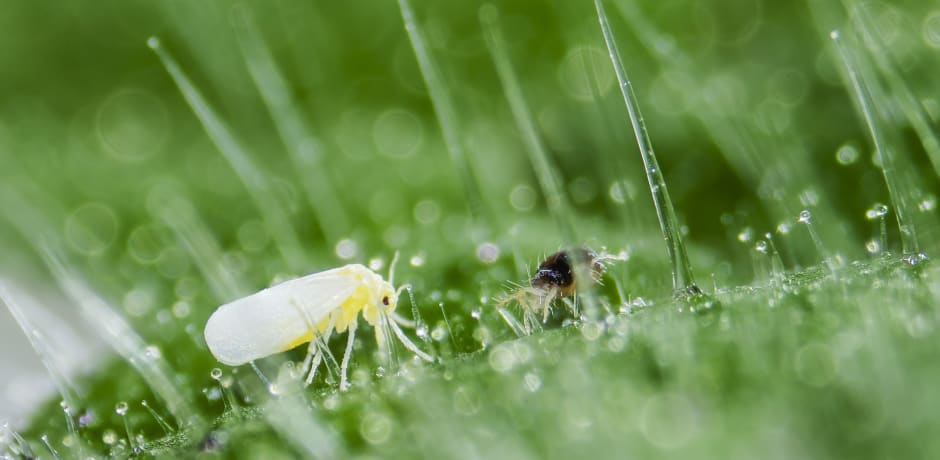
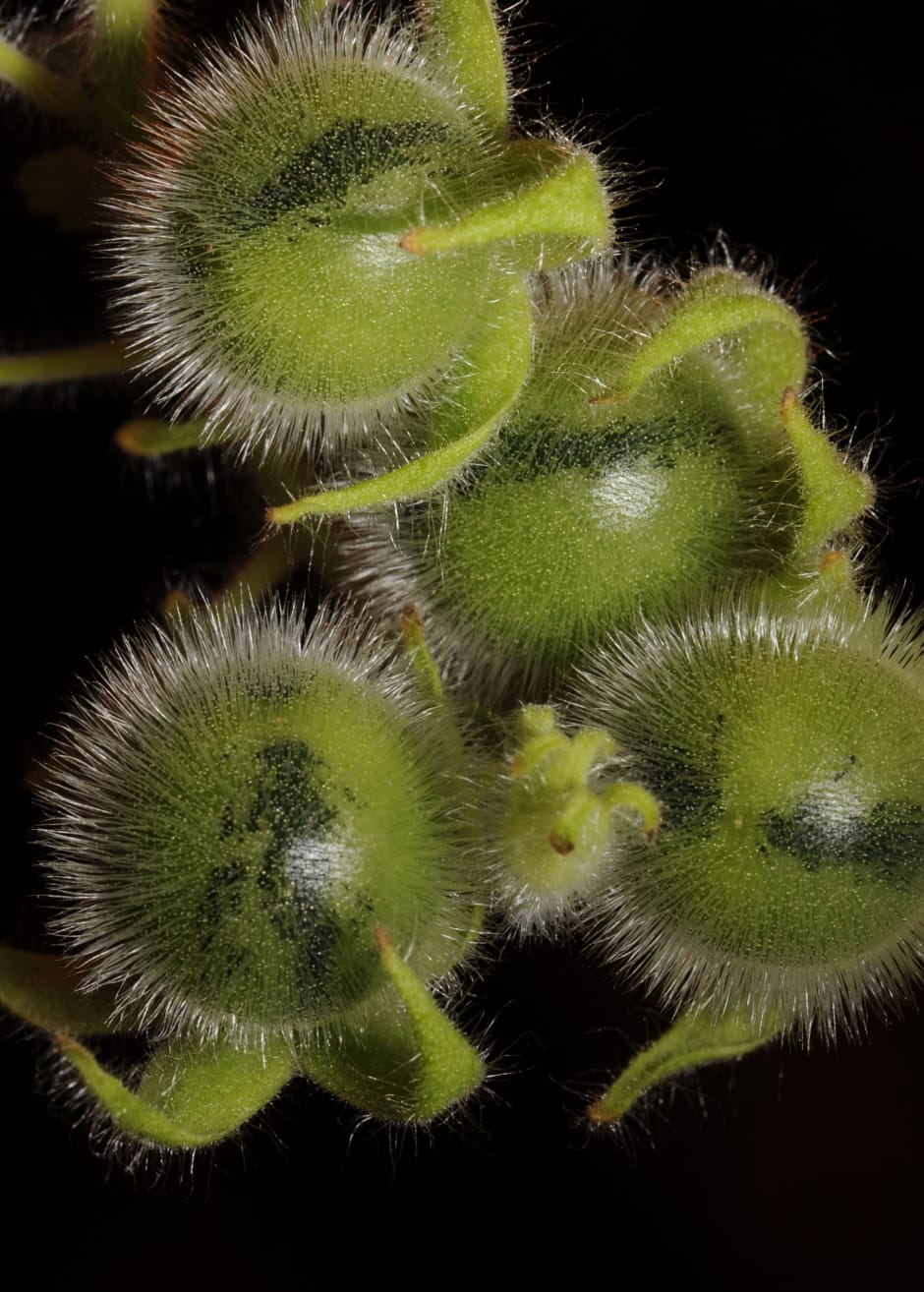
UvA physicist Maziyar Jalaal and his PhD student Jared Popowski used a high-speed camera to record how thrips larvae, a pest that attacks tomato crops, move on a tomato leaf. They published their findings in the Journal of Experimental Botany. There, they recorded for the first time how thrips come into contact with a bulb, causing it to burst open within a millisecond.
They also discovered that the glands of wild tomatoes are under much more pressure, which means that even less force is needed to burst them open. The contents of the glands in wild tomatoes are also often stickier and more toxic than in cultivated tomatoes. This makes wild tomatoes so resistant to pests that the use of pesticides is actually
unnecessary.
Not the holy grail
This discovery is relevant for growers because they can introduce the genes responsible for the trichomes in wild tomatoes into cultivated tomatoes. However, it is not the holy grail for tomato cultivation, says Bleeker: “Ultimately, you have to focus on different strategies at the same time. This includes ensuring that the plant produces toxic substances, growing tomatoes alongside other crops that are more attractive to insects, and using natural pest control methods.”