Should Museum Vrolik change its name?

The new exhibition in Museum Vrolik is about the future of human remains with a colonial background. Part of the collection consists of stolen and racialised skulls. The museum is now also asking itself a question: can the name Museum Vrolik remain? “Keeping the name at all costs is, with today’s knowledge, no longer self evident.”
Museum Vrolik is busy during the May holiday. The anatomical museum in Amsterdam UMC holds more than 10,000 anatomical and medical objects that can only be seen in a few other places. From foetuses in preservation fluid, full skeletons, to the bones of the most exotic animals. But anyone who reads the descriptions carefully will learn that part of the human remains has a colonial background, including material collected by the museum’s namesakes, Gerardus (1775-1859) and Willem Vrolik (1801-1863). In the new exhibition Verbeeld je, 46 stories are told about the remains of people who are trying to find their way home.
Father Gerardus (1775 to 1859) and son Willem Vrolik (1801 to 1863) were both professors of medicine at the Athenaeum Illustre, the predecessor of the University of Amsterdam. They were fascinated by human development and together built a large anatomical collection in Amsterdam, known as Museum Vrolikianum.
Part of that collection has a colonial background and was used by the Vroliks for racial research. After their deaths, the collection was transferred via the Athenaeum Illustre to Amsterdam UMC. Want to know more? Listen to the story of the Vroliks in the Folia podcast series De Illustere Universiteit.
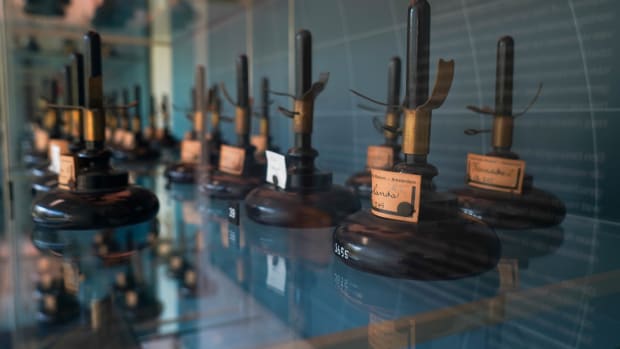
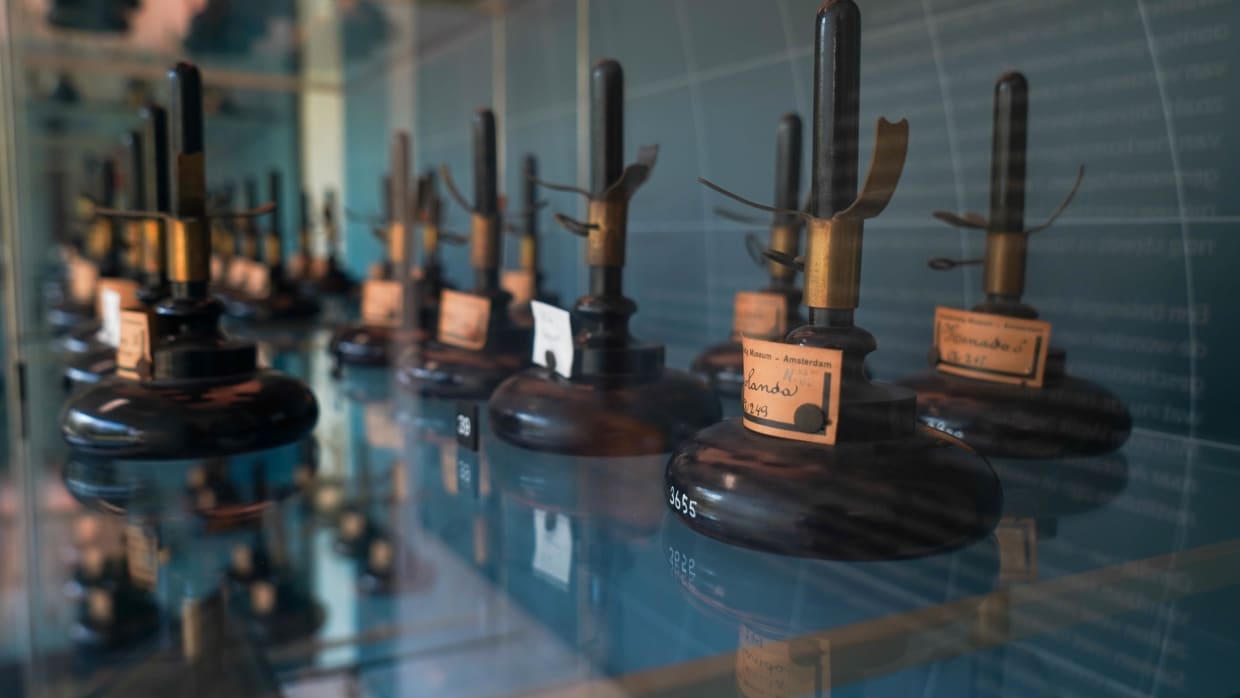
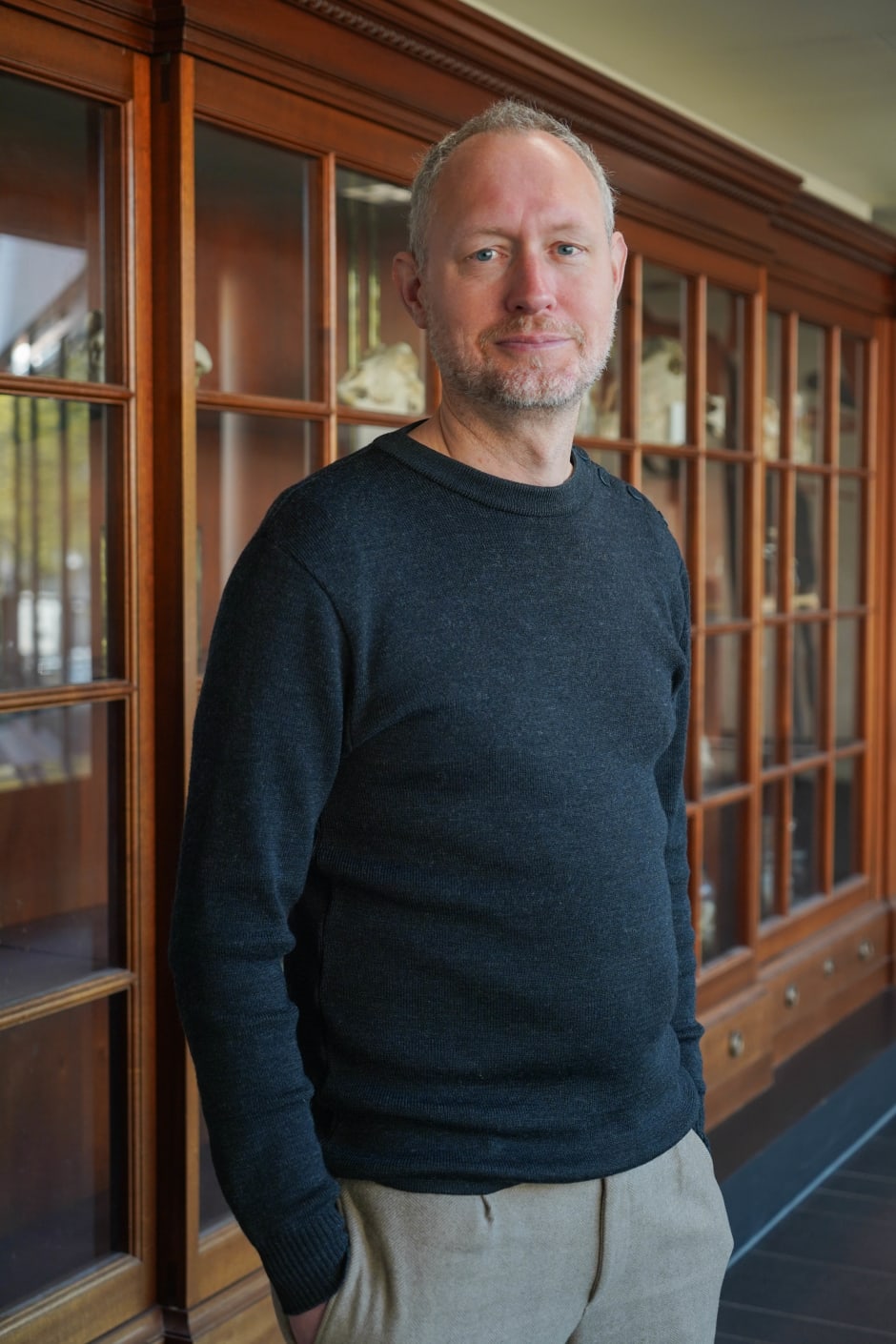
The exhibition is placed in the corridor just outside the museum and is therefore free and open to the public. Anyone expecting to see skulls or other skeletal parts will be disappointed. In a large display case there are dozens of stands and bases with stories. The choice to show nothing is deliberate, says curator and museum director Laurens de Rooy. “This way the museum takes account of communities of origin, and the focus is on the personal stories behind these stolen and racialised skulls.”
Edward Cornwall
The exhibition is the result of the Pressing Matter project of the Dutch Research Agenda. In this project, museums and experts jointly investigated the colonial origins of different museum collections. For Museum Vrolik, this research has reconstructed the personal stories of several human remains. Visitors can read, for example, about Edward Cornwall, an artist from the Caribbean, from Saint Kitts and Nevis, who lived in the Papenbrugsteeg in Amsterdam.
He died of a lung disease in the Binnengasthuis, after which his body was dissected and racialised. “The colonial collecting drive of anatomists such as the Vroliks has led to these human remains losing their personality or identity and being reduced to race,” says De Rooy. “With this research, we hope to help restore that humanity.”
Restitution
Alongside the exhibition, the aim is to return skulls to their countries of origin where possible. In 2024, fifteen skulls were returned to the inhabitants of the Tanimbar Islands in Indonesia. Whether restitution is possible depends on the level of detail in the provenance research and the political will of the countries involved, says De Rooy. “Ultimately, it must always be possible for communities to bring their ancestral remains back home, so they can find a final resting place there.”
The provenance research has led the museum to publicly question whether the name Museum Vrolik still fits. The name refers to the anatomists Gerardus and Willem Vrolik, who held racist views and used colonial networks for their research. Five years ago De Rooy told Folia that he was not in favour of a name change, but he has since changed his view. “I have shifted on that. With the new knowledge and information I have doubts about whether we should maintain the name Museum Vrolik at all costs. Moreover, the museum has not always carried that name throughout its more than 200 year history. At one point it was called the Anatomical Museum Amsterdam.” Visitors to the new exhibition are invited to suggest an alternative name.
The exhibition Verbeeld je can be seen at Museum Vrolik until June 2027.