Can ecotourism and reforestation save the Amazon?

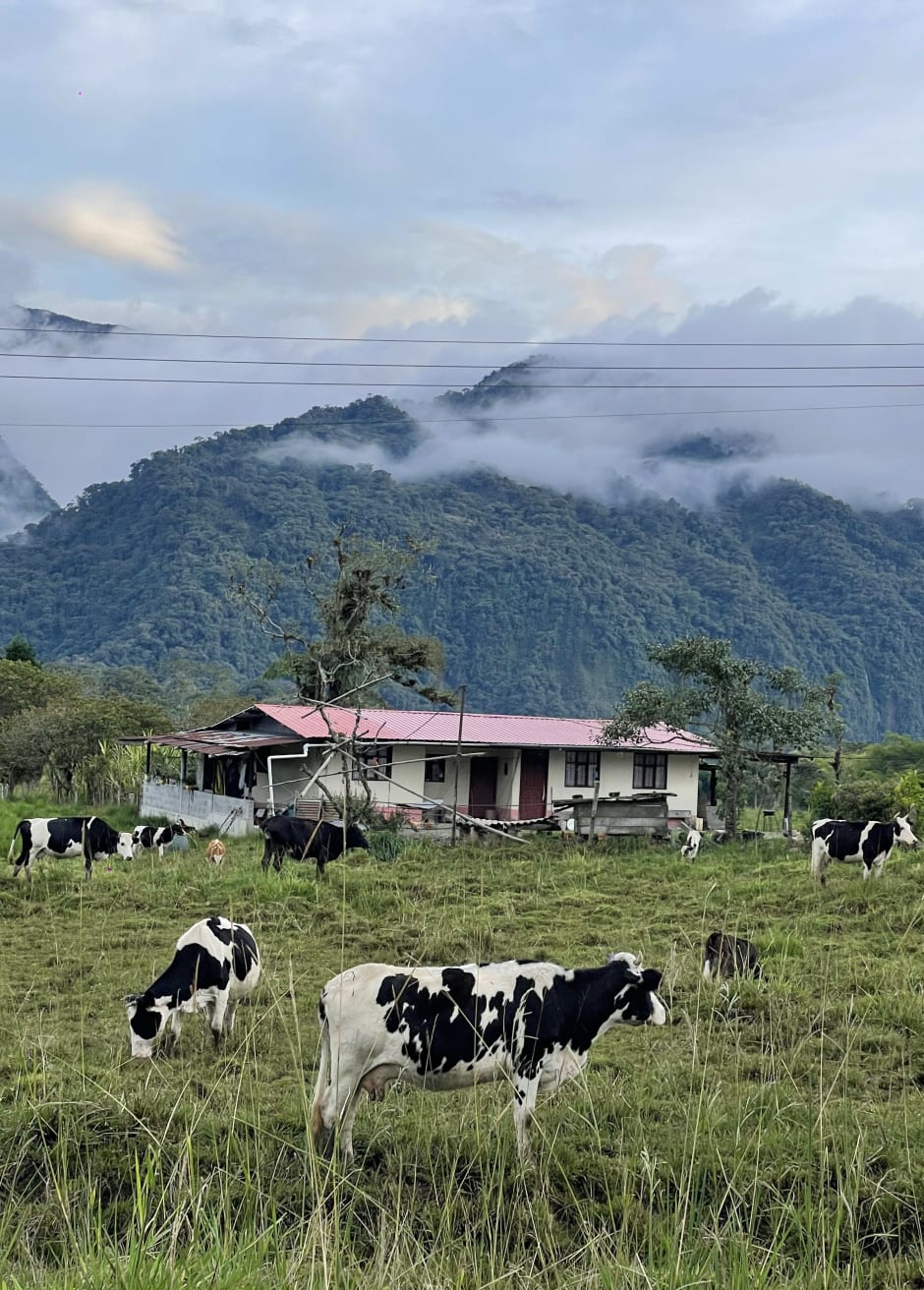
In Ecuador's Quijos Valley, grasslands and grazing cows are being replaced by palm trees and legumes. Local farmers are focusing on ecotourism and reconnecting their farmland with the Amazon region. UvA students Marleen Leek and Eva van der Veek are researching how to grow the right trees more effectively. “When you replant trees, the animals and birds will also return.”

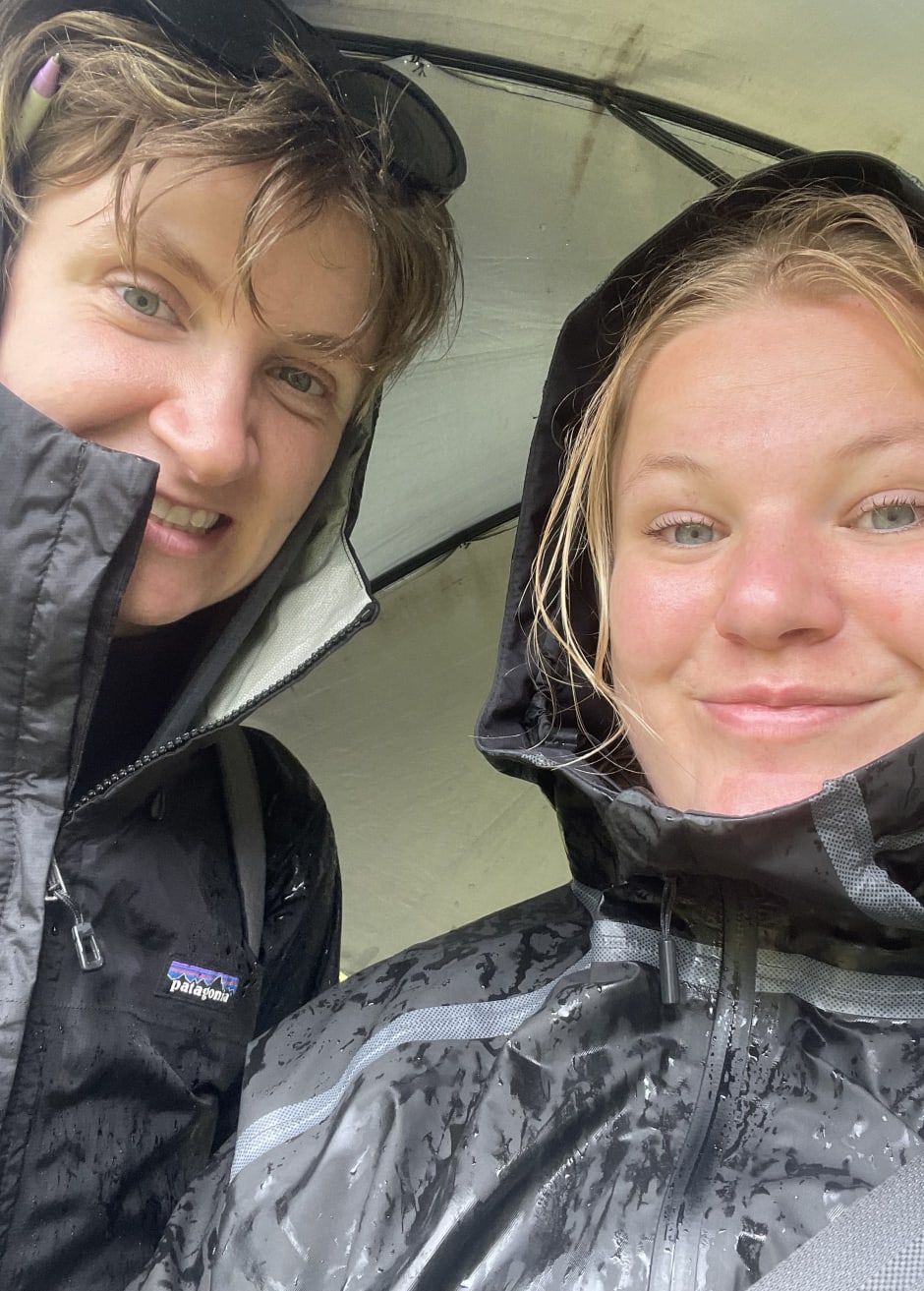
Over the course of one month, UvA Earth Sciences students Marleen Leek and Eva van der Veek are trading in their familiar surroundings in Amsterdam for San Francisco de Borja, a small village between the Amazon and the Andes mountains in Ecuador. “Life here is actually super chill,” say Leek and Van der Veek. “But we do live like hermits, you can't really go out in the evenings here.”
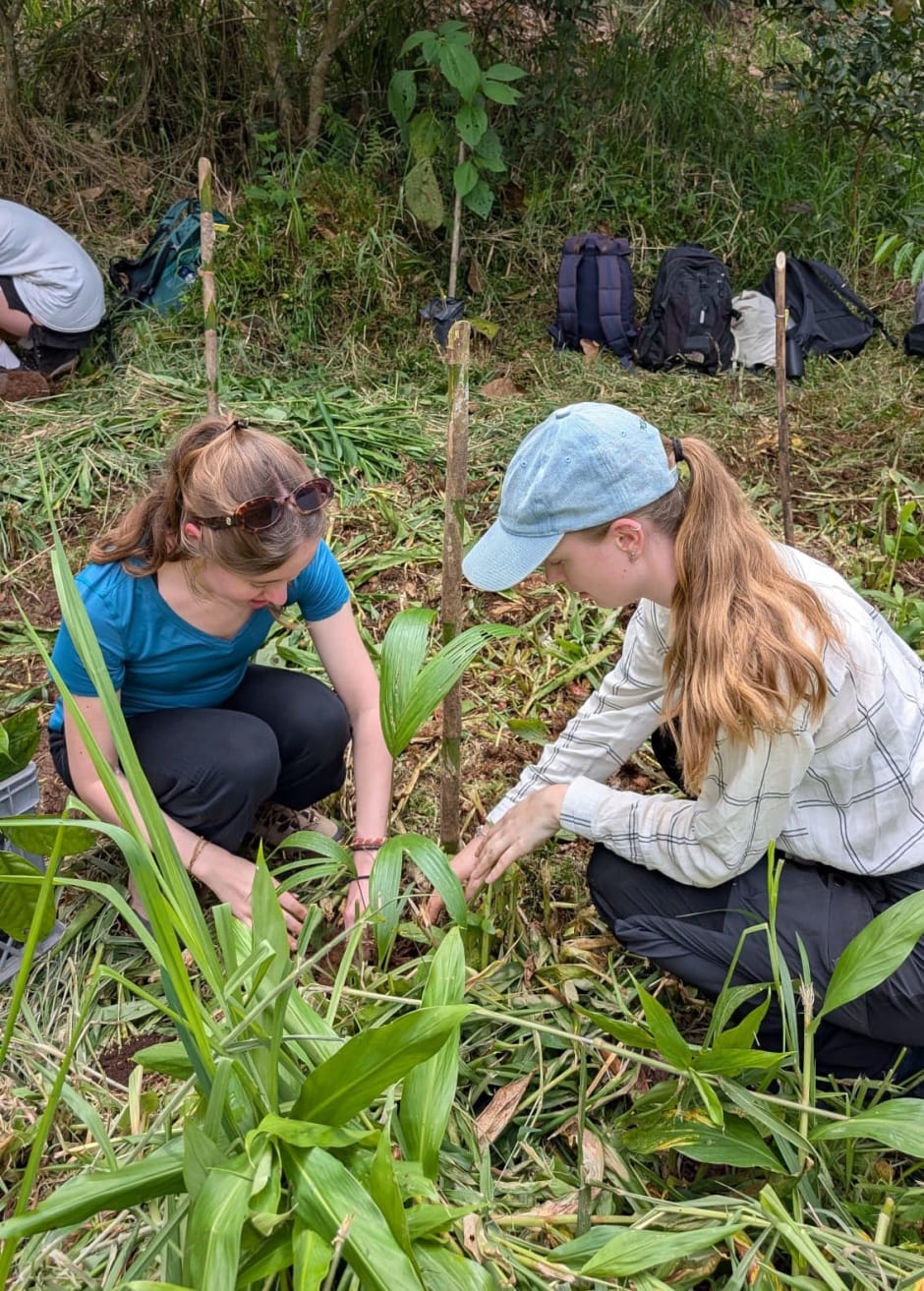
They are researching the conditions in which specific trees and plants grow well and work with the local NGO Birdwatchers, which plants trees free of charge on local farmers' land to reconnect their land with the large rainforest.
Reforestation is essential for the recovery and resilience of the Amazon, says UvA ecologist and teacher of the two students, Crystal McMichael. “Deforestation has resulted in little connection between the different areas in the Amazon. Planting trees expands the habitat of animals, allowing them to migrate. This ensures that the rainforest is better protected against future changes such as drought, forest fires and human influence. It's just like the eco-passages (such as a nature bridge connecting two nature reserves, ed.) in the Netherlands, but on a large scale.”
“Deforestation is not only caused by foreigners searching for oil, but just as much by local communities who use the land for agriculture,” says McMichael.
The colonists once brought cows with them, and now cattle farming and agriculture have been the primary sources of income for the local community for generations, explains Leek. “Actually, it”s not economically interesting for them at all. We spoke to a farmer who earns two hundred dollars a month, with his entire family. Even in Ecuador, that's well below average.”
Rare birds
By planting specific trees, animals and plants are returning to the area. This attracts birdwatchers and ecotourists, who come to the valley to see that one specific bird. “There are farmers here who have a rare species of animal or bird in their backyard that you can only find there,” says Leek.
Leek: “You see a lot of hummingbirds and toucans here.” But it was the cock-of-the-rock that particularly caught the students’ interest. Van der Veek: “It's a very funny creature. It's an orange bird with a kind of egg-shaped plume on its head. It is actually quite ugly. Every morning between six and seven o'clock, they dance and sing for a female and then they all leave again.”
Not ecology but economics convince the local community to plant trees. Farming is hard work and barely profitable. Ecotourism offers the ideal solution, explain Leek and Van der Veek. Leek: “ These tourists are often quite wealthy, so you can charge them quite a bit of money.”
“Contrary to what you might expect from mass tourism, ecotourism actually has a low impact on nature,” explains McMichael. The tourists sleep in cabins with limited facilities, explain Leek and Van der Veek. “They are not large resorts.”
Despite barely speaking any Spanish, the students are welcomed with open arms. Van der Veek: “The farmers are very kind. Angel, one of the landowners, has already invited us to a fiesta and to come over and eat worms.” The students want to try everything.
“Everyone here goes out of their way for each other,” says Van der Veek. “During the minga days, they plant trees together. It's an old custom where everyone does something for the community.”
Planting trees
Trees need to be planted. That sounds simple, but is not. “They tried planting trees for a long time without success,” explains Leek. “There has been a monoculture of grass for a very long time, which means there is little nitrogen in the soil.”
Leek and Van der Veek are investigating how they can ensure that the right plants survive. “Planting legumes prevents the trees from dying. It's a kind of natural fertilisation,” says Leek, who is investigating how nitrogen fixers, including legumes, help other plants grow better.
“The palm tree is very important, but also vulnerable,” says Van der Veek. She is researching the tree that attracts many large native birds, making it very interesting for the promotion of ecotourism. “They don't grow well in open areas. I'm looking at the trees that can surround the palm and how they provide shade.”
Great biodiversity
The project and research of the students are important for the recovery of the larger Amazon rainforest. “The Quijos Valley has the greatest biodiversity in the world. There is also great cultural diversity.” All possible forms of nature can be found here. “It is precisely this diversity that makes this the ideal area for researching the Amazon. If something works in this area, it will probably work in most other areas as well.”
The Quijos Valley is still relatively unknown, say Leek and Van der Veek. Therefore it has plenty of space for the growth of ecotourism. Nevertheless, the students expect that agriculture will never completely disappear. “The people there still need to eat,” says Van der Veek. “It would be insipid to say: get rid of all those cows and go back to eating guinea pigs.”