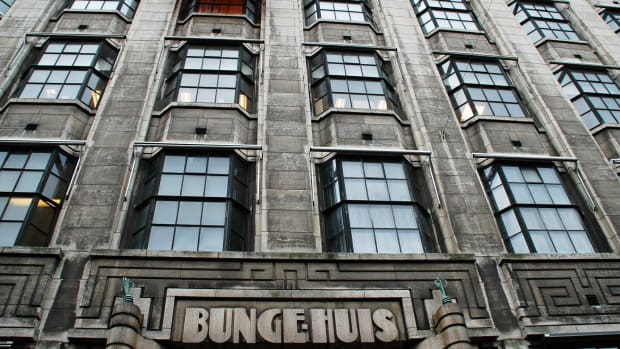
Sale | Between 20 and 10 million for the Bungehuis

The Bungehuis is up for sale. It is unknown how much the property will fetch. Professor of real estate economics Peter van Gool has valued it. “The UvA will get a bargain if it can sell it for 2,000 to 3,000 euros per square metre.”
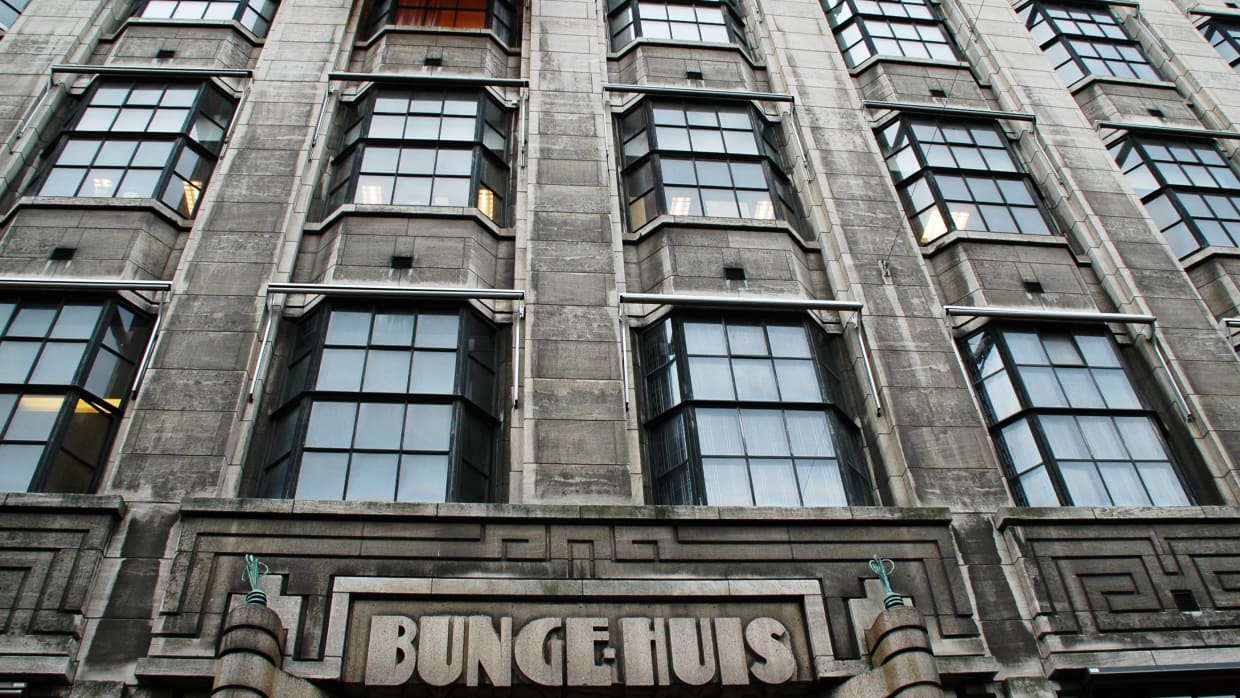
“Be realistic. The university’s accommodation must serve the productivity of education and research. Today’s students and researchers want to be able to network and share information, and that requires space for interaction and the ‘new way of working’. The building is not suited to this. And let’s be honest, this may also be the ideal moment to sell this awkward, impractical, inefficient, but also beautiful building with its status as a national monument,” says Van Gool during a tour of the building on Spuistraat.
The Faculty of Humanities will soon be moving to the City Centre Campus on the BG site, which is why the historic Bungehuis – built in the 1930s – is being sold off. The UvA is looking for a buyer for the 6,000-square-metre building. According to Van Gool, this will be done in accordance with the applicable tendering rules. “Potential buyers can submit bids during the tendering phase. Anyone can register in the first round, and in the second round, discussions will continue with the best or highest bidders. It can happen quickly, but you always have to wait and see; there may be bidders who make it through to the next round but then drop out.” According to Van Gool, the property could fetch “between fifteen and twenty million”. The UvA bought the property in 1974 for 10.5 million guilders.
Stained glass
According to Van Gool, the property has a zoning designation that is coded by the government as “Mixed 2”. Van Gool: “That means that a business or a so-called short stay, i.e. a hotel, may be established there, but not residential apartments. I would not recommend that either, because the property is not really suitable for that. For example, there is nowhere to go outside and balconies are not allowed on the façade. The building will not easily be able to meet modern residential requirements.”
Travertine walls
Van Gool is very enthusiastic about the historical value of the building, but as a building for education and research or as an office building, it has had its day, he says. “It has tremendous historical value, a beautiful courtyard, beautiful stained-glass windows and beautiful finishes, such as panelling and travertine walls. But it’s all small rooms, there are pillars everywhere and a lot of traffic space, i.e. free walking space. The staircase is beautiful, but by today’s standards, the building is far from efficient. The building also had an open central heating system, i.e. with water circulation based on thermals, without a water pump. As a result, there are still thick circulation pipes for the central heating everywhere. The insulation is also poor.”
This is also noticeable when walking around: the heating is on almost everywhere, even though the sun is shining outside. “You can imagine how much that costs. The windows are all single-glazed, which also lets in a lot of cold. Look, in several offices, they have put plastic wind and cold screens on the windows because otherwise it is too cold. You can insulate it all, but that is very expensive for such a large building.”
Although according to the current zoning regulations, the Bungehuis could also be used as an office or commercial building, but Van Gool believes that it is not really suitable for that purpose. “The building does not meet current modern networking requirements. It is often not as productive when everyone works in small rooms. Education and research today are often multidisciplinary. This works better when people share large spaces where they can network, consult and collaborate. Such a large open structure cannot be created in the Bungehuis.”
Hotel
Wherever you walk in the Bungehuis, there is always a corner or a thick pillar. According to Van Gool, it would be very costly to get rid of the “boxy character” of the building. “The Bungehuis is beautiful for those who appreciate history and fine architecture from bygone eras, but the UvA is an educational and research institution, not an institution that should want to invest in historic buildings in a location that is also outside the planned Inner City Campus. I would say: ‘Tie a bow around it and sell it.’ Don’t forget that the building is on UvA-owned land, which is rare in Amsterdam. It is very suitable as a hotel: a beautiful location in the city centre. What’s more, there are currently too few hotels, but if you wait a few years, there may be too many and you won’t be able to sell the building.”
The Bungehuis may be sold and redeveloped by project developer REB Projects, but that is not yet certain. A spokesperson for REB Projects said by telephone that the Bungehuis project is “still in the process phase”.