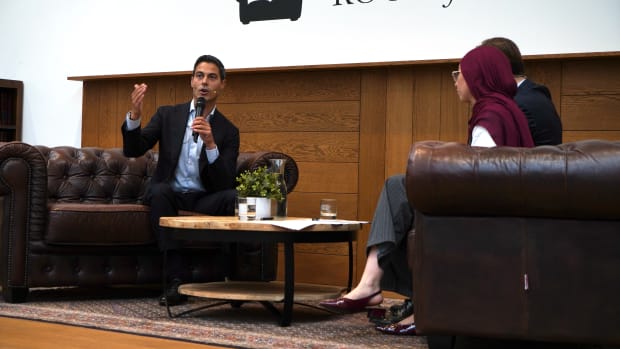
Rob Jetten’s brotherly and eloquent appeal to the nation

This week Rob Jetten of D66 won the prize for political rhetoric, the Thorbecke Prize. Professor of Modern European Culture Josephine Hoegaerts recently wrote a book on rhetoric through the centuries. “Jetten has something slightly fatherly, but not the convincingly paternalistic tone of the nineteenth century.”
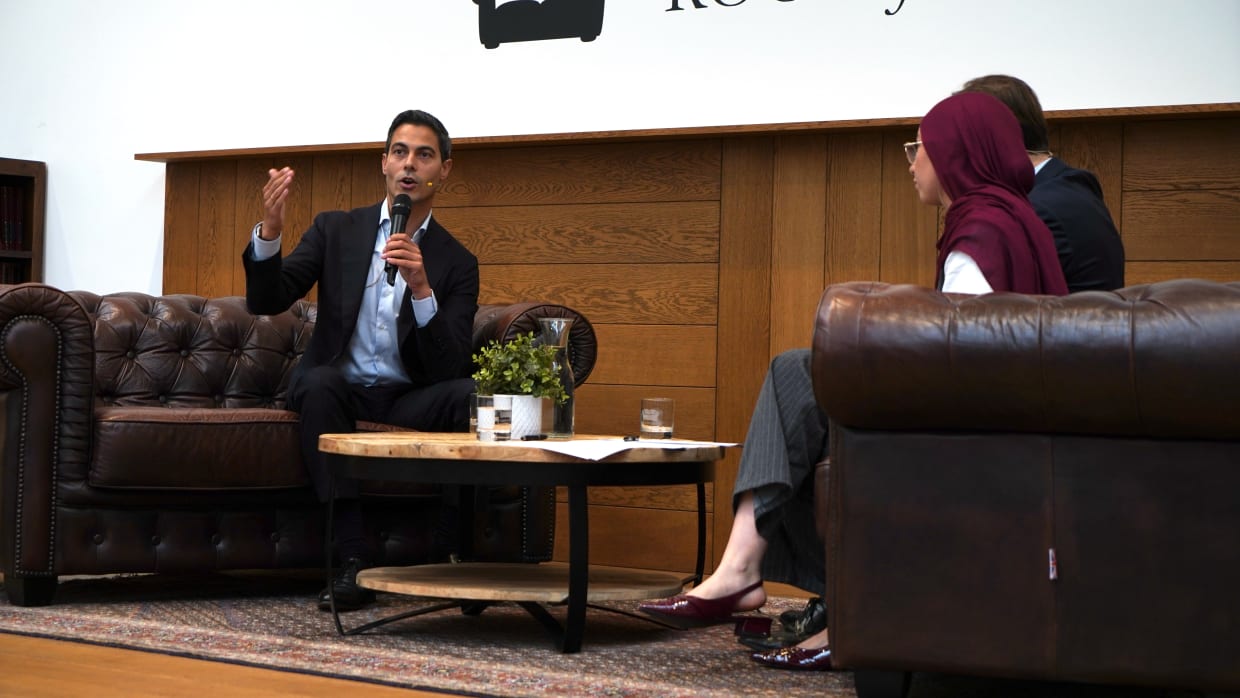
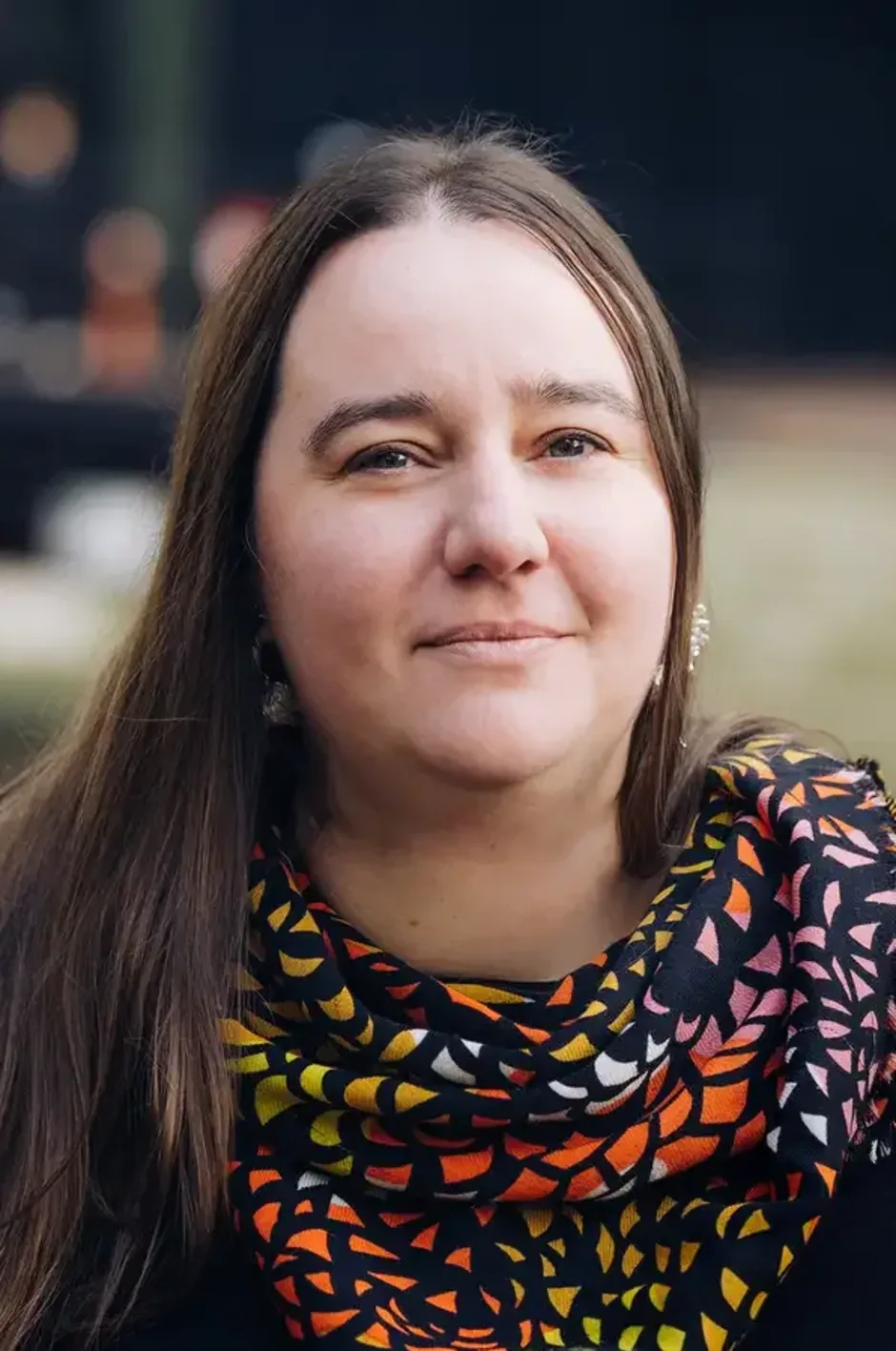
“Yes we can” was the slogan with which Barack Obama strengthened his campaign in 2008. “It can be done” was Jetten’s slogan in the recent House of Representatives elections. A striking similarity. Beyond the words themselves, both politicians are praised for their way of speaking. Last week Jetten received the prize for political rhetoric for that reason. Professor of Modern European Culture Josephine Hoegaerts recently wrote the book Speaking, Stammering, Singing, Shouting on rhetoric through the ages. She observes that a low monotone voice is favoured in such awards, but that other sounds are also heard among parliamentarians.
In the eighteenth century politicians often sounded theatrical, in the nineteenth century more monotone. How has the status quo of voice use changed so much?
“If we look at the eighteenth century, we mainly see a preference for speakers who speak in a very sensitive and emotional way. Voices were not amplified in parliament, so you more or less had to perform as you would in the theatre, otherwise you would not be heard. This way of speaking is also called the orotund style, resonant and bombastic. The writer of the famous line ‘It was a dark and stormy night’, Edward George Earle Bulwer Lytton, was well known for this.”
“In the nineteenth century this gradually changed. The era of the stiff upper lip began: authority and trustworthiness were linked to reason, to presenting scientific facts, and to doing all that as monotonously as possible. The former British Prime Minister Winston Churchill is a good example. He had that fatherly, reassuring tone of ‘I am serious and I understand it all’. You could connect that style to Frans Timmermans, who can also speak in a fairly technocratic way.”
“Today we see that people are less interested in someone who is very technocratic or paternalistic. People are more looking for recognisability, authenticity, something more sensitive. That is now linked to trustworthiness.”
Does voice still matter?
“It turns out that voters are much more guided by things like voice pitch, gestures or appearance than they might want to admit. We know for example that some time ago an opponent of Netanyahu, who himself has a very deep heavy voice, had quite a high squeaky voice. He took all kinds of lessons and worked with a voice over artist for his political adverts, in which he said: ‘Yes, I know I do not have Netanyahu’s voice, but please listen to what I have to say.’ He saw his high voice as a disadvantage in the debate.”
“Our association of a low voice with trustworthiness comes from the nineteenth century: low, monotone and rational. Women were then given a very high voice and many women spoke mainly in head voice. That changes in the twentieth century. Then women, especially in a professional context, also start speaking lower and adapting to that monotone culture. Margaret Thatcher is a good example. The former Prime Minister of the United Kingdom lowered her voice through speech therapy. These examples show that the monotone low voice forms at least a certain cultural pattern to which we respond emotionally in the West and which we link to trustworthiness. Locally, however, you do see changes.”
So rhetoric can apparently be learned. Thatcher and Jetten have both gone through such a development. Is there still enough attention for this in education?
“I think that traditionally and historically, especially in the nineteenth and twentieth century, a lot of attention was paid to it, but only for boys from the higher classes. That has now been democratised. A girl of Turkish background at a school in Amsterdam-West now learns more about rhetoric than twenty years ago. But at the same time, very specific attention to rhetoric is still lacking.”
“In England we see debating clubs returning. There has been a lot of lobbying for oracy, for rhetoric, to become part of among other things primary education. It is believed that an articulate person gains better access to all kinds of services and opportunities, and thus contributes to a sense of equality.”
We live in a time of huge technological change, with AI currently leading the way. Could it ever happen that the Thorbecke Prize goes to a robot?
“It is interesting, because the way we now think about what a trustworthy politician is, is something very recognisable, very human. AI is anything but human. And when it comes to voice and what people respond to most, a perfectly AI generated voice is also not ideal. Then you end up with what is called the uncanny valley: a voice that is almost perfect, but not quite, and that makes us feel slightly uneasy.”
Hoegaerts, Josephine, Speaking, Stammering, Singing, Shouting. A Social History of the Modern Voice. Available here.