Election debate Crea: “You don’t understand how the real world works”

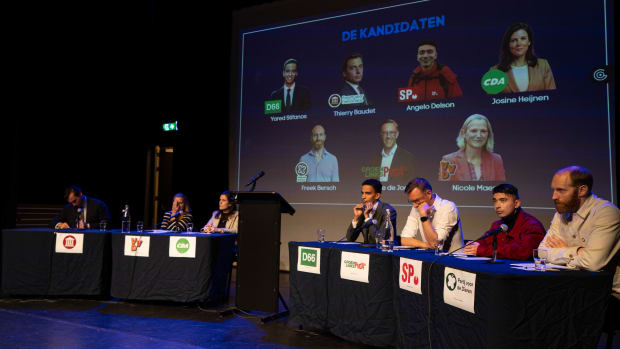
At the election debate at Crea, organized by the Student Association for International Relations (SIB), the focus was strikingly on substantive debate. While party leaders have not always set the best example during this campaign, the atmosphere on Monday evening in the Crea theatre remained largely amicable.
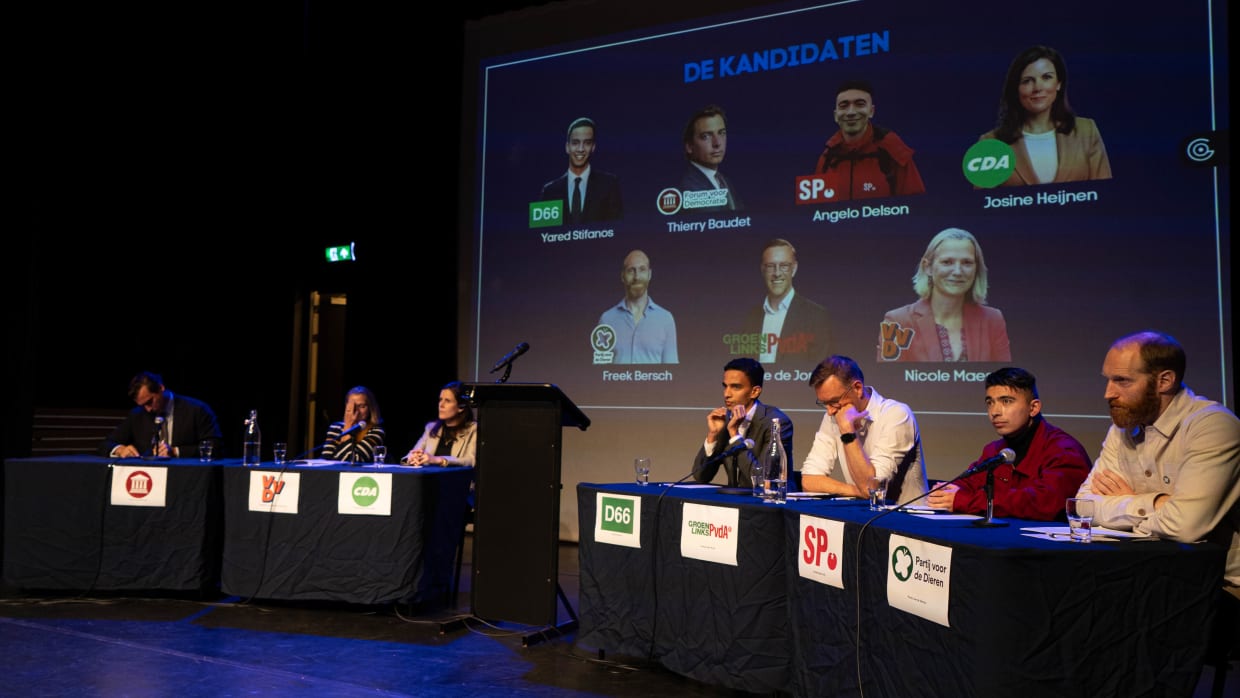
For a brief moment, a fire alarm threatened to derail the evening. The politicians were waiting backstage, phones in the audience had been switched to silent, and suddenly the organisers felt compelled to point out the emergency exits. Fortunately, before an evacuation was necessary, it turned out to be a false alarm. The debate, held at Crea, was able to proceed, about half an hour later than planned.
That was just as well. For anyone worn out by the endless parade of party leaders on television or the recycled talking points on hot-button issues like migration and housing, Monday night’s UvA debate offered a welcome change of pace. Not only were the topics refreshing – EU policy, defence and the Netherlands’ role on the world stage – but the politicians themselves were, for the most part, less familiar faces.
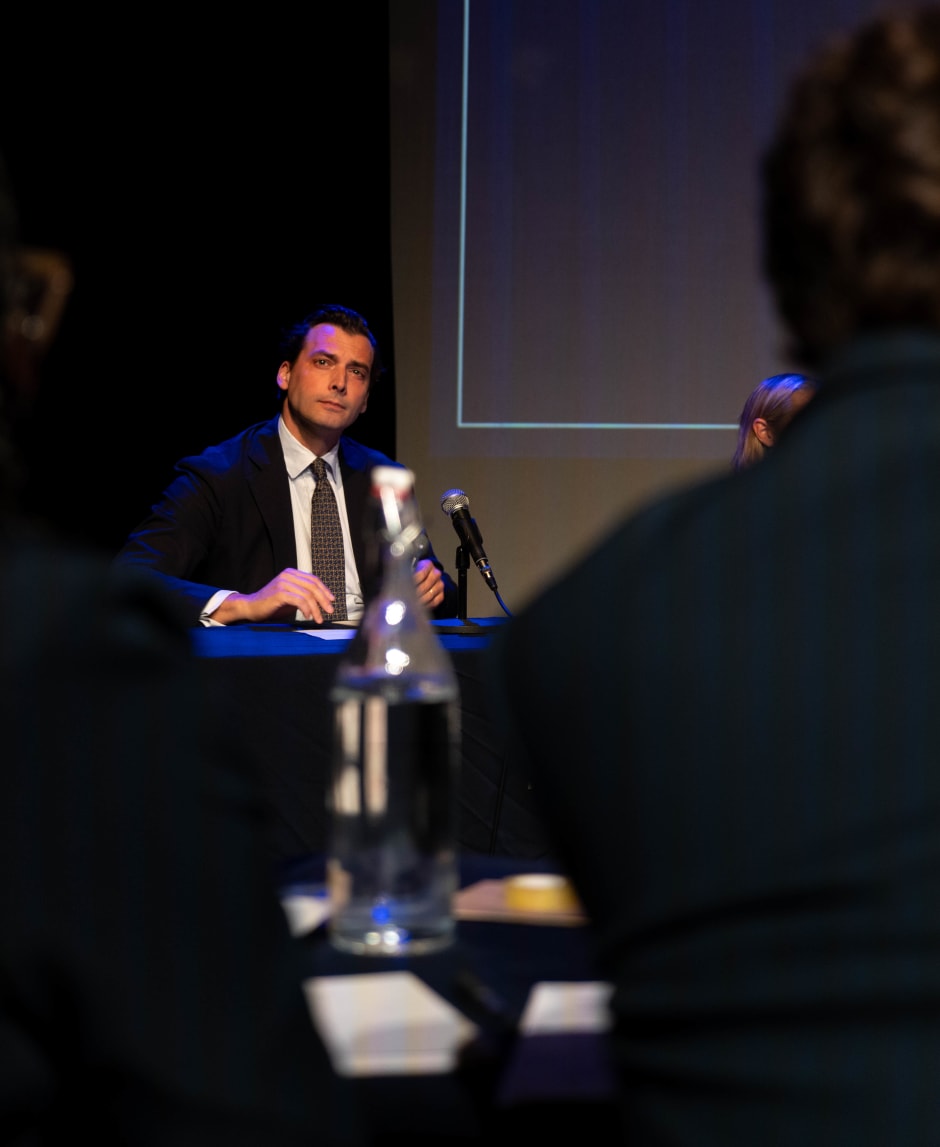
Thierry Baudet
One notable exception was Thierry Baudet, number two on Forum for Democracy’s candidate list. Although he had called the UvA “left-wing and politically correct” during his previous visit to the Roeterseiland campus, his party nonetheless seemed to see an opportunity to win over a few votes at the university. FvD was the only participating party to send a high-profile representative, in this case, its former parliamentary leader.
The line-up was completed by Yared Stifanos of D66, Angelo Delsen of the Socialist Party, Freek Bersch of the Party for the Animals, Hayte de Jong of GroenLinks–PvdA, Josine Heijnen of the CDA and Nicole Maes of the VVD. A striking absentee was Volt, a party that enjoys considerable popularity among young people and would likely have fit well with the international character of the SIB debate, but chose not to attend.
European Union
Once the debate began, each participant had two minutes to share their vision on international politics. Early on, the speakers sought common ground. Baudet even mirrored his criticism of NATO with that of SP’s Delsen, though he quickly drew a line: “We don’t believe in a communist solution.”
When the discussion turned to the European Union, Delsen and Baudet again found each other in their scepticism toward the current form of international cooperation. According to Maes, the VVD candidate, both were naïve: “I don’t see how we can guarantee our security without EU cooperation.” Baudet, on the other hand, argued for a Dutch exit, the so-called Nexit: “There’s no benefit whatsoever for the Netherlands in staying in the EU.”
The tone sharpened when the moderators brought up Israel–Gaza. Delsen accused the CDA’s Heijnen of lacking a moral compass; voices began to overlap; and when Maes said the VVD considered it too soon to recognise the Palestinian state, murmurs of discontent spread through the audience. When Baudet argued that the Palestinian state should be recognised, he received the first big round of applause of the evening. As he often did, he pointed to similarities between himself and the far-left parties. “The extremes meet,” he said with a grin, gesturing towards the SP, perhaps hoping to charm the “left-wing” UvA crowd.
Bersch compared Gaza to Vietnam: “The red line has been crossed by Israel for years,” said the Party for the Animals politician. Stifanos of D66 agreed, arguing that the Netherlands is failing to act: “It’s clearly a genocide.”
Reptiles
During the debate on the war in Ukraine, Delsen clashed with De Jong of GroenLinks–PvdA over arms deliveries. “Russian boys are being killed by weapons we’re sending to Ukraine,” said the SP candidate, whose fiery outbursts injected energy into what was otherwise a somewhat restrained debate. De Jong countered that the SP was abandoning Ukraine and defended raising NATO defence spending: “Putin is a formidable opponent.”
Baudet caused a stir by claiming that the war in Ukraine had been provoked by the EU and NATO. When this drew little support – De Jong even called it “a falsification of history” – Baudet shot back, accusing the others of being “Mickey Mouse politicians” who “don’t understand how the real world works.” Stifanos joked in reply that the “real world” Baudet believed in, is “run by reptiles.” Even these candidates, it seemed, could not entirely resist the occasional jab, just like their party leaders.