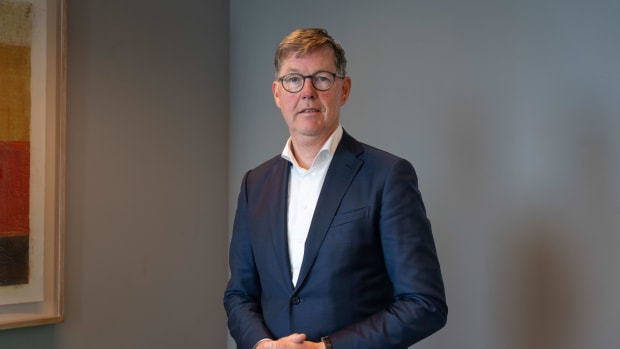
New vice-president must steer UvA through difficult financial times

Since 1 September, the UvA has had a new vice-president. It is chartered accountant Richard Goldstein. Previously, he audited the UvA’s accounts; now he is being audited. “My role at the UvA is structured and covered in such a way that no conflict of interest can arise.”
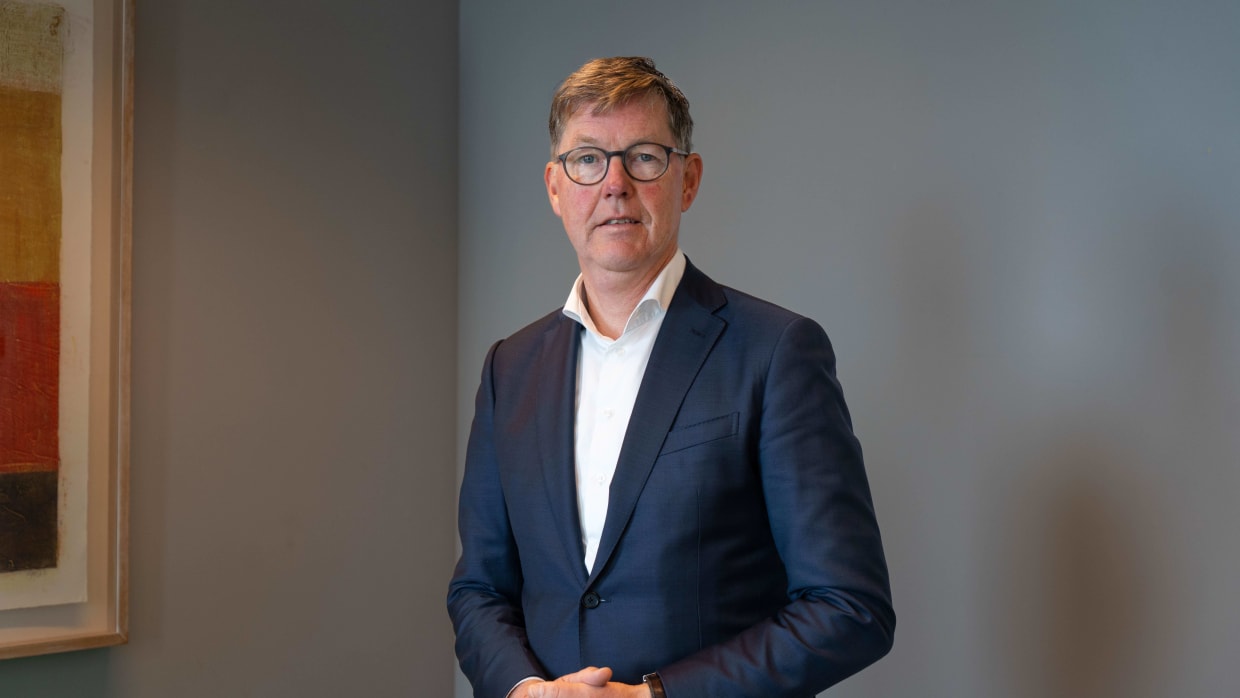
It is, of course, quite an exciting time to start as a director at the UvA, as Richard Goldstein acknowledges right at the start of the conversation. Even before he took office, it suddenly became apparent that Board President Edith Hooge was leaving after only a year, the Opening of the Academic Year on 1 September was a washout and was cancelled halfway through, and the first demonstration took place soon after that.
You hit the ground running at the UvA. Did you expect to start like this?
“More or less. This is the UvA, so in that sense it didn’t surprise me, although Edith Hooge’s sudden departure was a huge disappointment. I think that’s a shame, because I was really looking forward to working with her and Peter-Paul Verbeek on the UvA Board. Nevertheless, I am happy with this job. They’ve put together a really nice introductory programme for me. I didn’t want to meet people in my office, but on location. So now I’m cycling my head off to get to know the UvA in all kinds of places in Amsterdam.”
You are moving from the sedate world of accountancy to the dynamic world of the UvA. Why are you making such a change after 38 years at PwC?
“I wouldn’t call it a sedate world. PwC also carries out assignments in the public sector. For example, the company was involved in various investigations into fraud prevention, including the benefits scandal. We also conducted research into the adequacy of funding for vocational education, which was important public research with an impact. I have always been curious about ‘the other side’ of the table, learning there and seeing if I can make a positive contribution. Today, I am taking that step.”
As a chartered accountant, you audited the UvA’s accounts for many years. Now, as the UvA’s chief financial officer, you are being audited yourself, also by PwC. Isn’t that a strange feeling?
“From a financial control perspective, it does feel strange, but this was discussed at length during my job interview. My role at the UvA is structured and covered in such a way that no conflict of interest can arise. For example, I will not be involved in the selection process for a new auditor after 2026. The Supervisory Board will make that choice, not me or any other member of the Executive Board.”
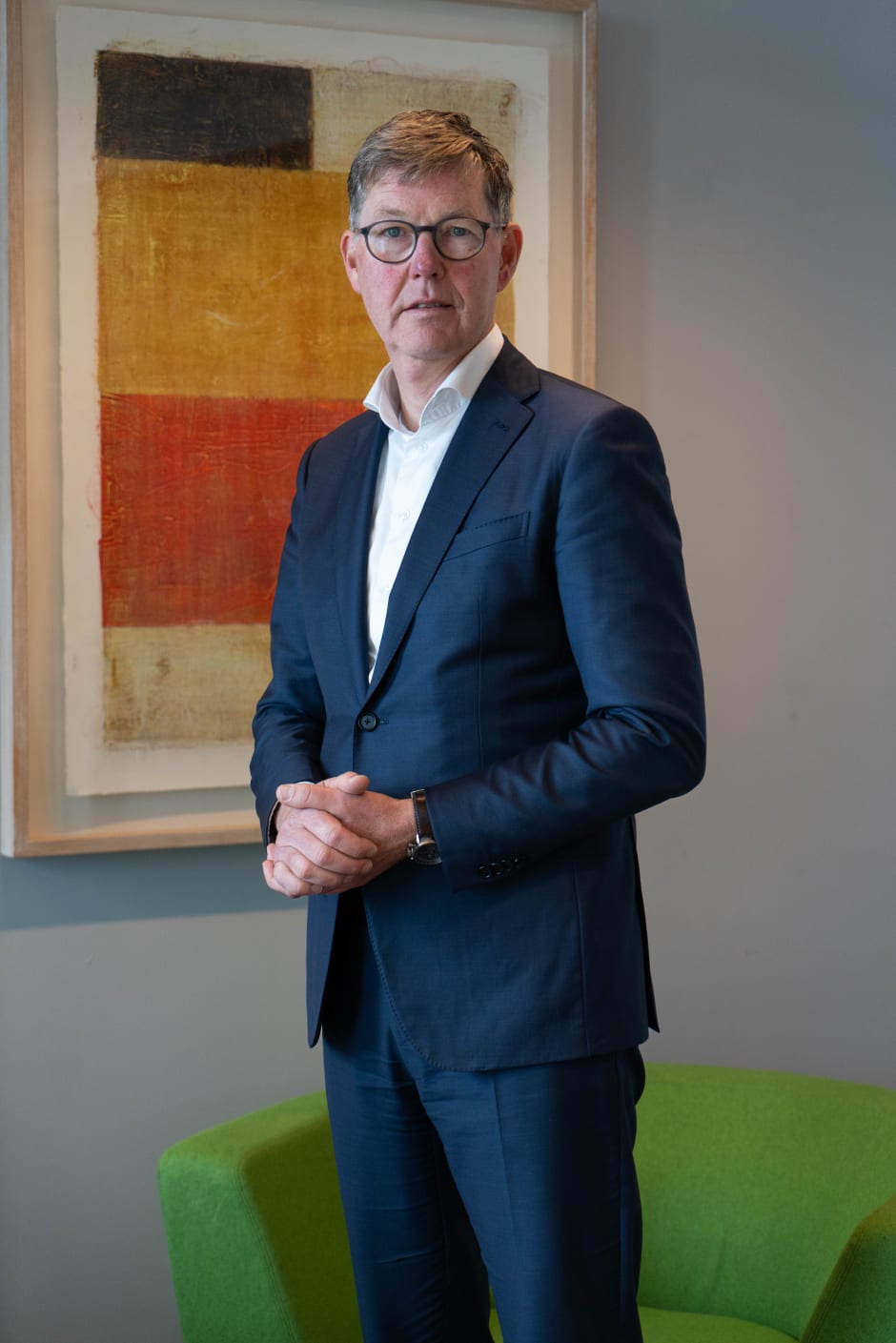
In today’s politicised UvA environment, threats are the order of the day. Are you prepared for that as a vice-president?
“This is an issue that was already raised during my job application, and I was doxxed even before I started working. Society is becoming more hardened and polarised, and that is also reflected in the UvA culture. I would like to say that sometimes you are accused of things that are so far removed from you that it doesn’t affect you personally.”
You are not afraid?
“No, not at all.”
Who is Richard Goldstein as a person?
“I am a connector, by which I mean that ‘together’ has more impact than ‘alone’. I am not one for ‘us and them’, but rather ‘us UvA’, so I am not a loner. I am also energetic, which is precisely why I want to commit another eight years to the UvA. I think I bring more energy than I get back. I am positive, but that is mainly a mindset. I am also someone who likes to be ‘on time’, but I mean that mainly as a sign of respect to others. If you are always on time, word gets around and others will also be on time. Furthermore, I am driven and want to achieve something with what I do.”
What do you want to achieve for the UvA?
“I really want to contribute to excellent support and good conditions for education, research and valorisation. It’s great when many elements of business operations run smoothly and seamlessly behind the scenes. I also enjoy contributing to an outward-looking university that focuses on major social issues.”
You have forty years of experience in the financial world, but your UvA portfolio also includes housing and ICT. Are you knowledgeable in those areas as well?
“Let me put it this way: the core of my work is, of course, finance, but as an accountant, you also have to understand the world behind the numbers, otherwise you can never be a good accountant. There are many talented individuals working in ICT, accommodation and, for example, the allocation model, who are of great assistance to me. I also receive excellent guidance when it comes to crisis management, crisis escalation and public relations.”
I read in next year’s draft budget that the UvA is developing a new Accommodation Plan.
“That’s right, although it is a work in progress. Normally, the Accommodation Plan is an appendix to the annual budget, but this time we are doing things differently because the entire accommodation plan is being revamped for a variety of reasons: there will of course be cutbacks, the Balanced Internationalisation Act (Wib) is coming into force, and demographic developments will also lead to fewer students. The Wib in particular could have a very negative impact on the UvA, as far fewer international students will be coming to the UvA. We have to take this into account in our accommodation planning.
“In collaboration with subject matter experts, we are now developing scenarios for how we can reduce the amount of floor space, because fewer students means fewer staff and less space is needed. Incidentally, we also expect to need less square metres in the future due to hybrid working. And if further savings are necessary, I would rather make them in the supporting accommodation than in the primary process: education and research. The new Accommodation Plan is expected to be ready next spring. Incidentally, I can already say that, however beautiful the new University Library is, it will not become the new construction standard for the UvA in terms of costs.”
The draft budget for 2026 was actually drawn up by your predecessor. Would you have drawn up a similar budget?
“I think so. The UvA has a sound and prudent budgeting system for moving from preliminary calculations (Framework Letter) to (draft) budget and financial forecasts for the following four years. A small loss of three million has been budgeted for 2026, which is perfectly acceptable.”
But for the years after that, the deficits could rise to 50 million, of which 30 million will be spent on personnel alone, according to the financial outlook up to 2029.
“Of course, this is not yet certain, because as time goes on, the outlook becomes more uncertain. Thirty million less in personnel expenditure is a lot of money, but we also have a lot of staff. If that amount is needed to cut costs, it is expected to be achieved through natural attrition. The UvA does not have a reputation for forced redundancies, and
I want to maintain that. Just as we would prefer not to make savings in the primary process.”
Your predecessor said that there is not really much to worry about as long as we make the right choices in the coming years. What are your right choices?
“That is difficult to say at this point. My role is primarily to present options to faculties and departments in order to achieve balanced cutbacks. In general, I am not in favour of a piecemeal approach where everyone sacrifices something, but rather of making targeted choices about what to continue or discontinue, or what to do or not do.”
From now on, you will have to negotiate with activist students about the financial frameworks of, for example, a budget. What is your negotiating style?
“This suggests a contradiction that does not actually exist. The central student council and the central works council jointly agree on the main points of the budget and can then advise and ask questions, to which we respond positively where possible. I do not see this as a negotiation game, but as a way of working together to achieve the best possible UvA for everyone.”
Your predecessor advised you to take your time, otherwise there will be resistance to your plans within the organisation. Take it easy, seems to be his advice. This seems like very boring advice to me.
“Not at all. I am going to take my predecessor’s advice to heart. I will take a good look around before I make any changes. I want to get to know a complex organisation like the UvA well first.”
Richard Goldstein (Amsterdam, 1969) is married and has three children.