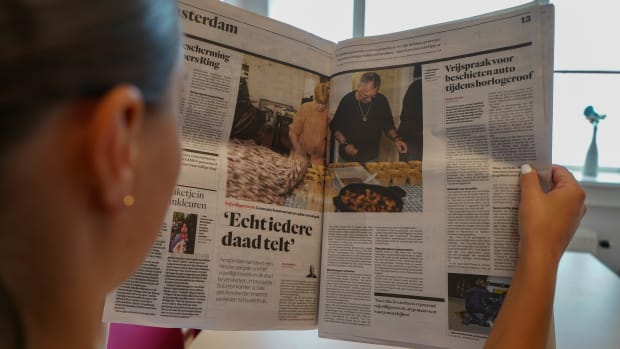
New journalistic platform aims to combat news poverty among young people

SPIL is the new journalistic platform from Mediahuis, created by young people for young people. This group often doesn’t feel represented by traditional news and, as a result, experiences what’s known as news poverty, according to SPIL’s own research. “Our journalists behave more like creators than newsreaders in suits.”
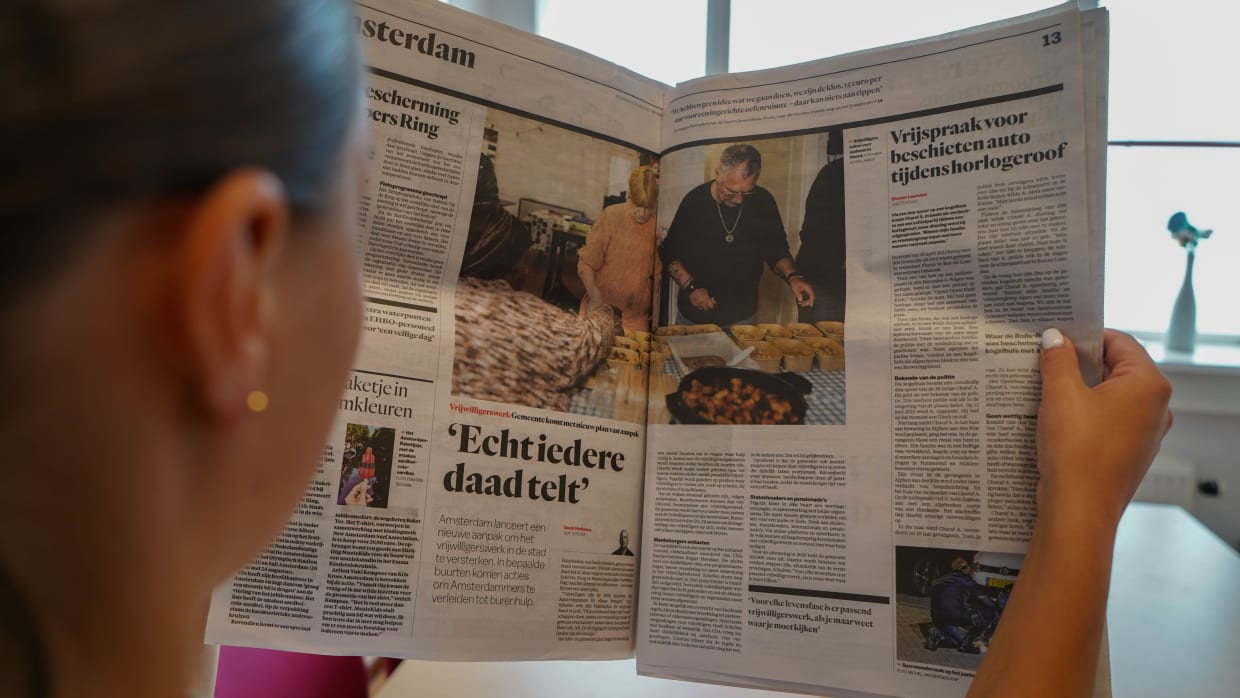
SPIL produces news videos and publishes them on TikTok, Instagram and YouTube – platforms where young people are active themselves. They also have a news podcast on Spotify. According to their own research, nearly sixty per cent of fifteen- to twenty-five-year-olds want more reliable news, and only 36 per cent feel represented by the media. That’s why SPIL involves young people in the news-making process from the very start – and on a structural basis.

News on social media
Sophie Kluivers (38), editor-in-chief of SPIL and a University of Amsterdam alumna, explains that fewer and fewer young people are downloading news apps or watching traditional broadcasts. “The readership of Mediahuis newspapers, such as NRC and De Telegraaf, is fairly old. Young people often have no interest in reading long blocks of text – it shouldn't feel like homework. That's why they're increasingly getting their news from social media.”
Still, not all news outlets are active on those platforms, Kluivers says. “That’s partly because there’s no standard revenue model for social platforms yet. You can earn directly from visitors to your own site or app, through subscriptions or ads. But on TikTok or Instagram, that’s a lot more complicated.”
That doesn’t mean young people aren’t looking for news there – quite the opposite. “There’s a lot of information circulating on those platforms, but also a lot of half-truths and misinformation. And not everyone has the tools to judge what’s accurate and what isn’t,” Kluivers says. That’s why SPIL brings factual, relevant and contextual news to the platforms where young people already are.
Vlogging from The Hague
According to editor-in-chief Kluivers, it's a challenge to make serious information appealing to young people. “Entertainment often wins out over heavier news, because of their short attention spans.” SPIL tries to grab that attention with sharp angles and topics that speak directly to young people. “If there’s a parliamentary vote on student loans, we’ll definitely cover it.”
Political news also has a place, as long as it's relevant to the target audience. One of SPIL’s 25-year-old journalists vlogs from The Hague, showing not only debates and interviews, but also what happens behind the scenes. In doing so, SPIL hopes to make politics feel less distant, more accessible, and even spark curiosity. “Our journalists behave more like creators than newsreaders in suits,” Kluivers sums up.
Democratic role
According to Kluivers, it’s essential that young people are well-informed for democracy to function properly. “They need to be able to engage in social issues and enter the voting booth with awareness. On a small scale, that’s how you can still hold a bit of power.”
University of Amsterdam media scholar Mark Deuze also believes it’s important to keep all parts of society involved in public debate. In his view, young people are well-informed, but don’t always see themselves reflected in traditional news – and that’s nothing new. “That doesn’t mean they all need to take out a subscription to de Volkskrant.” Instead, they look for information in places that match their own world. “If you’re a young person wanting to know what’s happening in Gaza, it makes perfect sense to follow a TikTok channel run by two Palestinian friends who live there.”
Innovative
Still, Deuze thinks SPIL is a nice initiative. “It’s just not all that new: broadcasters and publishers have been trying to reach young audiences for the past forty years.”
SPIL, however, tries to stand out by actively involving young people in the editorial process. “We talk to them via WhatsApp polls, Instagram DMs and comments,” says Kluivers. “Rather than deciding in the morning meeting what we think is news, we ask our audience directly what they find interesting.”