“In frisbee, we don’t swear at each other”

Next week, UvA student Leeloo Lievestro (19) will play her third Ultimate Frisbee World Cup in the Spanish summer sun. That sounds more relaxing than it is: she will be running her heart out for six hours a day, six days a week, to secure a place in the top 8 for the Dutch team. “Everyone is going to cry at this tournament.”
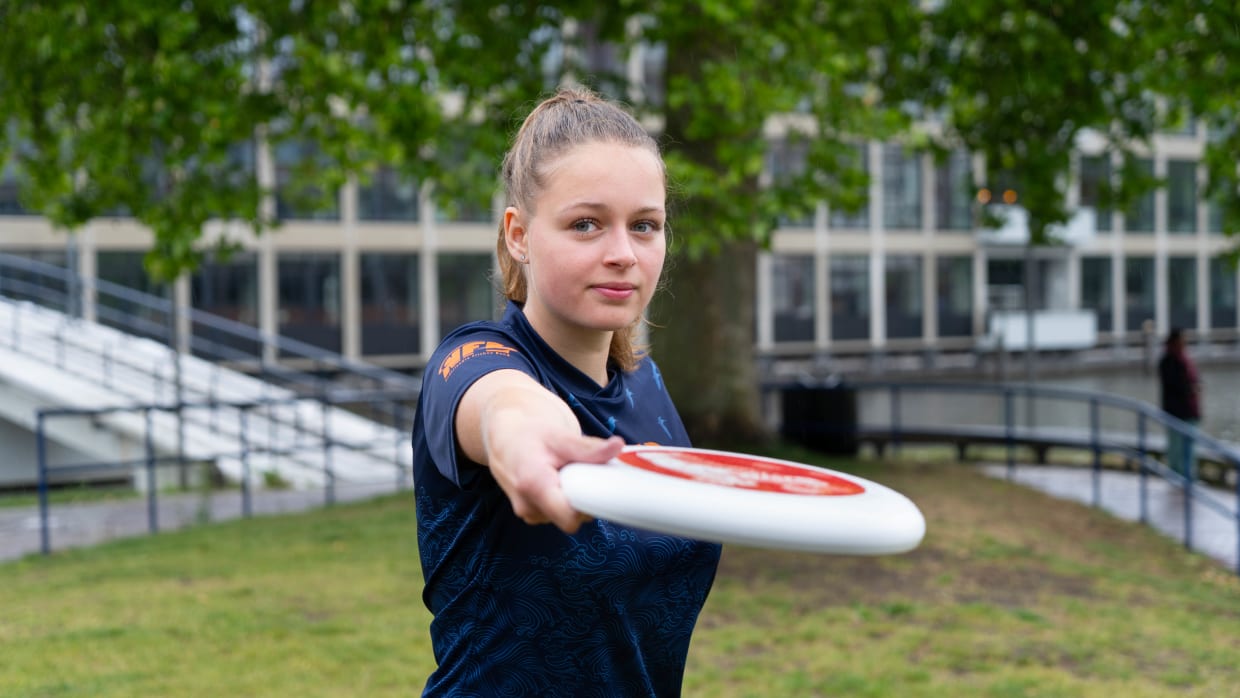
Her fellow students are often surprised when Leeloo Lievestro (19) tells them that she plays frisbee at a high level. “People often think it’s just throwing a disc around on the beach,” says the UvA student at the university’s teacher training college, “but it’s an intense sport with a lot of tactics. It’s constant running, jumping and stopping. Five of my peers tore their cruciate ligaments last year.”
One of Lievestro’s wishes is therefore to get through next week’s World Cup in Spain without injury. She also wants her team to finish in the top eight of the 27 participating countries. Lievestro: “That’s possible. We are among the top European countries this season. Our biggest challengers are Singapore, the Czech Republic, Belgium and France. Ultimate Frisbee is huge in the United States and Canada. You can pretty much write those two countries into the final already.”
Ultimate Frisbee is played by two teams of seven players each. The field consists of three zones: two scoring zones (end zones) and a middle zone. The aim of the game is to get the frisbee into the opponent’s scoring zone. The game ends when one of the teams scores 15 points or 100 minutes have elapsed.
Around six million people play Ultimate Frisbee worldwide, 90 percent of them in North America. The highest international competition is the World Games, also known as the little brother of the Olympic Games, in which Lievestro participates.
This is Lievestro’s third World Cup already. Her love for the game was instilled in her at the age of 7 by her cousin, who taught her how to throw a frisbee as far as possible in the back garden. “It’s really a matter of technique.” Because there are few opportunities for young people under the age of 16 to play frisbee, Lievestro only made the definitive switch from tennis to frisbee when she was 16.
Spirit of the game
What makes Ultimate Frisbee more fun than other team sports is that there is much more teamwork, says Lievestro. “It’s the only team sport without a referee. If a mistake is made, the players resolve it among themselves. So you are responsible for the rules and how the game progresses.”
In addition to winning, there is also the spirit of the game. At the end, each team assesses whether the opponent has played fairly, sportingly and respectfully. “That makes the sport feel safe. It also makes it so important for children to play Ultimate Frisbee, because it teaches you to take responsibility for your own actions. In frisbee, we don’t swear at each other.”
Social
The social character is also evident in Lievestro herself, who is studying at the Academic PABO Amsterdam (UPvA) and wants to become a teacher. On her way to the interview with Folia, she took a child to the first aid station after she got her ankle caught in the spokes of her bicycle on the cycle path. “The babysitter who was there didn’t have her hands free, so I took the child to the first aid station.”
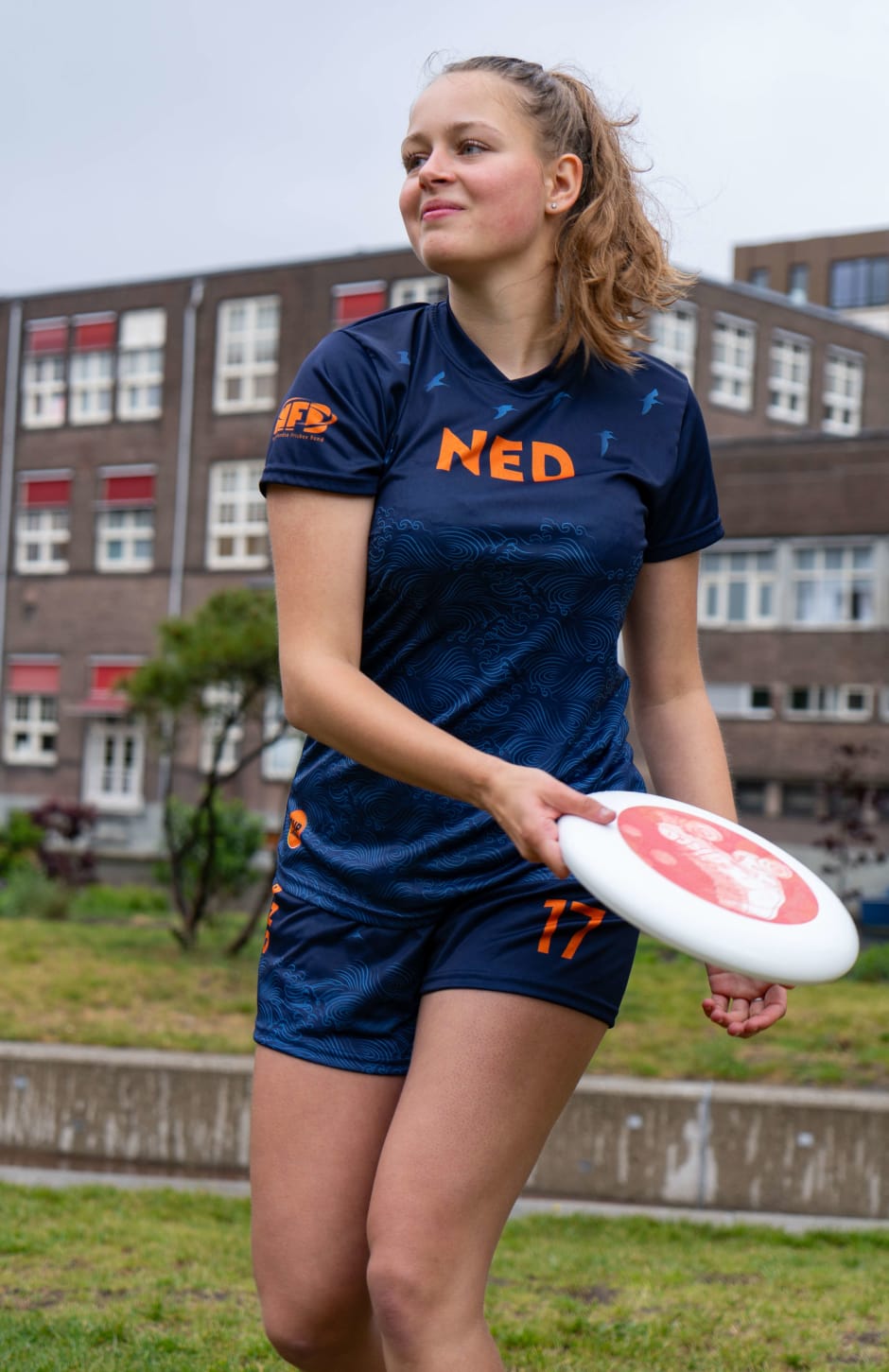
Lievestro also sees what needs to be done in frisbee. She is a so-called “handler”, a player with game insight who decides how the frisbee should ultimately get from the defence into the opponent’s zone to score a point. “The handlers determine the strategy and throw the disc to the cutters, who easily break free. We give the assist, and the cutters ultimately score the goal.”
For Lievestro, playing sports at a high level can be combined with her studies at the University of Amsterdam with good planning. “During the week, I study, run and do strength training, and on weekends, it’s frisbee." In the coming period, she wants to take her studies a little easier so she can also work to make her life in Amsterdam more affordable. She wants to continue playing frisbee at a high level until she is 25, and then she will see.
Lievestro does not seem like the type to get easily worked up, but she says that will be different in the week leading up to a tournament. “A few days before the World Cup, I am extremely nervous, I have stomach ache and I cannot sleep. That’s part of it, and it helps that I know the team well. There’s a lot of pressure, and a tournament is mentally and physically very demanding. It’s six hours of sport a day for six days in a row in 30 degrees. Everyone cries during this tournament.”
From 21 to 28 June 2025, Leeloo Lievestro will be playing in the World Ultimate Frisbee Championships for under-24s in Logroño, Spain. There is a livestram at the World Flying Disc Federation.