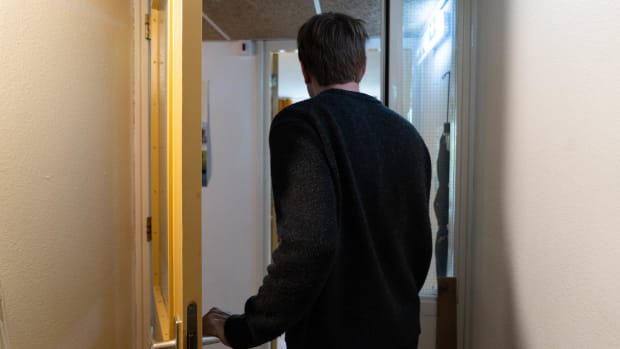
Residents of the student complex on the Prinsengracht feel unsafe after burglaries

Residents of a student complex on the Prinsengracht feel unsafe after a burglary and several attempted burglaries. ‘I find it an unsettling thought that someone was in my room while I was sleeping.’
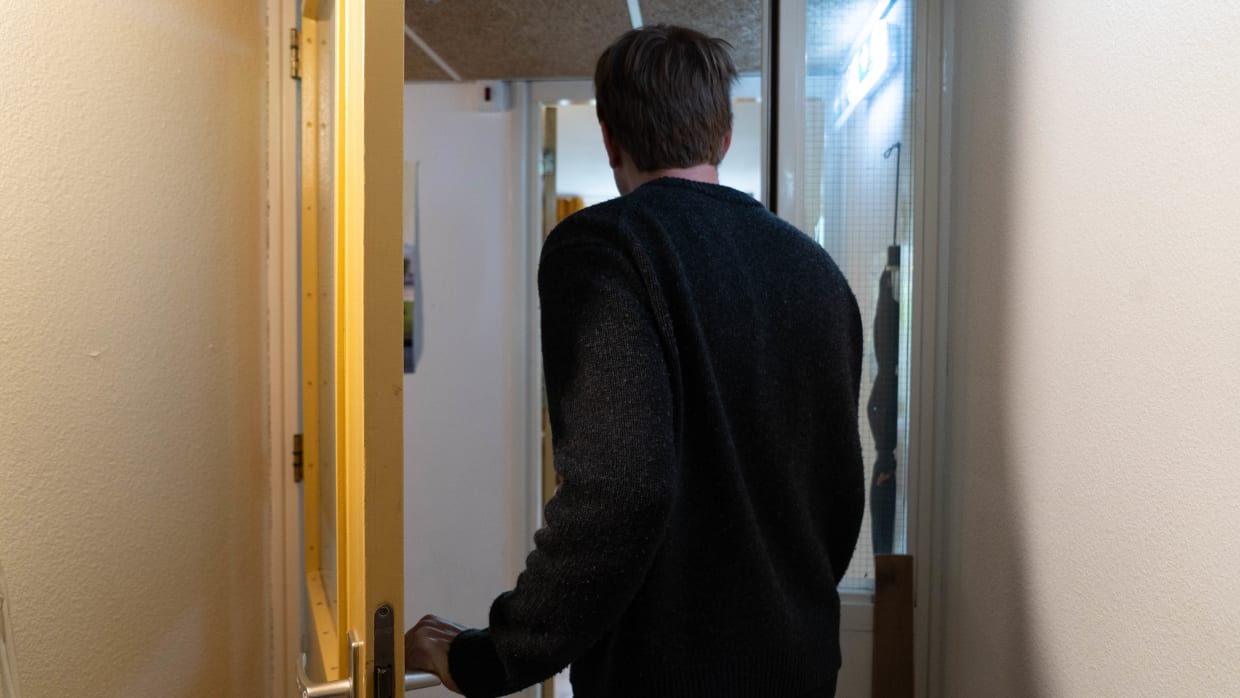
Last month, Max Smedes (25), who lives in a student complex on the Prinsengracht, was burgled. He taps his hand on the cabinet at the foot of his bed. “My camera, worth €2,500, was here,” he says, “the thief took the camera while my girlfriend and I were sleeping right next to it. We didn’t notice a thing.”
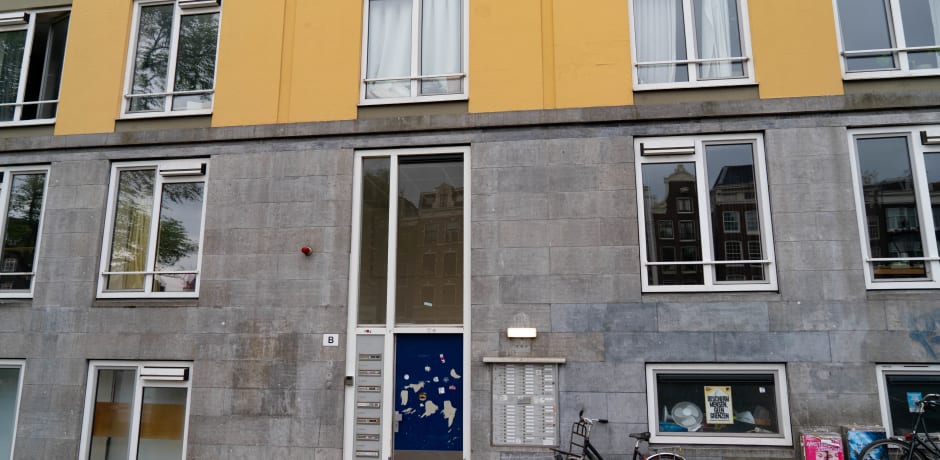
The East European Studies student lives with 42 other residents in the student residence. The building has six storeys, each with its own front door onto the corridor. On each floor six to seven students have a bedroom; they share the living room, kitchen and toilet.
Apart from the camera, the burglar took his brand‑new MacBook (€1,300) – containing his thesis interviews – a rucksack (€100), headphones (€230), a speaker (€150) and his girlfriend’s earrings (€50).
Easy prey
The burglary at the student complex on the Prinsengracht is a textbook example of how student rooms are an easy prey for burglars. According to the Centre for Crime Prevention and Security, this is because of the frequent turnover of residents and the fact that the front door is often left unlocked. Burglars use a technique called latch bypass, whereby they slide a bank card – or another flexible plastic card – between the door and the frame. By slowly pushing the card towards the lock, they can release the door’s locking mechanism.
‘Find my Mac’
On Friday morning, 12 April – the morning after the burglary at the student complex on the Prinsengracht – Max wakes to a noise in the corridor. That is odd, because he normally wouldn’t hear that. He walks towards the sound and sees that his bedroom door is ajar. Although Max only locks it when he leaves the buidling, he always closes it when he is inside.
A little later, when he tries to look something up on his MacBook, he realises that his bag – the one containing the laptop – is gone. At first, Max thinks he must have lost it. Then he opens ‘Find my Mac’ on his phone: the dot on his iPhone screen pinpoints his laptop’s exact location, a house on Sint Willibrordusstraat in De Pijp. “I don’t know anyone who lives there,” says Max. “I hopped on my bike and went over.”
Max rings the bell at a fourth‑floor flat; a middle‑aged man answers. “The resident said he hadn’t done it,” says Max. Neighbours had told him it wasn’t the first time people collected their stolen goods there. For instance, the AirTag – a Bluetooth tracker from Apple that you attach to personal belongings – on a mountain bike stolen shortly before also pointed to the same address.
No signs of forced entry
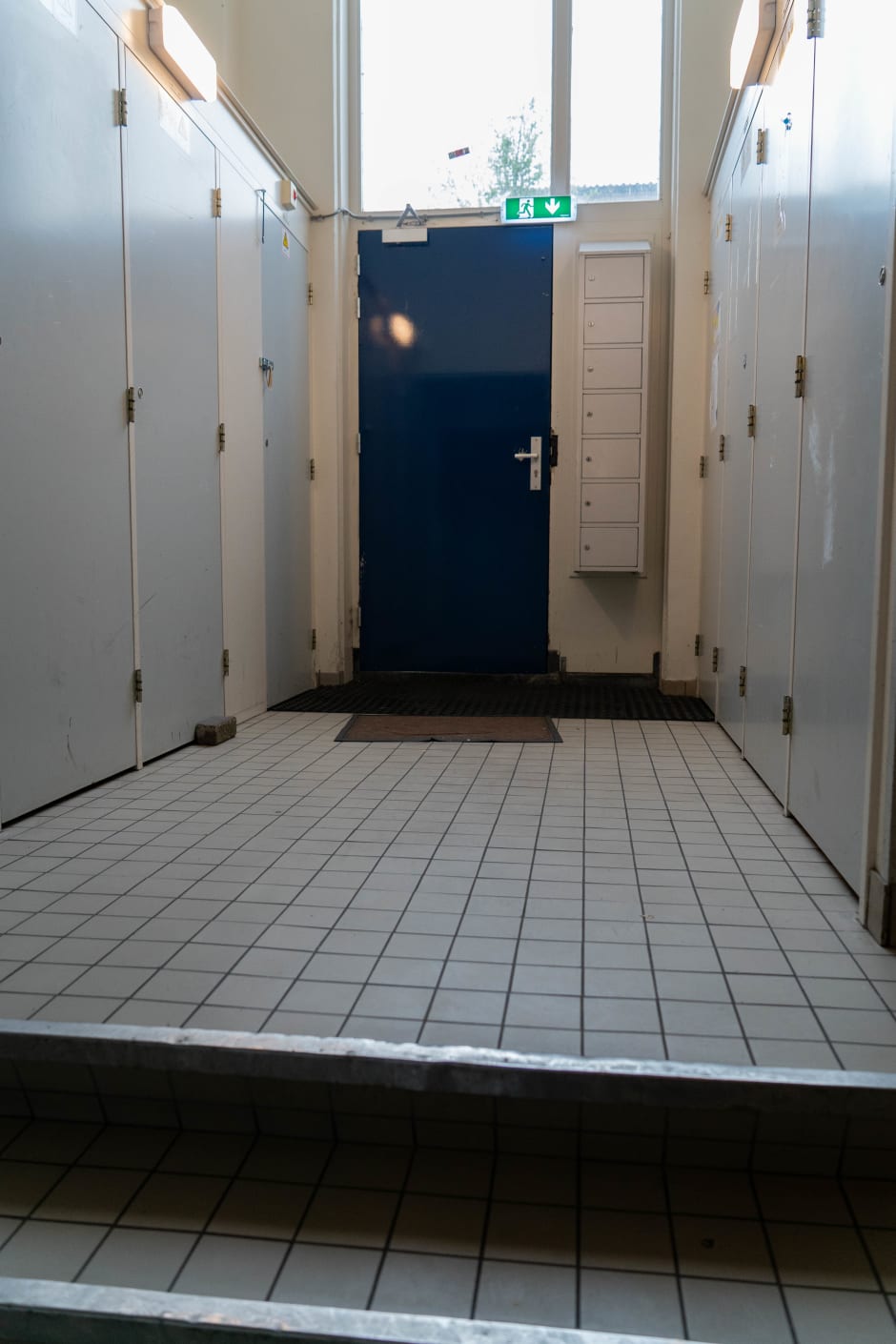
After his visit to the house on Sint Willibrordusstraat, Max reported the burglary. “The detectives have started an investigation and the police have examined the locks in our student complex,” Max says. There turned out to be no signs of forced entry. Max therefore received no compensation from the insurance for the damage he suffered.
In the past three months, there have already been two suspected attempted burglaries. One of the residents was woken by someone repeatedly pulling at her bedroom door – which was locked. A few weeks later, another student went to the communal toilet at night when she saw an unknown person in the corridor checking which bedroom doors were not locked. The resident called the police, but by the time they arrived, the suspected burglar had already fled.
Feeling unsafe
The message from Max about the burglary in the student complex’s group chat made other residents feel unsafe. Max now places a chair in front of his bedroom door and locks it at night. “It’s unpleasant to constantly wonder who might have done it. And I find it a horrible thought that someone was in my room while I was sleeping. I’ve become a bit neurotic now – if I go to the toilet, I lock my bedroom door.”
One possible explanation for the lack of signs of forced entry is that a former resident still has a key. “You’re supposed to hand it in when you move out, of course, but someone can easily have had an extra key cut,” Max says. “Packages that delivery drivers leave in the corridor are also regularly stolen,” he continues. “That’s why I no longer have anything delivered here.” The police also told Max that the locks on the front door and the corridor doors are not tamper‑resistant. They do latch shut, but they do not lock securely, allowing burglars to easily bypass the latch with a card.
Security measures
After the burglary, Max and many of his housemates phoned the manager and Lieven de Key – the housing association of the building – on their own initiative to request security measures. “The locks on the front door and the corridor doors need to be replaced and we want cameras,” Max says.
De Key and the manager are not willing to cooperate, because it is too expensive and it would not be able to prevent burglaries.
Locks replacement
Although Selina Kielman, the manager, agreed to have the lock on Max’s bedroom door replaced, renewing all the locks and keys is too expensive. “It will cost between seven thousand and ten thousand euros, something De Key simply does not have,” she says. It would also offer no guarantee that there would be no more burglaries: “You do not know what happened. The person whose room was burgled did not lock their door. The seven students on his floor could, so to speak, also have broken in. Flatmates stealing each other’s belongings happens regularly.”
Regarding the possibility that a former resident still has a key, Kielman says: “Also in all other buildings in the Netherlands where people share a front door, one can easily copy a key, give a key to someone, or lose it.”
A spokesman for DUWO, which manages multiple student complexes in Amsterdam, emphasises that housing associations must prevent former residents from entering with a key. “That is why in more and more complexes we are switching from physical keys to digital solutions; not only is that more user‑friendly but also safer.”
Max does not believe any of his housemates broke in. “I absolutely do not suspect them,” he says. Although it is expensive, he still thinks it important to replace the locks every few years. “Turnover among tenants is high, and recently more people have entered without signs of forced entry.”
Camera footage
According to Kielman, installing cameras in the building is too expensive, and also not a good solution. “A camera system costs an enormous amount of money, more than ten thousand euros. Moreover, our experience is that security does not improve as a result. Even if you have footage of the burglar, you cannot clearly see who it is, so it does you no good.”
“Furthermore,” says Kielman, “there are cheap cameras that residents can purchase together. I have a Ring camera on my front door myself – it costs fifty euros.”
“Very inconsistent,” calls Max Kielman’s suggestion that residents install cheap cameras themselves. “If a Ring camera costs only fifty euros, De Key could surely afford to purchase them too?”
Personal responsibility
Kielman places a large part of the responsibility on the students. “I also take measures myself to secure my home. If something happens at my place, I can’t ask someone to drive four laps around my house because I feel unsafe. Also look at what contribution you can make yourself to ensure safety, including: lock your door.”
DUWO also warns their tenants to turn their doors to a double lock and close their windows as soon as they leave the building. “These are the most common burglary methods,” their spokesperson says. “Opportunistic burglars walk by and immediately see that they can easily get inside.”
Burglary‑prone area
Furthermore, Kielman states that the student complex is simply located in a burglary‑prone area. She argues that it is therefore not possible to rule out a burglary or trespass one hundred percent.
The residents and the police disagree. A female UvA student living in the building believes it is precisely important to take security measures in a burglary‑prone area. The police, with whom she spoke by phone, agreed. In their view, it would be wise to replace the locks on the front door and the floor doors, which were last renewed six years ago.
Several residents are disappointed by De Key and the manager’s approach. “A few thousand euros is probably nothing to De Key, especially considering I’ve already suffered almost two thousand euros’ worth of damage to everything that was stolen,” says Max.