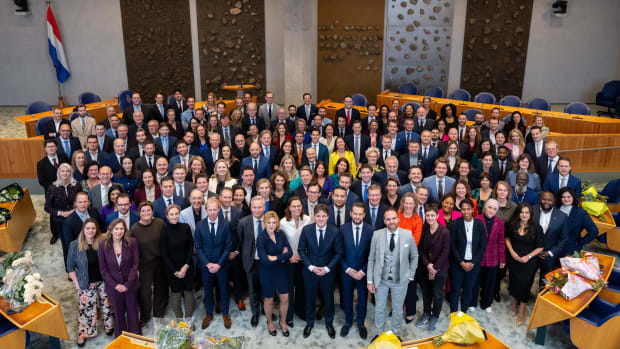
Relatively many Dutch politicians with a migration background, “but still many obstacles”

The number of politicians with a migration background is relatively high in the Netherlands, according to research by UvA doctoral candidate Zahra Runderkamp. However, she argues that this is no reason to sit back and relax, because even in our country this group still faces major challenges: “They are under a magnifying glass.”
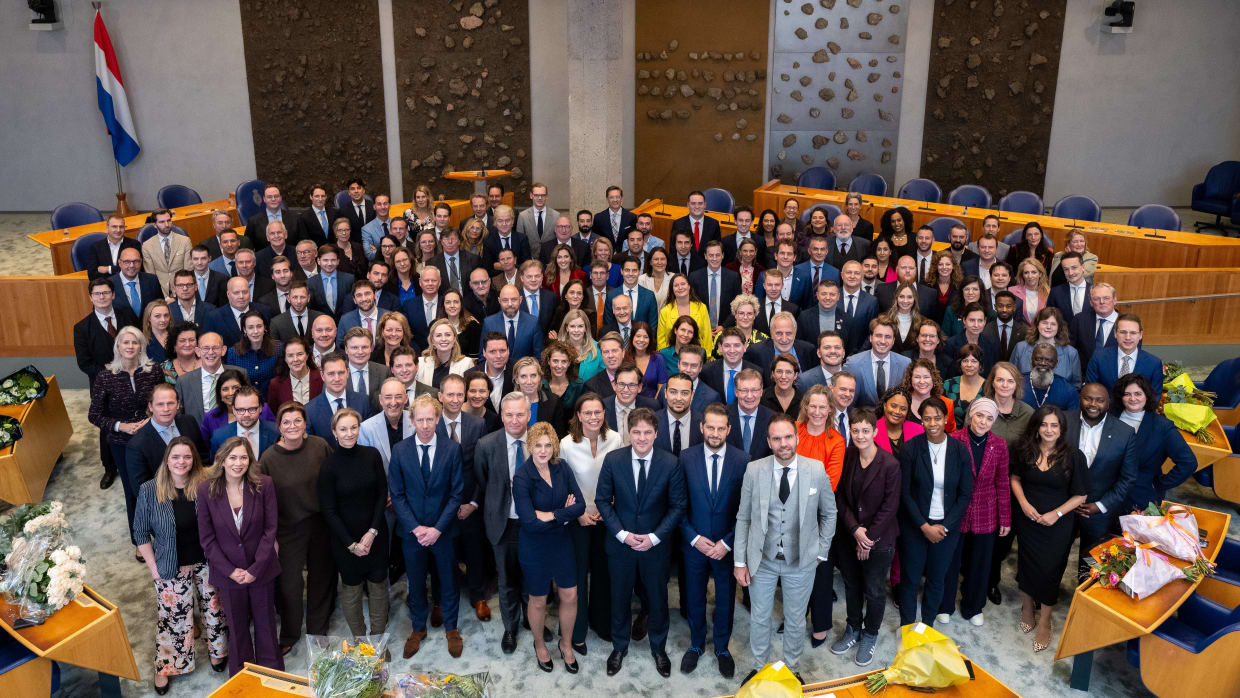
This Friday, political scientist Zahra Runderkamp will be at Spui25 to present the results of her research into the representation of Dutch politicians with a migration background. It will be a nuanced story, the PhD candidate emphasises immediately, because although the politicians interviewed all indicated that they had had to fight hard to get where they are, it is not all doom and gloom. Compared to other European countries, the Netherlands is actually doing quite well, as it turns out.
“In collaboration with universities in various European countries, we have mapped out the number of politicians with a migration background,” says Runderkamp. “This showed that, compared to Germany, Spain, Switzerland and the United Kingdom, the Netherlands has the highest percentage of MPs with a migration background. To be precise, 18 percent. These are mainly people of Moroccan or Turkish descent. By comparison, in the Spanish parliament only 2 percent of politicians have a migration background, so that is quite a difference.”

Behind the percentages
As far as those percentages are concerned, Dutch politics seems to be fairly representative, but according to Runderkamp, these figures do not tell the whole story. “Ideally, you want the parliament to be a kind of perfect reflection of the population, including in terms of ethnicity, gender and, for example, people with disabilities. But the question of what lies behind those figures is just as important. What experiences lie behind those percentages?”
To find out, Runderkamp and two colleagues spoke with 50 Dutch politicians with a migration background about their experiences in national, European, provincial and local politics. “When you look at the figures, it is tempting to think that everything is going really well, but the interviews showed that there is still a lot to be improved. People with a migration background still face considerable obstacles at every step of the process. This starts from the moment they become politically active and continues until they obtain an electable position and are assigned a portfolio.”
Extreme visibility
One of the main challenges that a large proportion of the respondents face is an unpleasant kind of visibility. “Because they deviate from the stereotypical image of a politician in the Netherlands, they are under a magnifying glass,” explains Runderkamp. “As a result, many politicians with a migration background feel they have to fight harder for their place, and are judged more on their background than on their expertise. For example, there have been several stories of politicians whose specialism is, let’s say, education, who are never assigned that portfolio and are only allowed to deal with subjects such as migration and diversity.”
This means that the origin of politicians remains a factor throughout their entire career, Runderkamp continues. “Across the board, we see that these politicians face additional barriers and resistance. They indicate that they are judged disproportionately on their appearance and ethnicity, and feel that they have to work twice as hard as other politicians.” Among those interviewed are GroenLinks member of parliament Raoul White and former D66 member of parliament Fonda Sahla. “They will be there on Friday to tell their story on stage,” says Runderkamp.
9/11
The PhD student noticed that a large number of the politicians interviewed cited the terrorist attacks of 11 September 2001 as a turning point. “The debate on migration really changed at that moment, in the Netherlands as well. Politicians who were already active at the time noticed that people were looking at them differently. All of a sudden, people were suspiciously asking about their Islamic faith, even though they had been just another colleague up untill that point. For younger generations of politicians, 9/11 was the moment when their political ambitions were first kindled. They no longer wanted to remain on the sidelines. The impact of that moment can still be felt today.”
The lecture Fighting harder: politicians with a migration background in the Netherlands can be attended on Friday 11 April at 5 p.m. at Spui25. Zahra Runderkamp will defend her dissertation on 18 June.
Another striking statistic: women with a migration background appear to be relatively better represented than women without a migration background. “A few decades ago, there were political parties in the Netherlands that recognised that the guest workers and their children would not be going back, and would therefore form a new electorate. They then pursued an active policy to win these people over.” So there are definitely advantages here and there that politicians with a migration background can take advantage of, according to Runderkamp. “They have a good feel for what is going on in certain communities and can therefore represent those groups better.”
Yet Runderkamp emphasises that there is room for improvement. She underlines the importance of organisations that are committed to this group of politicians. “In recent years, many programmes and networking opportunities that stimulated diversity in politics have disappeared. The gains can be made with those kinds of organisations that are committed to this. It is important that such networks, role models and mentors are put back on the map, which is why we want to use this report to shed light on the existing barriers. That is how we hope to do our bit.”