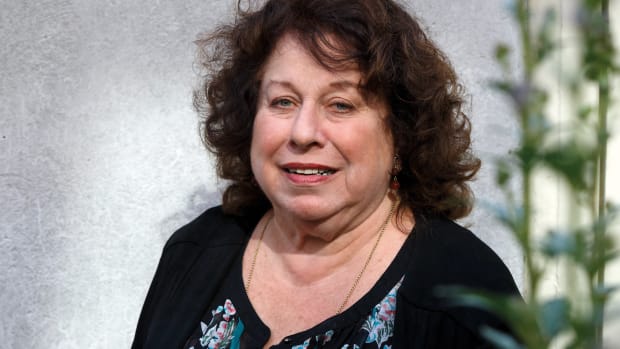
Read back | “Breaking through the white, male heterosexual stronghold is not easy”

This week, Selma Leydesdorff, historian and professor emeritus at the UvA, passed away. In 2017, Folia interviewed her about her then upcoming retirement. She looked to the future with the same cheerfulness and fighting spirit that had characterized her past, although she noted that the UvA was still very white, with a glass ceiling. “That has been a very big struggle, and it still is.”
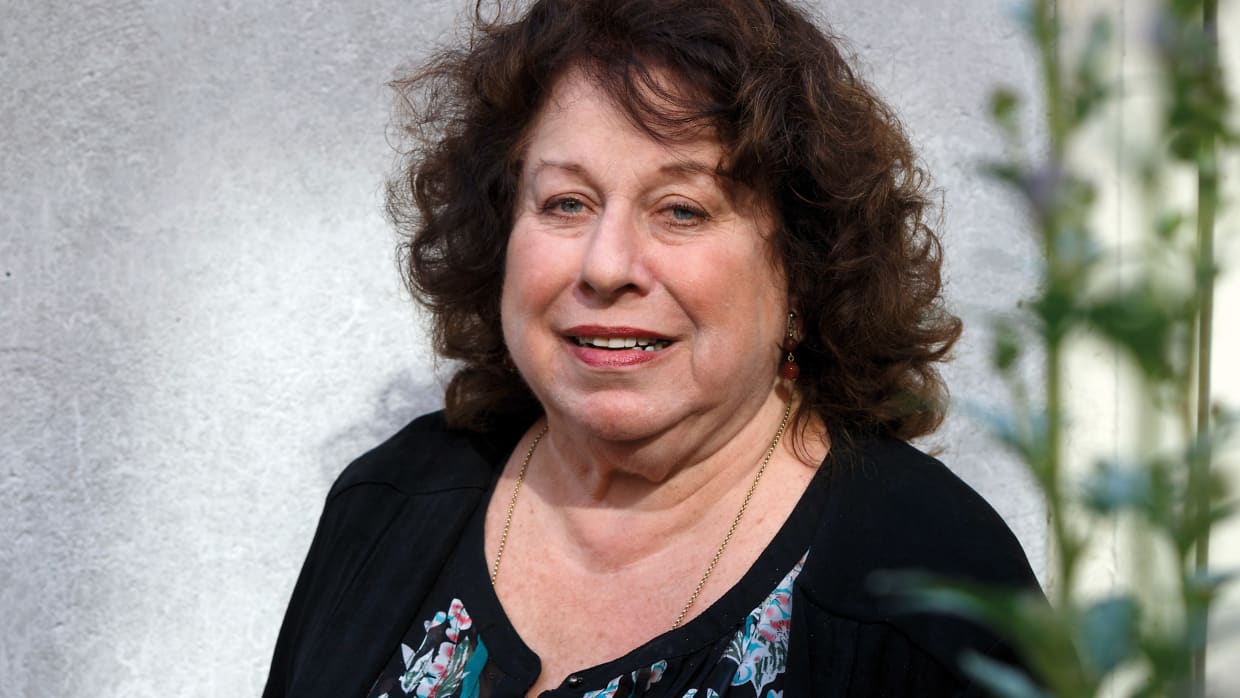
At the start of the intyerview with historian Selma Leydesdorff at ten o’clock in the morning, the mood is already good: she is looking forward to her farewell lecture this week in the Aula of the UvA, where her new book – about the memories of Sobibór survivors of the leader of the camp uprising – will also be presented. “The Aula is always a difficult room: I remember defending my thesis in 1987 on the pre-war Jewish proletariat in Amsterdam. I was in a bold mood, reckless even, and that helped. At one point, the question was asked how the distribution of soup to Jews differed from that to other people. “Because the soup was tastier,” I replied with a quip. A large hall like that becomes a little easier to handle.
This week she is back again. Now because of her retirement and to say goodbye to colleagues, students, former students and the UvA, to which she has been connected for so long. In almost fifty years, she has published countless academic and popular books and articles and won many grants and awards. The name Dolle Mina – one of the feminist Dutch movements she helped to found – was a brainchild of her extremely productive mind.
Are today’s students less engaged than those of your generation?
“To be honest, I don’t think so. I am, of course, a child of the sixties. We live in very different times now, in which students have to hurry up, pass exams and graduate. Everything has become more well-behaved. But on the other hand, there are still some very naughty students, aren’t there? Just look at the occupation of the Maagdenhuis two years ago. That still happens, doesn’t it?”
Have you seen scientific research change over the years?
“Not myself, but that’s due to the nature of my research. In general, a lot of research nowadays takes place in research groups, whereas twenty or thirty years ago it was an individual activity. For me, it still is. My field of research and methodology is that of oral history: long interviews with witnesses who talk about a particular historical event. That is not a group activity, but is done one-on-one and ultimately leads to a book, my book. I am an associative writer. I make associations in my head and write them down. That is an individual activity. Books written jointly by research groups are often bloodless. I don’t like working on those.”
Why is the method of oral history scientifically interesting? Isn’t conducting extensive interviews more of a journalistic approach?
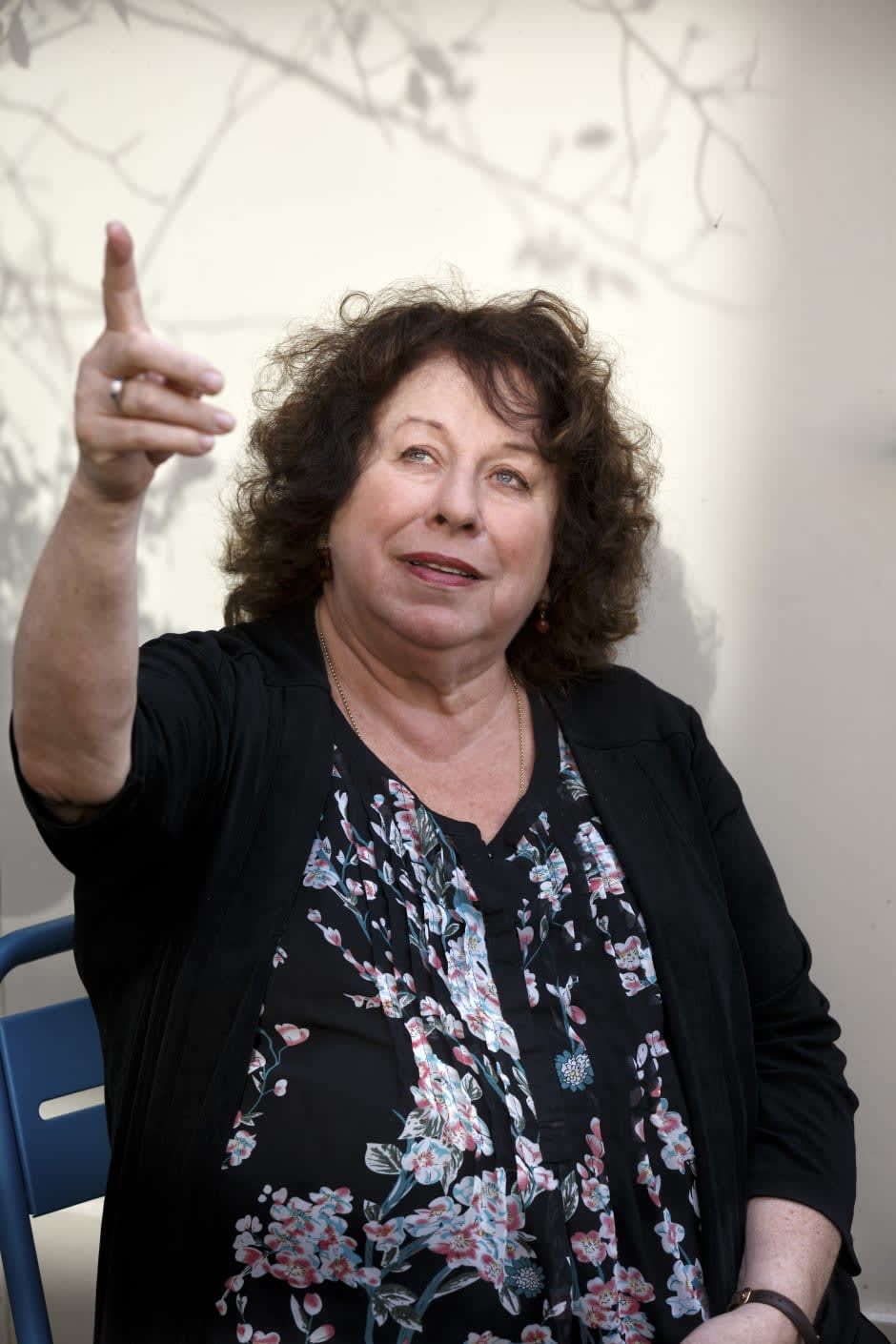
“There is a big difference between the scientific interviews I conduct and teach my students to conduct, and journalistic interviews. In a journalistic interview, you ask probing questions, intervene, question the interviewee further and even contradict them. In my interviews, on the other hand, I let the other person speak and remember freely. I let him or her first rant about a subject that is important to him or her, so to speak. That activates the memory, and then I get to the heart of what I want to know from him or her.”
What intrigues you so much about memory?
“Mainly the question of whether and how the collective memory of groups of people becomes part of individual memory. The fading of individual memories over time is related to this. In my book Het water en de herinnering (The Water and Memory), about the memories of Zeelanders of the flood disaster in the Dutch province of Zeeland, it sometimes turned out that the memory of, for example, rescue operations at the collective level was very different from how they were remembered individually. I understand that, because telling an individual story is sometimes easier if you can do so within a larger structure and unconsciously adapt your story. I find that tension very interesting.”
During your farewell lecture, you will present your new book, for which you interviewed people worldwide about their memories of Sasha, the Russian-Jewish leader and organiser of the Jewish uprising in the Nazi extermination camp Sobibór in Poland. Why did you write that book?
“The book actually expresses all the themes of my work: the relationship between individual and collective memory, the view of individual memories as part of a life story, and the study of the traumatic memories of victims of large-scale and extreme violence. The book also has to do with me personally. I have a Jewish background and lost all four of my grandparents in the Holocaust: on my mother’s side in Bergen Belsen, on my father’s side in Sobibór.”
You previously visited Bosnia to speak with Muslim women in Srebrenica and Tuzla whose husbands and sons were murdered by the Serbs. What fascinates you about researching genocides? Is it about finding the truth? About justice?
“Oral history provides interpretations of the past; there are multiple truths. I wanted and still want to know how memories of violence are constantly being reshaped, because memories change and are adapted.”
Bosnian women’s memories of their husbands.
“Yes, although the memories of camp survivors in Sobibór and those of Muslim women in the enclave of Srebrenica are difficult to compare. I am personally involved with Sobibór and the survivors I spoke to were very old; I was just in time to talk to them. The Bosnian women, on the other hand, were sometimes my own age and often younger. I wanted to give them a voice and record their memories of their husbands and sons. I also wanted to do this because the women were not given a voice in the research report that the NIOD wrote on behalf of the government. I still find it strange that the victims of the Bosnian genocide are hardly mentioned in the report.”
Nowadays, people often talk about “efficiency thinking” in science. Looking at your long list of publications, you are a very efficient scientist. Do you recognise yourself in that description?
“In a way, yes. I have indeed always been very productive, especially when it comes to writing books. I have never participated in writing for important, so-called ‘A-journals’. ‘Can you deliver an article of six thousand words,’ or something like that. I don’t like that. It’s too formulaic for me. Incidentally, productivity at the university is often also about money and how much you can earn as a scientist. That discussion may have gone a bit too far in the sense that science is very often about money.”
Is oral history at the UvA strong enough to survive without you? After all, you are your field of expertise.
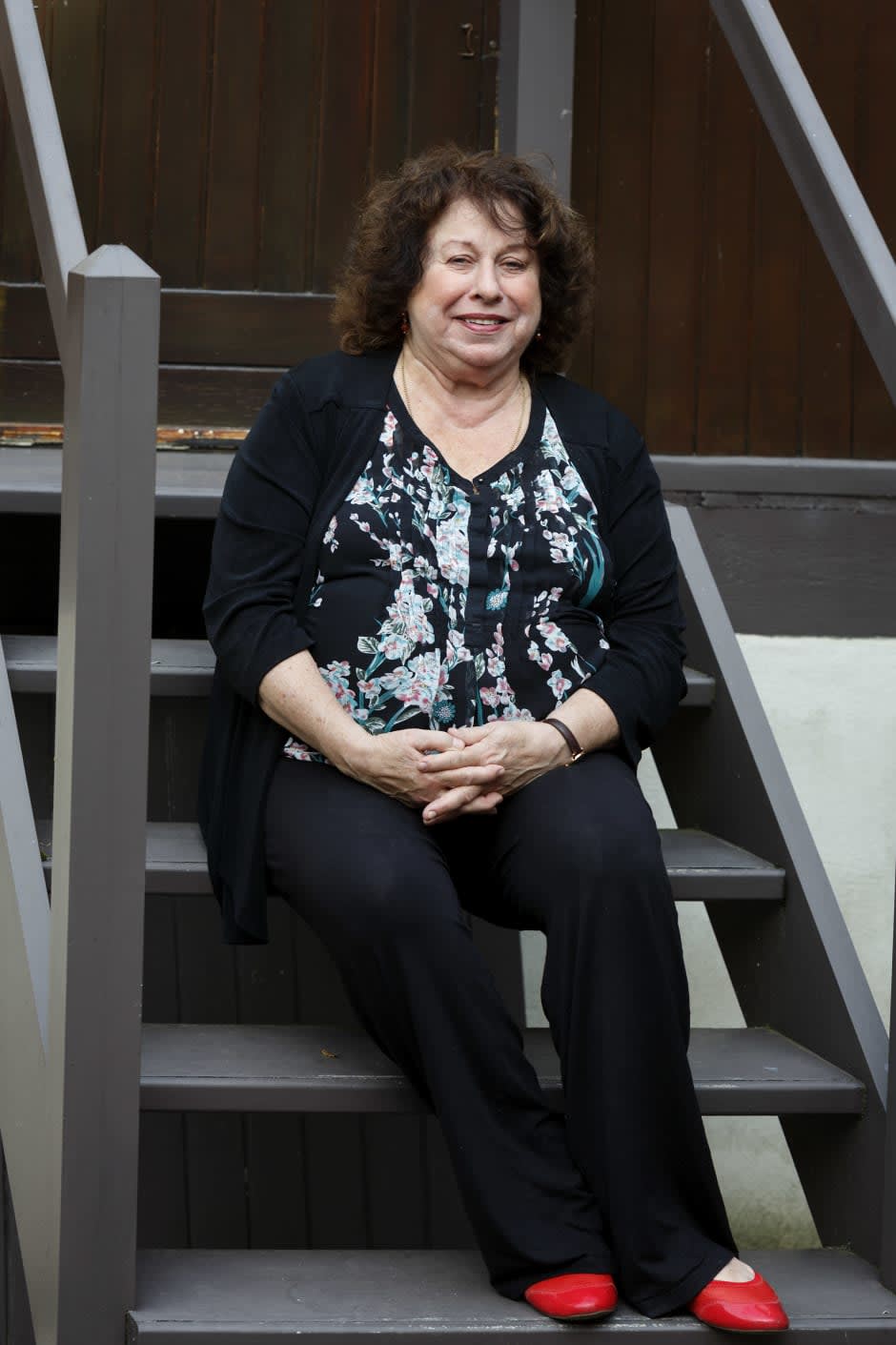
“There is no successor for me and there won't be one. I used to work at the Belle van Zuylen Institute for Gender Studies, where I was director. When that institute was closed down and I had already had a lot of success with oral history, a chair was created, but it will not be continued. Last year, my colleagues and I submitted a plan to NWO to set up an oral history centre in Amsterdam. We had budgeted three million euros for this, but the lobbying failed and the money went to eighteenth-century history, which already receives a great deal of funding. It shows how little innovation there is at NWO.”
What now?
“I hope we will succeed in securing funding outside NWO for oral history research and for appointing a special professor. The digitisation of the humanities makes it possible, for example, to store ten thousand hours of interviews that we have on tape, to link them together and make them searchable. But for that we need computers, computer scientists and lawyers.”
You have spent most of your life at the University of Amsterdam. Has the university culture changed significantly?
“I have been associated with the University of Amsterdam for forty-nine years. From student to PhD candidate, from assistant to lecturer, director and professor, initially in women's studies, later in history. I have enjoyed every minute of it. A lot has changed, though. Managers, for example, have made their entrance. There are a lot of complaints about that, but not from me. I take advantage of it: they arrange everything – for example, a room for your farewell lecture – so you don't have to do it yourself.
There are also many more women now. When I arrived at the UvA in 1968, there were only a few ‘female students’, as we were called. Moreover, there were hardly any visible gay people and the university was even whiter than it is now. It is very late that the UvA is only now getting a diversity officer to do something about this.”
But the glass ceiling still exists.
“That’s right, even though the UvA’s women’s studies programme has produced forty female professors since the late 1970s. Not all of them work at the UvA, but it’s still progress – even though it has been and continues to be a huge struggle. Breaking through the white, male heterosexual stronghold is not easy. When I was still with Dolle Mina, we used to talk about the “urinal culture”: men still like to arrange things with and among themselves, possibly while urinating. There is still work to be done.”
You might say: gender-neutral toilets are the solution?
“In New York, there is ‘sitting’ and ‘standing’, which avoids a lot of discussion. In practice, I prefer the ladies’ toilet myself: it’s often cleaner. Dolle Mina fought for ‘public urination rights’ and decorated the urinals that are now causing so much controversy with pink ribbons.”