
KNAW: “Science is not just a cost”

The great value of science can hardly be captured in numbers, according to a new KNAW report. “Nor can you say: this one discipline yields more than the other,” says committee chair Mirjam van Praag.

As soon as Lower House elections are in sight, economists pull out their calculators: how much influence do the plans of political parties have on citizens’ wallets? Which party is the “winner” of the calculations? But the benefits of education and research usually lie in the distant future. As a result, you can’t quantify them in numbers. In fact, in those models, such additional expenditures only seem like a cost.
Tempting
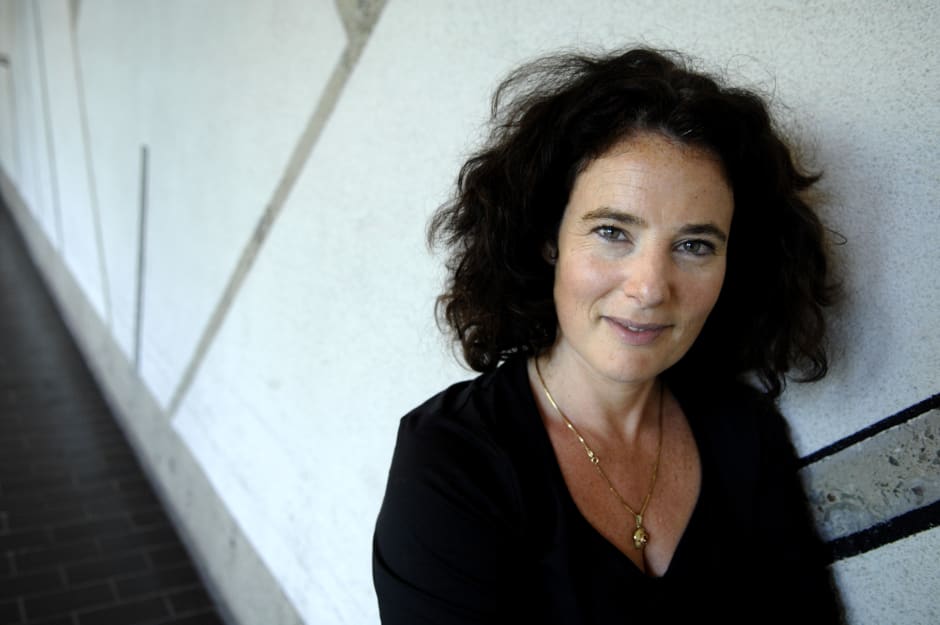
“We also hear this in the corridors,” says Mirjam van Praag, college president of VU University Amsterdam and chair of the KNAW committee that considered the value of science. “It is tempting for political parties to cut investments in science to make the calculations look better.”
There is growing criticism of such economic models. But how can you then map the value of science? The previous Minister of Education (Ingrid van Engelshoven) asked the Royal Netherlands Academy of Sciences for advice on this subject.
This has now been offered to her successor, Minister Robbert Dijkgraaf, who, by the way, was himself president of the KNAW. The Akademie, which calls itself the “guardian and interpreter” of science, frequently gives advice. The value of science is “bigger and broader” than we can perceive, the KNAW emphasizes in the report. “What is perceived to be the value of science is often only the tip of the iceberg.”
You can develop a new drug or work on a technical innovation, but far from all outcomes are so demonstrable. You can't calculate the education of students, for example, or the contribution to democracy and the rule of law. Besides, some innovations have an impact you cannot predict: the Internet was born when scientists around the CERN particle accelerator wanted to exchange information a little easier.
To do some justice to all the possible values of science, the accountants of the planning agencies would do better to start working with the concept of “broad prosperity,” the KNAW advises, because it isn’t just the economic situation in a country that counts. There are also things such as health, happiness, and social cohesion.
Besides, the planning agencies now make “disappointingly” little use of what is measurable. They should include the many partial studies that are already out there in their work. “The planning agencies should start doing that here and now,” the report's authors believe.
Value of education
Van Praag, an econometrician herself, gives the example of spending on education. “Planning agencies feel that they cannot properly measure the value of education. Yet thousands of studies say that an extra year of education yields a financial return of six to 10 percent. But if you don't include that, you actually round that return to zero or worse, because only expenditures are factored in, not returns.” So planning agencies should do their best to include that value, KNAW believes.
Is the report behind the times, now that this administration has freed up so much money for education and research? Van Praag replies: “We are now in a slightly more luxurious position, but it may not stay that way forever as the economy slows down.”
Broad prosperity
So it still makes sense to capture that value - the KNAW prefers to speak in plural of “values” - in a kind of dashboard for “broad prosperity,” in which you can see how investments will ultimately yield returns. “And that doesn't have to be down to the decimal point,” says Van Praag. “Because some things we just don't know exactly yet. But we can then work on that.”
Isn't the danger, according to this story, that investments in science must always pay off? After all, then it is difficult to determine when it is enough. It remains a political trade-off, says Van Praag. “But the value of science is now very high, so investments in it are worthwhile for a country. The problem is mainly that you cannot compare them now with alternatives, such as investments in healthcare.”
The report speaks of science in general, while there are countless directions and disciplines. Can you lump them together? “There is just so much that is influenced by education and science,” Van Praag replied. “If you look at population development, healthy living or the resilience of democracy, you can't say: this one discipline delivers more than the other.”
Education
In the corona era, billions were flying around. Did that make the conversation about big spending easier? Van Praag wouldn't say so. “But the corona time did show that the value of education is very important. You see - based on reliable partial studies - what happens when people don't get an education for a few months: it harms student development. Inequality immediately increases. People from vulnerable backgrounds suffer more than others. It just goes to show how important education is.”
The report was presented last Friday to Minister Dijkgraaf of Education, Culture and Science. It has just been sent to the House of Representatives.